
10 Essential Grounds Maintenance Tasks for Autumn
Table of Contents
Why Autumn Grounds Maintenance Matters for Commercial Sites
1. Clear Fallen Leaves and Garden Debris
4. Mulch Borders and Protect Soil Health
5. Plant Spring Bulbs for Early Colour
6. Divide and Move Perennials
7. Protect Tender Plants from Frost
8. Tidy Paths, Patios and Hard Surfaces
9. Clean and Store Garden Tools and Equipment
10. Plan, Prioritise and Manage Risk
Frequently Asked Questions
Last Updated: October 19, 2026
Why Autumn Grounds Maintenance Matters for Commercial Sites
Autumn is the season that decides how your grounds will look in March.
The pattern is always the same: sites that get autumn right need less corrective work in spring. Sites that skip it spend the first quarter of the year fixing problems that were cheap to prevent.
The Royal Horticultural Society's seasonal advice is clear on this point. Autumn work protects soil, plants and structures through the coldest months.
For a facilities manager, autumn grounds maintenance is really about risk. Wet leaves on paths, blocked drains, weak branches over car parks, and tender plants left exposed.
Here is the short version of what matters most:
Task | Best Timing | Why It Matters |
Leaf clearance | October to December | Safety on paths and car parks |
Final mow and lawn care | October to November | Prevents winter lawn damage |
Pruning and tree surgery | Late autumn to winter | Safer, healthier plants |
Mulching borders | October to November | Protects soil and roots |
Bulb planting | September to November | Early spring colour |
Dividing perennials | October to November | Healthier plants, no cost |
Frost protection | Before first hard frost | Saves tender plants |
Below, we walk through all ten tasks in order, with the timing and practical detail that actually matters on a commercial site.
Key Takeaway Autumn grounds maintenance is not about tidying up. It is the cheapest window of the year to prevent expensive problems in spring and winter.
1. Clear Fallen Leaves and Garden Debris
Leaf clearance is the first task on every autumn list, and for good reason. Wet leaves on paving, steps and car park surfaces are a genuine slip hazard, and they block drains faster than most people expect.

Start clearing as soon as leaves begin to fall, not once the trees are bare. Clearing in stages is easier than one big clear-up in December.
Sweep paths, steps and entrance areas weekly
Clear car park edges and drainage channels
Keep gully covers and grates free of debris
Bag or compost leaves away from buildings
A common mistake is piling leaves against walls or fences to deal with later. Damp leaf piles smother grass and can stain hard surfaces. Clear them properly the first time.
If you are weighing up how local councils handle leaf and garden waste, note that green waste rules vary.
(/post/liability-insurance-for-landscaping-contractors-2026-guide).
Remove dead and damaged branches
Cut back spent perennials to ground level
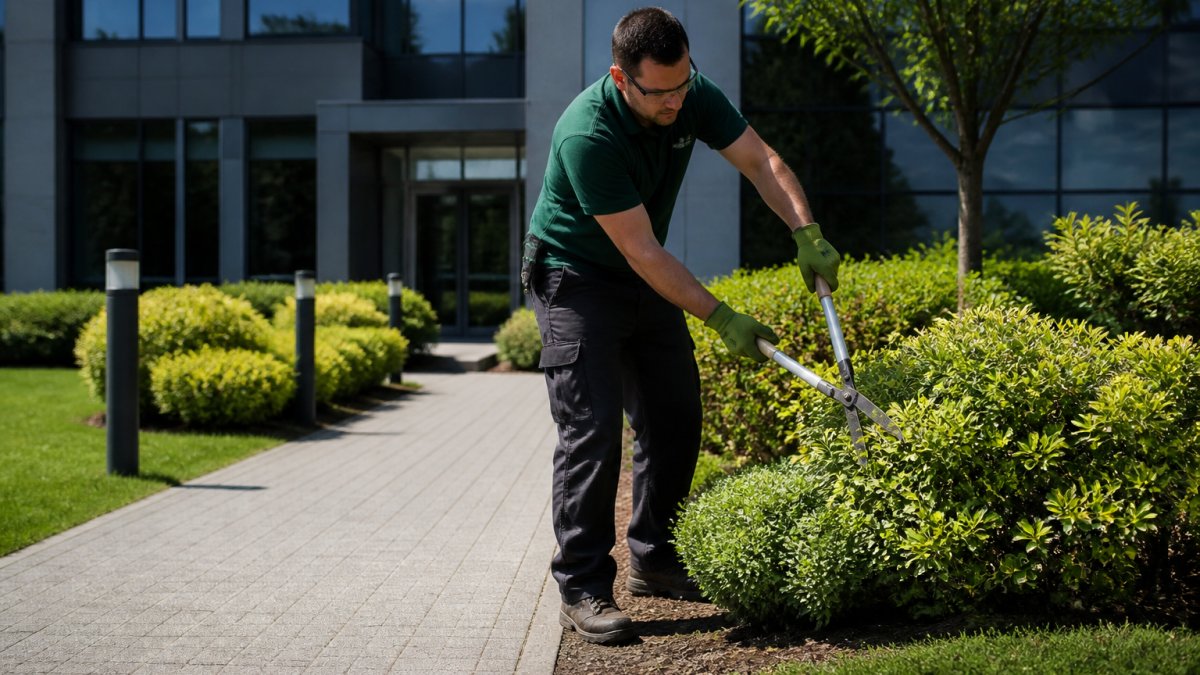
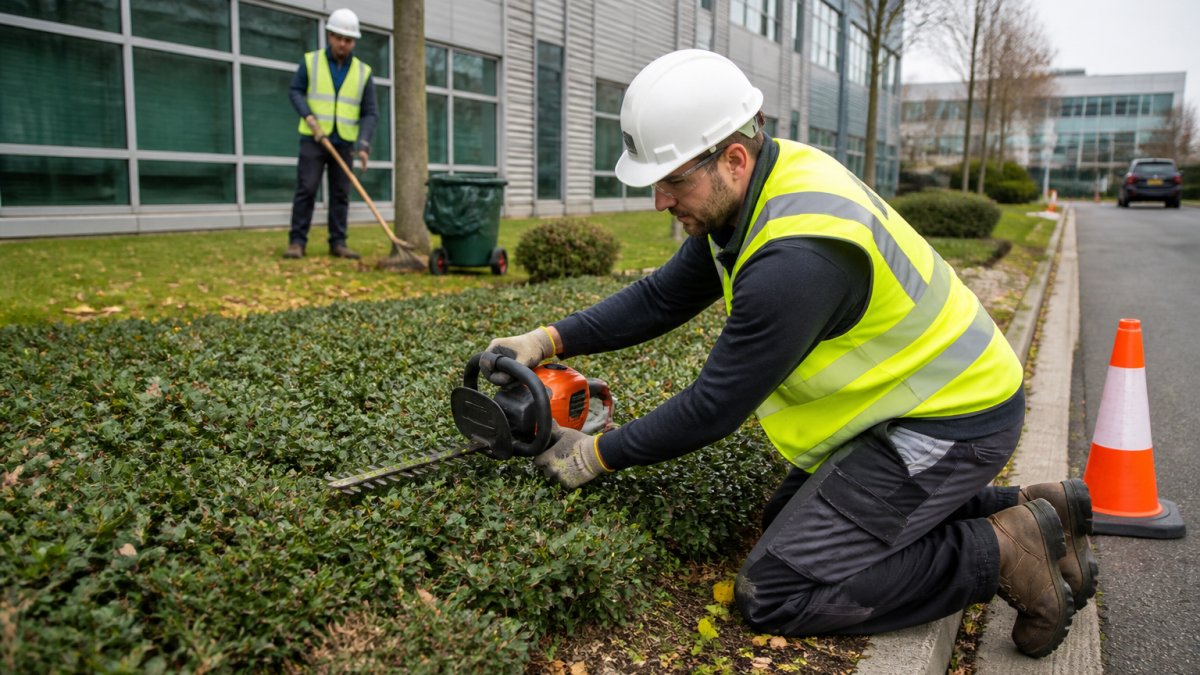
Trim hedges while growth has slowed
Get a professional survey on mature trees
If you want to check what is safe to cut and when, the RHS pruning guidance is a reliable reference. It covers timing by plant type, which matters more than most people realise.
4. Mulch Borders and Protect Soil Health
Mulching is the simplest way to protect soil through winter. A good layer of mulch insulates roots, holds moisture and suppresses weeds. It also improves how borders look at a glance.
Apply mulch after you have cleared leaves and cut back spent plants. Spread it around plants, not piled against stems, and keep it a little away from trunks and crowns.
Clear weeds and debris first
Spread a layer over bare soil in borders
Keep mulch off stems and trunks
Top up around newly planted shrubs
Soil health is the long game here. Mulch feeds the soil as it breaks down, which means healthier plants next year without extra work. On a commercial site, it also cuts down on weeding through winter.
Watch Out Do not pile mulch up against tree trunks or shrub stems. It traps moisture and can cause rot. Spread it around the plant, leaving a small gap at the base.
5. Plant Spring Bulbs for Early Colour
Bulb planting is the one autumn job that pays off visually. Planted now, bulbs give you colour in early spring, before anything else is flowering.
Plant bulbs from September through November, before the ground gets too cold. Choose a spot with good drainage and plant at the right depth for the bulb size.
Pick bulbs suited to your soil and light
Plant in groups for a stronger display
Set depth at roughly three times the bulb height
Water after planting if the ground is dry
The RHS guide to planting bulbs sets out depth and spacing by bulb type. Follow it and you will get a reliable display rather than a patchy one.
A common mistake is planting too shallow. Shallow bulbs get lifted by frost or dug up by wildlife. Plant deep enough and they settle in for years.
6. Divide and Move Perennials
Dividing perennials is free plant stock, and autumn is a good time to do it. Overcrowded clumps flower less and start to die back in the middle. Lifting and splitting them restores vigour and fills bare borders at no cost.
Divide plants that have finished flowering and have had a few weeks to settle. Replant the healthy outer sections and discard the woody centre.
Lift the clump with a fork
Split it into smaller sections
Replant the healthy outer pieces
Water in and mulch around the new plants
This is also the moment to move plants that are in the wrong spot. Moving them now gives roots time to settle before winter. It saves you buying replacements in spring.
7. Protect Tender Plants from Frost
Frost protection is the task that separates a site that looks good in spring from one that needs replanting. Tender plants left exposed can be lost in a single cold night.
Move pots into a greenhouse or sheltered spot before the first hard frost. For plants in borders, use fleece, mulch or a cloche to insulate roots and foliage.
Move tender pots under cover
Wrap or fleece vulnerable plants
Mulch around roots for insulation
Check greenhouse glazing and vents
Timing matters more than method. Watch the forecast and act before the first hard frost, not after. Once foliage is blackened, the damage is done.
A common mistake is wrapping plants too early and trapping damp. Wait until the first cold snap is forecast, then protect.
8. Tidy Paths, Patios and Hard Surfaces
Hard surfaces take a beating in autumn. Wet leaves, moss and algae make paths and patios slippery, and that is a safety issue on any commercial site.
Clear leaves and debris first, then deal with moss and algae on paved areas. Pressure washing or a suitable cleaner restores grip and improves how the site looks.
Clear leaves and debris from all hard surfaces
Treat moss and algae on paths and patios
Clean entrance areas and steps
Check and clear drainage channels
This is also the time to check for cracked paving and loose slabs. Small defects become trip hazards once the wet weather sets in.
9. Clean and Store Garden Tools and Equipment
Tool care is the task nobody enjoys and everybody regrets skipping. Damp autumn conditions rust blades and clog machinery. Clean tools last longer and work better.
Clean, dry and oil metal tools before storage. Service mowers and blowers, and store everything under cover.
Clean soil and sap off blades and prongs
Dry tools fully before storing
Oil metal parts to prevent rust
Service mowers and power tools
Drain fuel from equipment not in use
On a commercial site, equipment downtime is a real cost. A little maintenance now avoids breakdowns in the middle of a job.
Pro Tip Book machinery servicing in autumn, not spring. Workshops are quieter, turnaround is faster, and your equipment is ready to go the moment growth starts again.
10. Plan, Prioritise and Manage Risk
The last task is the one that ties the other nine together: planning. On a commercial site, autumn grounds maintenance works best when it is mapped to a calendar and a risk register, not done when someone remembers.
Prioritise by risk first, appearance second. Slip hazards, blocked drains and weak branches come before cosmetic tidying. Then schedule the rest around weather and site use.
Build a month-by-month task calendar
Rank jobs by safety risk first
Schedule around client meetings and site events
Keep a drainage and water management check in the plan
Record what was done and when
Drainage deserves its own line here. Autumn rain plus fallen leaves equals blocked drains and standing water. Check gullies, channels and soakaways before the wet season, not after the first flood.
For sites with regular contracts, this is where a reliable partner matters. Pemigogardens works only with private offices and business parks, on regular maintenance contracts, with a team trained in health and safety.
If you want a grounds maintenance contract built around your site's needs, the Health and Safety Executive's guidance on workplace maintenance is a useful reference for the safety side.
Frequently Asked Questions
What are the most important grounds maintenance tasks for business parks in autumn?
The priorities are leaf clearance from paths and car parks, final lawn mowing and aeration, pruning shrubs and trees, mulching borders, planting spring bulbs, and protecting tender plants from frost. Drainage checks and tool maintenance also matter. A structured seasonal checklist helps facilities managers stay ahead of weather changes and keeps the site safe and presentable for staff and visitors throughout the colder months.
How does autumn leaf clearance impact commercial site safety?
Wet fallen leaves create slippery surfaces on paths, car parks, and entrances, raising the risk of slips and trips. Regular autumn leaf clearance services remove this hazard and prevent leaves from blocking drains, which can cause localised flooding. Keeping hard surfaces clear also reduces moss growth and algae. For business parks, scheduled clearance before peak arrival times is essential to maintain a safe, professional environment for employees and clients.
When should commercial lawn aeration be performed in the UK?
Early to mid-autumn is ideal for commercial lawn aeration in the UK, while soil is still warm and moist but before the first hard frosts. Aerating relieves compaction, improves drainage, and helps nutrients reach the roots before winter dormancy. For high-traffic business park lawns, combine aeration with overseeding and a final low cut. Avoid aerating waterlogged or frozen ground, as this can damage the turf structure.
Why is professional tree surgery recommended during the autumn months?
Autumn is a good time for professional tree surgery because many trees are entering dormancy, reducing stress from pruning and lowering the risk of disease transmission. Removing dead or dangerous limbs before winter storms protects people and property on business parks. Qualified tree surgeons can also assess structural weaknesses and carry out formative pruning. Always check that contractors hold appropriate insurance and work to UK safety standards.
Autumn is short, and the window for most of these jobs closes fast. The sites that look sharp in spring are the ones that planned their autumn work in September and stuck to it. If you would rather not manage that calendar yourself, Pemigogardens provides regular site visits, tailored grounds maintenance, and a full service that includes tree surgery, cleaning and clearance. Tell us about your site and we will build a schedule around it.
TELL US Submit

Comments