
Common Mistakes When Hiring Commercial Landscapers
Updated: 10 hours ago
Table of Contents
Why Commercial Grounds Maintenance Is Different From Residential Work
Mistake 1: Prioritising Price Over Quality and Long-Term Value
Mistake 2: Skipping Insurance and Licensing Checks
Mistake 3: Not Checking References or Past Work
Mistake 4: Ignoring Communication and Responsiveness
Mistake 5: Hiring Without a Formal Contract or Scope of Work
Mistake 6: Overlooking Long-Term Maintenance and Seasonal Planning
Mistake 7: Choosing a Provider With Limited Service Offerings
What to Ask Before You Sign
Frequently Asked Questions
Last Updated: September 13, 2026
Why Commercial Grounds Maintenance Is Different From Residential Work
Hiring commercial landscapers is not the same as booking a gardener for a domestic property, and treating the two as interchangeable is the first mistake property managers make. Commercial grounds maintenance is the scheduled care of business park grounds, office landscaping, car parks and shared outdoor areas under a formal contract, with fixed visit frequencies and documented standards. This guide from Pemigogardens, a grounds maintenance team working exclusively with private offices and business parks, sets out the mistakes that cost property managers the most.
The differences run deeper than scale. A residential job ends when the customer is satisfied; a commercial contract runs for twelve months and is judged by Health and Safety Executive guidance on managing contractors, insurance documentation, and consistent reporting. Miss those requirements and the risk lands on the property manager, not the contractor.
Key Takeaway Commercial work is judged on compliance, consistency and documentation. Residential work is judged on how the garden looks when the job finishes.
Mistake 1: Prioritising Price Over Quality and Long-Term Value
Choosing the cheapest quote is the most common mistake when hiring commercial landscapers, and it almost always costs more over a contract term. A low price usually means fewer visits, a smaller crew, or no allowance for seasonal work such as pre-emergent application and autumn clearance. Those gaps show up as scalping damage in summer, blocked drainage in winter and emergency call-out charges that were never in the budget.
When you compare quotes, ask what each price includes: visit frequency, waste removal, fertilisation schedule, and whether plant health care is covered or billed separately. A quote that looks higher often covers work the cheaper one quietly excludes.
What to compare | Low-cost quote | Properly scoped quote |
Visit frequency | Monthly, weather dependent | Fortnightly, fixed schedule |
Waste removal | Charged separately | Included |
Seasonal planting | Not included | Planned annually |
Reporting | None | Written site reports |
Mistake 2: Skipping Insurance and Licensing Checks
Failing to verify insurance and licensing is the mistake with the sharpest consequences. Any contractor working on your site should hold public liability coverage and employer's liability insurance, and you should see current certificates before work starts, not after an incident. If a contractor is uninsured and someone is injured on your property, the claim can fall to you.
Ask for certificates directly and check the dates. Employer's liability insurance is a legal requirement for most businesses, and the HSE guidance on employers' liability insurance explains what a valid certificate should show. A contractor who hesitates over this request is telling you something.
Watch Out Never accept a photocopied certificate with no expiry date. Ask for the current schedule and confirm it covers the specific work, including tree surgery and any work at height.
Mistake 3: Not Checking References or Past Work
Past work is the only reliable predictor of future performance, yet most property managers skip it. Ask for two or three references from sites of a similar size and type, then actually visit one if you can. Look at how edges are cut, whether beds are weeded, and whether the car park is swept.
Pemigogardens works with clients including the Duke of Edinburgh Awards, De Le Cuona, Adair House in Windsor and Comino House in Bourne End, and site visits are the reference check that tells you most. A contractor with nothing to show is a contractor with nothing to hide behind.
Mistake 4: Ignoring Communication and Responsiveness
Poor communication during the sales process predicts poor communication during the contract. If quotes take a week, calls go unanswered, or nobody can tell you who your site contact is, expect the same once you have signed. The question to ask is simple: who do I call, and how quickly will they respond?
For a commercial site, though, responsiveness is not just about answering the phone. It is about whether you receive evidence that the work was done, to the standard agreed, on the schedule promised. That is where most providers fall short, and where a well-run contractor separates itself.
Ask for a reporting standard, not a promise. A professional commercial landscaper should be able to show you a sample site report before you sign. At minimum, expect a visit log with date, time on site, tasks completed and any issues noted; photographs of completed works; and a monthly summary against the schedule of works. If the provider cannot produce a sample report, they are almost certainly not producing one for their existing clients either.
Test the response mechanism during the sales process. Send a non-urgent question mid-quote and note how long the reply takes and whether it answers the question. Then ask what happens out of hours: who do you contact if a fence is damaged, a tree comes down, or an irrigation leak floods a car park on a Saturday? A named account contact with a defined response window for reactive works is the minimum; a shared inbox with no owner is a warning sign.
Confirm how issues are escalated and closed out. A good provider will have a simple process: you raise an issue, it is logged with a reference, a named person owns it, and you receive confirmation when it is resolved. Ask to see how this works in practice. If the answer is "just call Dave", the process does not exist.
Check whether technology is used to support the contract.
Agree the meeting rhythm. Monthly or quarterly review meetings, with the report pack circulated in advance, turn a reactive relationship into a managed one. Put the frequency, attendees and agenda in the contract so it survives changes of personnel on either side.
Watch Out A provider who cannot show you a sample report, name your account contact, or explain their out-of-hours process before you sign is unlikely to improve after. Responsiveness is a system, not a personality trait.
Set expectations in writing. A named account contact, a response window for issues, a reporting standard and a clear escalation route turn a vague promise into something you can hold a provider to, and give you the evidence you need when the contract comes up for renewal.
Mistake 5: Hiring Without a Formal Contract or Scope of Work
A verbal agreement is not a commercial grounds maintenance contract. A proper contract sets out the scope of work, visit frequency, service level agreement, payment terms, insurance requirements and notice period, so both sides know exactly what is expected. Without it, disputes about what was included become your word against theirs.
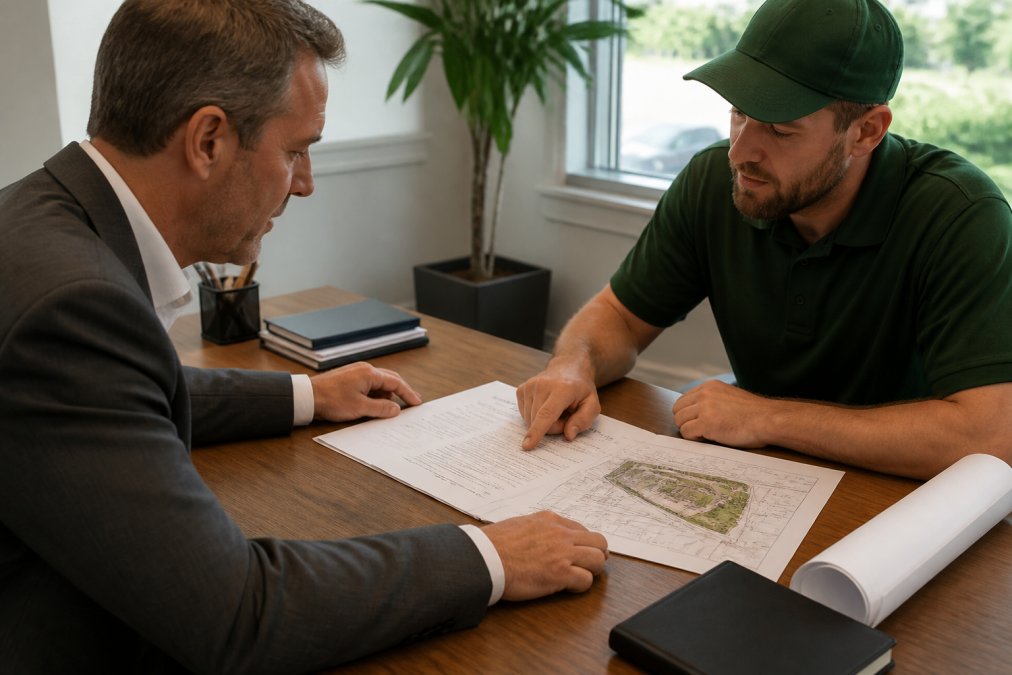
Most guides stop at "get it in writing". The clauses below are where commercial contracts are actually won and lost, and they are the ones property managers most often discover too late.
Termination and exit terms. Look for the notice period required to end the contract, whether it can be terminated for convenience or only for cause, and what happens to outstanding works and any prepaid visits on exit. A twelve-month term with a three-month notice window is workable; an auto-renewal that rolls over unless you give six months' notice is not. Under the Unfair Contract Terms Act 1977 and, for consumer-adjacent terms, the Consumer Rights Act 2015, terms that are significantly one-sided can be challenged, but it is far cheaper to negotiate them out before signature than to argue afterwards.
Liability and indemnity. The contract should state the contractor's liability for damage to your property, injury to third parties on site, and negligent work, and it should not cap that liability at a figure that is trivial against your site's value. Check whether the contractor indemnifies you for claims arising from their work, and confirm this is backed by the insurance certificates you verified earlier. A liability clause that is silent on tree surgery, hard landscaping or work at height is a gap.
Scope, specification and KPIs. The schedule of works should be an appendix, not a paragraph. It should list monthly and seasonal tasks, the standard expected (for example, grass cut height, edging frequency, weed tolerance in beds), and the measurement method. Where a service level agreement applies, it should define response times for reactive works, the remedy if standards are missed, and whether credits or re-visits apply. Vague wording such as "general maintenance as required" cannot be measured and therefore cannot be enforced.
Price adjustment and variations. Commercial contracts often run for multiple years, so check how the price is reviewed, annually, by an agreed index, or by negotiation, and how additional works are quoted and authorised. Without a variation mechanism, every extra task becomes a dispute or an unbudgeted invoice.
Health and safety and compliance obligations. The contract should require the contractor to comply with the Health and Safety Executive guidance on managing contractors, provide risk assessments and method statements for higher-risk tasks, and report accidents. It should also confirm who holds the waste carrier registration for green waste removed from site, since duty of care for waste rests with the producer.
Data and access. If the contractor will hold keys, alarm codes or site plans, the contract should cover access protocols, keyholder responsibilities and how any personal data is handled under the Information Commissioner's Office guidance.
Pro Tip Before signing, ask for the schedule of works as an appendix and a one-page summary of termination, liability and price review terms. If the contractor cannot produce either, the scope is not defined.
A contract that cannot be measured cannot be enforced, and a contract that can be exited only on the contractor's terms is not a partnership.
Mistake 6: Overlooking Long-Term Maintenance and Seasonal Planning
Grounds deteriorate slowly, which is why long-term planning matters more than any single visit. A provider who only reacts to problems will leave you managing turf health, irrigation management and drainage solutions as emergencies. Preventive maintenance, planned across the seasons, keeps a site presentable year-round.
Ask to see a twelve-month plan covering spring fertilisation, summer irrigation, autumn leaf clearance and winter works. This is also where sustainability commitments increasingly sit, so ask how green waste is handled and whether planting schemes support any environmental targets your organisation reports on.
Mistake 7: Choosing a Provider With Limited Service Offerings
A provider who mows and nothing else will subcontract everything beyond it, and you lose visibility of who is on site. A full-service provider covers services such as softscaping, hardscaping, tree surgery, cleaning and clearance under one contract, with one point of contact and one set of safety protocols.
Scalability matters just as much. If you manage several sites or plan to expand, confirm the provider can absorb additional locations without dropping standards at your existing one. Ask how they resource peak periods and whether the same team returns each visit.
What to Ask Before You Sign
Use this checklist when vetting contractors:
Current public and employer's liability certificates, dated within the last year
Two or three references from similar commercial sites
A written scope of work with monthly tasks listed
Named site contact and agreed response times
Service level agreement with measurable standards
Notice period and exit terms stated in the contract
Confirmation of who performs the work, in-house or subcontracted
Frequently Asked Questions
What are the most important questions to ask commercial landscaping contractors before hiring?
Ask about insurance and licensing, how they handle seasonal planning, what their service level agreement covers, and whether they use subcontractors. Request references from similar commercial sites. Confirm they carry public liability and employer's liability insurance, and ask how they report on completed work. A provider that cannot answer these clearly is a risk to your site and your budget.
What should be included in commercial grounds maintenance contract requirements?
A solid contract should specify the scope of work, visit frequency, seasonal tasks like pre-emergent application and fertilization schedules, and reporting expectations. Include a service level agreement with measurable response times, a clear payment schedule, and termination clauses. Confirm the provider holds adequate liability coverage. Vague contracts lead to disputes and inconsistent site upkeep.
How do you evaluate the reliability of a commercial landscaping company?
Check references from comparable commercial sites, ask how they handle staff turnover, and confirm whether they use a dedicated team or rotate subcontractors. Look for a provider that offers a written service level agreement with defined response times. Ask what happens if a scheduled visit is missed. Providers with consistent, long-term clients and clear communication processes are far more reliable than those offering the lowest quote.
Why is consistent grounds maintenance important for business parks?
Regular upkeep protects curb appeal, which directly affects how clients and tenants perceive your property. Inconsistent maintenance leads to overgrown turf, blocked drainage solutions, and costly remedial work. A preventive maintenance schedule covering irrigation management, plant health care, and seasonal planning keeps the site safe and presentable year-round. It also helps you avoid compliance issues around safety protocols and site access.
Commercial grounds maintenance rewards the property manager who checks insurance, insists on a written scope and plans beyond the next visit. Pemigogardens handles that work for private offices and business parks across the Thames Valley, with regular site visits, tailored maintenance contracts, and a team trained in health and safety through Human Focus. Get started with Pemigogardens and keep your grounds consistently presentable, season after season.
TELL US Submit


Comments