
How to Improve Office Exterior Biodiversity
Updated: Sep 16
Table of Contents
Assess Your Current Site and Plan for Biodiversity
Conduct a biodiversity audit
Identify opportunities for habitat creation
Implement Native Planting Schemes for Commercial Grounds
Select appropriate native species
Design pollinator-friendly planting areas
Install Wildlife Habitats and Nesting Structures
Bird, bat, and owl nesting boxes
Insect hotels and hibernacula
Achieve Biodiversity Net Gain for Businesses
Understanding regulatory requirements
Measuring and reporting biodiversity impact
Choose Sustainable Grounds Maintenance Services
Seasonal maintenance for habitat protection
Cost-benefit analysis of biodiversity investment
Create Green Infrastructure and Rewilded Spaces
Green walls and vertical gardens
Rewilding neglected outdoor areas
Engage Staff and Monitor Progress
Citizen science and employee involvement
Tracking biodiversity KPIs
Frequently Asked Questions
Last Updated: August 31, 2026
Assess Your Current Site and Plan for Biodiversity
Before improving office exterior biodiversity, you need a clear picture of your current landscape and its ecological value. This foundation determines every decision that follows.
Conduct a biodiversity audit
A biodiversity audit is a systematic assessment of the plants, animals, and habitats present on your commercial property. It identifies existing species, areas with potential for habitat creation, and where ecological gaps need filling.
Begin with a walkthrough. Document existing vegetation by type: trees, shrubs, herbaceous plants, and visible wildlife. Note site conditions, mowing frequency, shade levels, aspect, as these affect which species will thrive.
Look for natural features already present: mature trees, hedgerows, water features, or undisturbed corners. These become anchors for your strategy. Equally important is identifying sterile zones, large expanses of mown grass, hard landscaping, or herbicide-treated areas that support little wildlife.
Visit across different seasons if possible. Spring reveals dormant versus actively growing plants. Summer shows peak flowering and insect activity. Autumn and winter expose structural features and reveal which plants provide winter food sources.
Identify opportunities for habitat creation
Once audited, spot realistic opportunities for habitat features. Not every area should be transformed; the goal is strategic placement that complements your grounds while serving business needs.
Look for underutilised areas first: neglected corners, spaces between buildings, or areas serving no functional purpose. These often cost less to convert because they're already marginal to operations. Assess light and moisture conditions carefully. A sun-baked south-facing wall suits green infrastructure and heat-loving plants. A damp, shaded corner suits moisture-tolerant species and ground-nesting birds. Think about connectivity: wildlife moves through landscapes following habitat corridors. A line of native shrubs linking your site to a nearby park multiplies the value of your improvements.
Audit Element | What to Document | Why It Matters |
Existing vegetation | Tree species, shrub types, ground cover | Identifies anchors for habitat creation |
Site conditions | Light, moisture, aspect, soil type | Determines which species will thrive |
Wildlife signs | Nesting evidence, feeding activity, droppings | Shows which species already use your space |
Underutilised areas | Neglected corners, poor-performing lawns | Identifies lowest-cost conversion opportunities |
Connectivity | Proximity to parks, hedgerows, green space | Multiplies the ecological value of features |
Implement Native Planting Schemes for Commercial Grounds
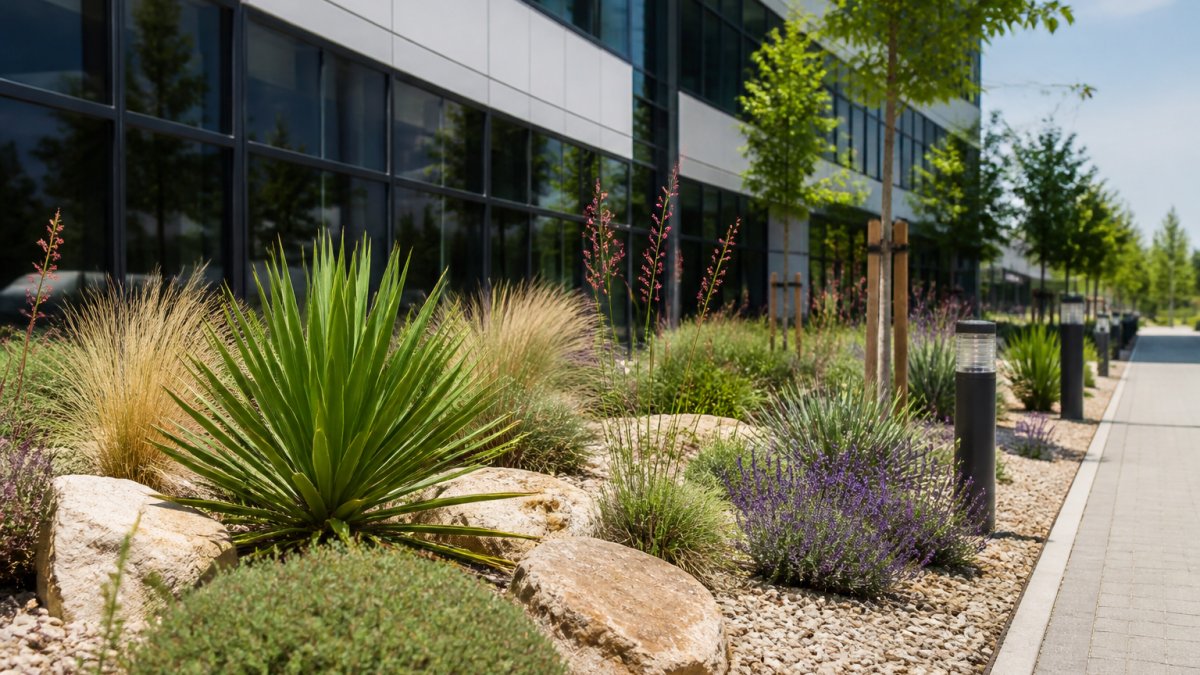
Native plants form the foundation of any biodiversity strategy. They're adapted to local conditions, require less maintenance than exotic species, and provide food and shelter for native wildlife.

Select appropriate native species
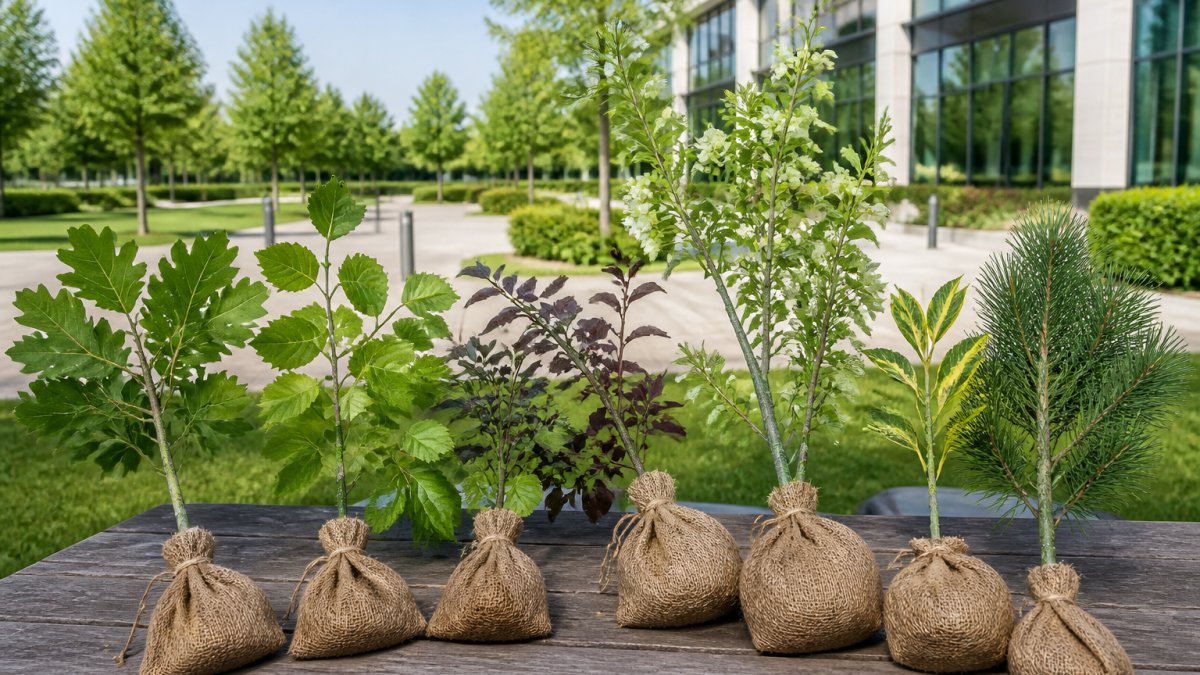
Native species selection depends on local climate, soil conditions, and the ecological role you want plants to play. Identify your local native plant community. The UK has distinct regional plant assemblages; lowland areas support different species than upland regions, and chalk soils differ from clay or sandy soils. Focus on perennials over annuals, they establish themselves, require less replanting, and develop deeper root systems that improve soil structure.
Include a mix of plant sizes and growth habits. Tall shrubs provide nesting and roosting sites for birds. Medium-height plants offer shelter and food sources. Ground-cover plants stabilise soil and prevent weed colonisation. Choose species that flower at different times: spring bloomers support insects emerging from dormancy, summer flowers sustain peak insect activity, and autumn-flowering plants provide crucial food as wildlife prepares for winter.
Design pollinator-friendly planting areas
Pollinators, bees, butterflies, hoverflies, and other insects, are essential to ecosystem function. Select plants with open flowers that pollinators can access easily. Double flowers and heavily hybridised varieties often have reduced access to nectar and pollen. Simple, single-petalled flowers in purples, blues, yellows, and whites attract the widest range of pollinator species.
Plant in clusters rather than single specimens. A mass of the same flower species is far more attractive to pollinators than scattered individual plants. Group plants so something flowers continuously from spring through autumn. Avoid pesticides entirely, herbicides eliminate wild plants insects depend on, insecticides kill pollinators directly, and fungicides disrupt soil microbial communities.
Provide nesting and overwintering habitat within or adjacent to pollinator areas. Leave some areas unmulched so ground-nesting bees can access soil. Allow dead wood to remain; many insects overwinter in hollow stems and decaying wood. A small insect hotel positioned near flowering plants provides additional habitat and visibility to staff.
Install Wildlife Habitats and Nesting Structures
Physical habitat structures complement native planting by providing specific shelter and nesting opportunities. These features are visible, tangible improvements that staff can monitor and engage with.

Bird, bat, and owl nesting boxes
Nesting boxes address a real shortage in modern landscapes. Older buildings with cavities and dead trees provided natural nesting sites; contemporary office buildings often lack these features. Artificial nesting boxes substitute for lost natural cavities.
Different species require different box designs. Small-entrance boxes suit blue tits and great tits. Larger entrance holes accommodate blackbirds and robins. Open-fronted boxes suit robins, wrens, and flycatchers. Mount boxes at the correct height and angle, most small bird boxes work best 1.5 to 2 metres above ground, angled slightly downward to shed rain. Secure boxes firmly to prevent movement in wind. Clean boxes annually after breeding season ends, typically August or September, removing old nesting material and checking for parasites.
Bat boxes provide daytime shelter. Install boxes on building facades or tall trees, positioned to catch morning sun but avoid afternoon heat. Owl boxes require specific dimensions and positioning; consult species-specific guidance before installation.
Insect hotels and hibernacula
Insect hotels provide shelter for beetles, lacewings, ladybirds, and other beneficial insects. A basic insect hotel consists of a wooden frame filled with corrugated cardboard, drilled wood blocks, straw, bark, and dead wood. Position insect hotels in sunny locations near flowering plants and native vegetation, ideally where staff can observe them.
Hibernacula serve a similar function but specifically target overwintering insects. A log pile or purpose-built hibernaculum provides shelter for insects, amphibians, and small mammals preparing for winter.
Achieve Biodiversity Net Gain for Businesses
Biodiversity net gain refers to achieving a measurable increase in biodiversity value compared to baseline conditions. Understanding this concept helps you measure and communicate the value of your improvements.
Understanding regulatory requirements
The Environment Act 2021 established mandatory biodiversity net gain requirements for new developments. Habitats are scored on distinctiveness (how rare or valuable they are) and condition (how well they function ecologically). A well-managed native wildflower meadow scores higher than mown grassland. If your site undergoes planning permission for significant changes, consult your local planning authority about biodiversity net gain requirements.
Measuring and reporting biodiversity impact
Establish baseline conditions before making improvements. Count bird boxes occupied, record plant species present, document insect activity. Take photographs from fixed points on the same date each year. After improvements are complete, repeat observations annually to track changes.
Use simple indicators that staff can monitor: nesting boxes used each breeding season, bird species visiting your grounds, flowering times and insect activity, and spread of native plants. Document seasonal changes and communicate results to staff and stakeholders through photographs, species lists, and observations. Celebrate milestones, the first nesting success, arrival of new bird species, establishment of wildflowers.
Choose Sustainable Grounds Maintenance Services
How you maintain your grounds fundamentally affects whether biodiversity improvements succeed. Sustainable grounds maintenance aligns regular upkeep with biodiversity goals.
Seasonal maintenance for habitat protection
Different seasons require different maintenance approaches. Spring maintenance focuses on preparing habitat for breeding season, avoid cutting vegetation during March, April, and May when birds are nesting and insects are emerging. Delay cutting hedges and shrubs until after breeding season ends. Mow grassland less frequently to allow spring flowers to bloom and seed.
Summer maintenance maintains features without disrupting active breeding and feeding. Continue avoiding broad cutting of vegetation. Remove invasive species selectively rather than with blanket herbicide application.
Autumn is the season for structural work. Cut back dead growth from herbaceous plants, leaving some standing as shelter for overwintering insects. Collect fallen leaves in designated areas rather than removing them all; leaf litter provides shelter and improves soil. Plant new trees and shrubs, as autumn provides ideal conditions for establishment.
Winter maintenance focuses on protection and minimal disturbance. Avoid work in wet conditions that damage soil structure. Leave seed heads and dead wood standing for wildlife.
Cost-benefit analysis of biodiversity investment
Native planting typically costs more initially than seeding or turfing, but requires less ongoing maintenance. Over a ten-year period, native planting often costs less than maintaining conventional landscaping.
Nesting boxes and insect hotels are low-cost features with minimal maintenance. Green infrastructure requires higher initial investment but delivers multiple benefits: improved building insulation, reduced stormwater runoff, enhanced visual appeal, and biodiversity support.
Rewilding neglected areas typically costs less than maintaining them. An area currently mown or treated with herbicides costs money to maintain. Converting it to native habitat eliminates those costs whilst creating ecological value.
Create Green Infrastructure and Rewilded Spaces
Green infrastructure and rewilding transform your office exterior from sterile landscaping into functioning ecosystems.
Green walls and vertical gardens
Green walls use climbing plants or modular planting systems to cover building facades. They're particularly valuable where ground space is limited but vertical surfaces are available. Living walls use modular panels filled with growing medium and planted with appropriate species. Climbing plants on trellis systems are simpler and lower-cost. Native climbers like ivy support insects and provide nesting habitat. Ivy flowers in autumn, providing crucial food for insects preparing for winter.
Position green walls where they're visible and accessible for maintenance. Select plants suited to your specific wall conditions. A south-facing wall receives intense sun; choose drought-tolerant species. A north-facing wall receives little direct sun; choose shade-tolerant species.
Rewilding neglected outdoor areas
Rewilding means allowing an area to return to a more natural state with minimal human intervention. Identify areas suitable for rewilding: neglected corners, poorly performing lawns, and areas with no clear functional purpose.
Reduce mowing frequency or cease mowing entirely. Within a single season, an unmowed area will develop significantly more plant diversity than a regularly mowed lawn. Remove invasive species that prevent native species establishment. Introduce native seed if the existing soil seed bank is depleted. Allow structural elements to develop, dead wood, standing dead vegetation, and leaf litter all support wildlife.
Engage Staff and Monitor Progress
Biodiversity improvements only succeed long-term if staff understand their value and participate in their management. Engagement transforms passive observers into active participants.
Citizen science and employee involvement
Establish a bird-watching group. Staff with an interest in birds can conduct regular observations, recording species seen and behaviour observed. Create a wildflower identification guide specific to your site. Involve staff in habitat installation and maintenance, a team effort creates ownership and understanding.
Establish a wildlife recording scheme. Staff can photograph and record wildlife observations using simple forms or a dedicated app. Communicate findings to all staff through monthly updates about wildlife observations, new species recorded, or seasonal highlights.
Tracking biodiversity KPIs
Number of nesting boxes occupied is a straightforward indicator. Track how many boxes are used each breeding season. Plant species richness, the number of different plant species present, indicates habitat diversity. Conduct a simple plant survey annually, recording which species are present.
Insect activity indicators include the presence of butterflies, bees, and other pollinators. Bird species richness and abundance track which bird species use your site and in what numbers. Set realistic targets for each indicator. Document your monitoring results in an annual biodiversity report summarising observations, changes recorded, and progress toward targets.
Improving office exterior biodiversity requires assessment, strategic planning, and sustained commitment. The steps outlined above, from conducting a baseline audit to implementing native planting and installing habitat features, create a comprehensive framework for transformation.
At Pemigogardens, we work directly with private office owners and facilities managers throughout the Thames Valley to deliver tailored grounds maintenance that supports biodiversity alongside your operational needs. Our team understands that effective habitat creation requires seasonal coordination, specialist knowledge, and reliable execution. We develop maintenance schedules that protect wildlife whilst keeping your grounds professionally presented. Whether you're establishing native planting schemes, installing nesting structures, or rewilding neglected areas, we provide the consistent, expert care that makes these improvements succeed. Contact Pemigogardens today to discuss how we can transform your office exterior into a thriving ecosystem.
=== FAQ ANSWERS (audit these too, same rules) ===
[1] Q: What are the most effective ways to improve office exterior biodiversity? A: Start with a biodiversity audit to identify existing habitats and gaps. Introduce native planting schemes that provide food and shelter for local wildlife. Install nesting boxes for birds and bats, create insect hotels, and establish green infrastructure like vertical gardens. Pair these physical changes with sustainable grounds maintenance that protects habitats during seasonal work. Regular monitoring of wildlife activity helps track success and guide further improvements.
[2] Q: How can native planting schemes improve office exterior biodiversity? A: Native plants are adapted to local conditions and provide food sources, nectar, pollen, seeds, and berries, that wildlife depends on throughout the year. They require less intensive maintenance and irrigation than non-native species, reducing environmental impact. Native flora also creates ecological corridors that allow wildlife to move safely across urban landscapes. A well-designed native planting scheme supports pollinators, birds, and insects while enhancing the visual appeal of your office grounds.
[3] Q: Are there specific regulations regarding biodiversity net gain for businesses? A: Environmental Impact Assessments (EIAs) may be required for certain commercial developments under the Town and Country Planning (Environmental Impact Assessment) Regulations 2017. Local planning authorities may also require biodiversity net gain commitments as part of planning conditions. The Environment Act 2021 introduces mandatory biodiversity net gain requirements for new developments. Consult your local planning authority about specific obligations for your site, and consider working with ecological consultants to ensure compliance and to measure your baseline and projected improvements.
[4] Q: How can businesses measure the success of their biodiversity initiatives? A: Establish baseline metrics before starting improvements: photograph existing habitats, count visible species, and record plant diversity. Track changes quarterly using simple observation logs, note bird sightings, insect activity, and plant flowering times. Use biodiversity indices or simplified scoring systems to quantify improvements. Engage staff in citizen science activities like bee counts or bird surveys to build engagement while gathering data. Document these metrics annually to demonstrate impact to stakeholders and guide future investment in biodiversity improvements.
Frequently Asked Questions
What are the most effective ways to improve office exterior biodiversity?
Start with a biodiversity audit to identify existing habitats and gaps. Introduce native planting schemes that provide food and shelter for local wildlife. Install nesting boxes for birds and bats, create insect hotels, and establish green infrastructure like vertical gardens. Pair these physical changes with sustainable grounds maintenance that protects habitats during seasonal work. Regular monitoring of wildlife activity helps track success and guide further improvements.
How can native planting schemes improve office exterior biodiversity?
Native plants are adapted to local conditions and provide food sources, nectar, pollen, seeds, and berries, that wildlife depends on throughout the year. They require less intensive maintenance and irrigation than non-native species, reducing environmental impact. Native flora also creates ecological corridors that allow wildlife to move safely across urban landscapes. A well-designed native planting scheme supports pollinators, birds, and insects while enhancing the visual appeal of your office grounds.
Are there specific regulations regarding biodiversity net gain for businesses?
Environmental Impact Assessments (EIAs) may be required for certain commercial developments under the Town and Country Planning (Environmental Impact Assessment) Regulations 2017. Local planning authorities may also require biodiversity net gain commitments as part of planning conditions. The Environment Act 2021 introduces mandatory biodiversity net gain requirements for new developments. Consult your local planning authority about specific obligations for your site, and consider working with ecological consultants to ensure compliance and to measure your baseline and projected improvements.
How can businesses measure the success of their biodiversity initiatives?
Establish baseline metrics before starting improvements: photograph existing habitats, count visible species, and record plant diversity. Track changes quarterly using simple observation logs, note bird sightings, insect activity, and plant flowering times. Use biodiversity indices or simplified scoring systems to quantify improvements. Engage staff in citizen science activities like bee counts or bird surveys to build engagement while gathering data. Document these metrics annually to demonstrate impact to stakeholders and guide future investment in biodiversity improvements.
TELL US Submit
This article was written using GrandRanker

Comments