
How to Maximize Commercial Property Value with Xeriscaping
Last Updated: October 24, 2026
Quick Summary
Xeriscaping commercial properties minimises water consumption while maintaining visual appeal and functionality for business grounds. It reduces water bills, labour costs, and equipment wear through drought-tolerant planting, improved drainage, and eliminated irrigation infrastructure, typically recouping upfront costs within 2-3 years.
Water savings vary by site; conduct a 12-month meter audit to establish a credible baseline before modelling payback.
Payback period typically ranges from 2-3 years through reduced water bills, lower maintenance labour, and decreased equipment wear.
Phase implementation by converting high-visibility areas first, then expand as budget allows and success becomes visible.
Native and drought-tolerant species reduce irrigation demand and establish quickly without constant supplemental care.
Newly planted xeriscaping needs supplemental watering through the first growing season; budget for this temporary increase.
Table of Contents
Why Xeriscaping Matters for Commercial Properties
Water Savings and Operating Cost Reduction
Xeriscape Design Principles for Business Grounds
Drought-Tolerant Plants for Commercial Landscapes
Low-Maintenance Commercial Landscaping Benefits
Implementation and Transition Planning
Starting Your Xeriscaping Project
Frequently Asked Questions
Why Xeriscaping Matters for Commercial Properties
Xeriscaping commercial properties minimises water consumption while maintaining visual appeal and functionality for business grounds. For commercial property owners and facilities managers, it balances curb appeal against the rising costs and environmental pressures of traditional landscaping.
The value isn't just environmental. Water bills climb, maintenance demands peak seasonally, and traditional landscaping requires consistent irrigation, mowing, and replanting, all labour-intensive. Xeriscaping designs landscapes that thrive with minimal intervention, lower water inputs, and reduced maintenance cycles.
Across the Thames Valley, properties that transition to xeriscaping report measurable improvements in operational efficiency and presentation. The landscape looks intentional, mature, and professionally managed, a distinction that matters when clients and employees form first impressions.
Sustainable landscape design principles underpin xeriscaping for commercial properties, but the business case stands alone: lower utility bills, reduced labour costs, fewer emergency calls, and grounds that perform reliably year-round.
Water Savings and Operating Cost Reduction
Water is often one of the largest controllable costs in a commercial grounds budget, but savings vary with the existing irrigation system, turf converted, local rainfall, and tariff. Start with a water audit: 12 months of meter readings, irrigation separated from domestic use where sub-metering allows, and litres per square metre of landscaped area calculated.
Replacing high-input turf and annual bedding with drought-tolerant planting and mulch reduces irrigation demand, but the figure varies widely. Sites with large lawns and automated sprinklers see the greatest reduction; those already on drip irrigation see smaller gains. Rather than promising a fixed percentage, model conservative, expected, and best-case scenarios using your own meter data and local evapotranspiration rates.
Beyond the water bill, fewer irrigation zones mean less pump run-time, lower electricity use, and reduced wear on valves, controllers, and pipework. Labour shifts from routine watering and sprinkler repair to occasional inspection. Where infrastructure is removed entirely, capital replacement costs are deferred or eliminated, and a system that isn't installed cannot leak, seize, or require emergency call-outs.
Tariff structure matters too. Many business water tariffs include standing, volumetric, and sometimes surface water drainage charges based on site area. Reducing irrigated area and improving infiltration through mulch and permeable surfaces can lower volumetric charges and, where the retailer offers a rebate for sustainable drainage features, drainage charges. Check your retailer's schedule and rebates before modelling payback.
Set KPIs before conversion: litres of irrigation water per square metre per year, irrigation run-hours per month, maintenance labour hours per month, and emergency call-outs per year. Review quarterly against the baseline. A spreadsheet model using your own tariff and labour rates produces a payback estimate finance teams will accept.
Pro Tip Before committing to a full conversion, install a temporary sub-meter on the irrigation supply for one season. The data will show exactly where water is being used and provide a credible baseline for any business case.
Be honest about trade-offs. Newly installed xeriscaping needs supplemental watering through the first growing season, temporarily increasing water use; savings accrue after establishment. Budget for this. A phased conversion lets the old system be decommissioned zone by zone, spreading capital expenditure.
Xeriscaping reduces multiple cost categories beyond the water bill itself.
Cost Category | Reduction | Notes |
Water bills | Varies by site | Depends on existing irrigation, turf area, rainfall |
Electricity use | Lower | Fewer pump run-times from reduced irrigation |
Equipment wear | Decreased | Mowers, trimmers, irrigation gear run less often |
Labour hours | Reduced | Shift from routine watering to occasional inspection |
Infrastructure replacement | Deferred or eliminated | Removed systems cannot leak or require emergency calls |
Drainage charges | Possible reduction | Where retailer offers rebates for sustainable drainage |
Payback period | 2-3 years | Typical timeframe for upfront costs to be recouped |
Xeriscape Design Principles for Business Grounds
Xeriscaping principles are consistent, but application must be tailored. Retail parks, office campuses, industrial estates, hotels, and multifamily developments differ in visibility, footfall, maintenance access, and user expectations. One template produces generic landscapes that underperform on aesthetics and water efficiency.
For office campuses, prioritise entrances, primary pedestrian routes, and areas visible from meeting rooms and reception. Use structured evergreens for year-round form, with ornamental grasses and flowering shrubs for seasonal interest.
Retail and leisure parks concentrate landscaping in islands, perimeter strips, and entrance features. The challenge is visual impact from a moving vehicle plus durability under high footfall.
Industrial estates and logistics sites prioritise low maintenance, security, and clear sight lines. Use robust, low-growing species that don't obscure CCTV or create hiding places, with gravel or aggregate mulch for weed suppression and easy inspection.
Hotels need year-round visual appeal because guests judge the grounds as part of the experience. Deliver it through structured planting, seasonal colour from drought-tolerant species, and attractive hardscape. Expectations for lushness are high, so use density and variety rather than water-hungry plants.
Multifamily properties combine communal amenity space with shared gardens. Xeriscaping should support usability: safe play areas, seating, and paths, with planting tolerant of neglect and foot traffic. Native and drought-tolerant species cut common-area maintenance costs, directly benefiting service charges.
Across all property types the core principles hold: assess soil and drainage, amend where necessary, mulch to reduce evaporation and suppress weeds, group plants by water need, and use hardscape to cut irrigated area. Only the emphasis changes.

Key Takeaway Start with a site audit that maps visibility, footfall, maintenance access, and existing irrigation by zone. Then apply xeriscaping principles zone by zone, rather than applying a single template across the whole property.
Drought-Tolerant Plants for Commercial Landscapes
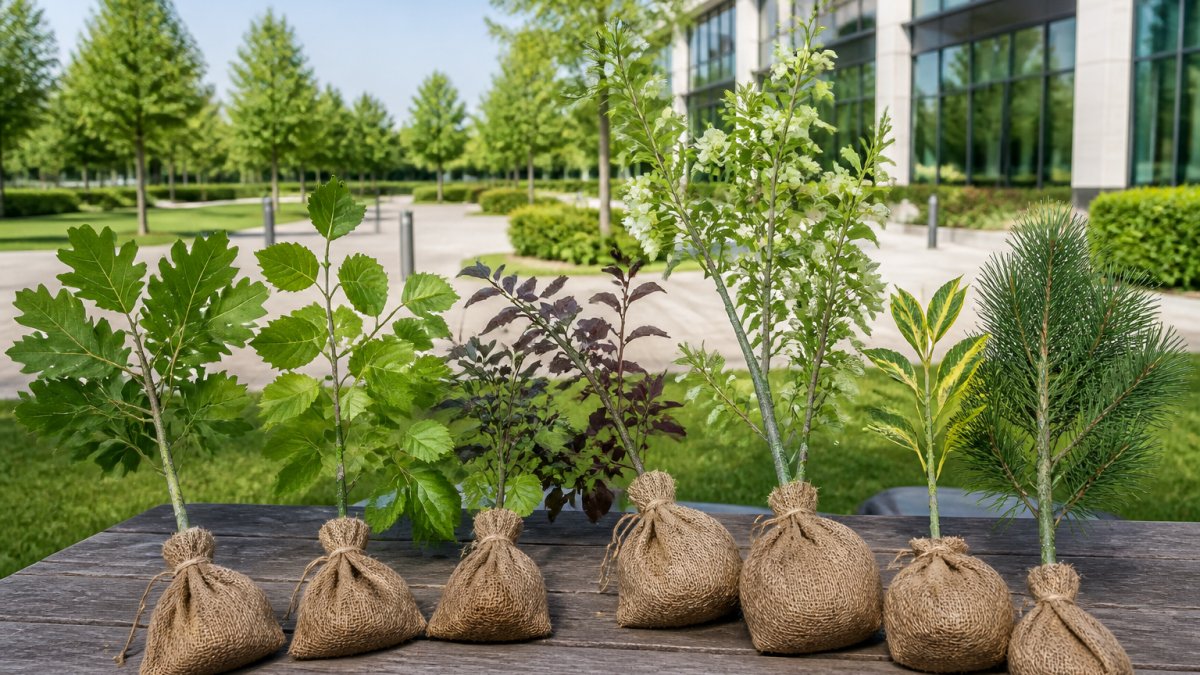
Plant selection is where xeriscaping for commercial properties becomes visually distinctive. Drought-tolerant species aren't limited to sparse minimalism, ornamental grasses, flowering shrubs, and structured evergreens create dynamic, attractive landscapes.
Prioritise native plants. Local species suit regional rainfall, temperature, and soil, establish quickly, need minimal supplemental care, and support biodiversity. Native plantings often qualify for water conservation rebates or grants from local authorities.
Ornamental grasses such as feather reed grass and miscanthus add structure, movement, and height variation while tolerating dry conditions. Flowering shrubs like lavender, rosemary, and buddleia deliver colour on rainfall alone once established.
Evergreens maintain year-round structure and a professional appearance; boxwood, yew, and holly offer formal or informal options. Deciduous shrubs add spring blooms, summer foliage, and autumn colour without constant irrigation.
Groundcovers and sedums fill beds efficiently, suppress weeds, and hide bare soil. They establish quickly, need minimal attention, and are especially valuable where maintenance labour costs are significant.
The specific plant palette depends on your property type and location within the Thames Valley region. 5 Best Drought-Tolerant Shrubs for Office Park Landscaping provides targeted recommendations for commercial spaces. Each selection should balance aesthetic goals with genuine water efficiency and local climate suitability.
Low-Maintenance Commercial Landscaping Benefits
Reduced maintenance is the operational advantage that compounds over time. Traditional landscapes demand weekly mowing, regular trimming, seasonal replanting, irrigation management, and pest control, each requiring labour scheduling, equipment, and budget.
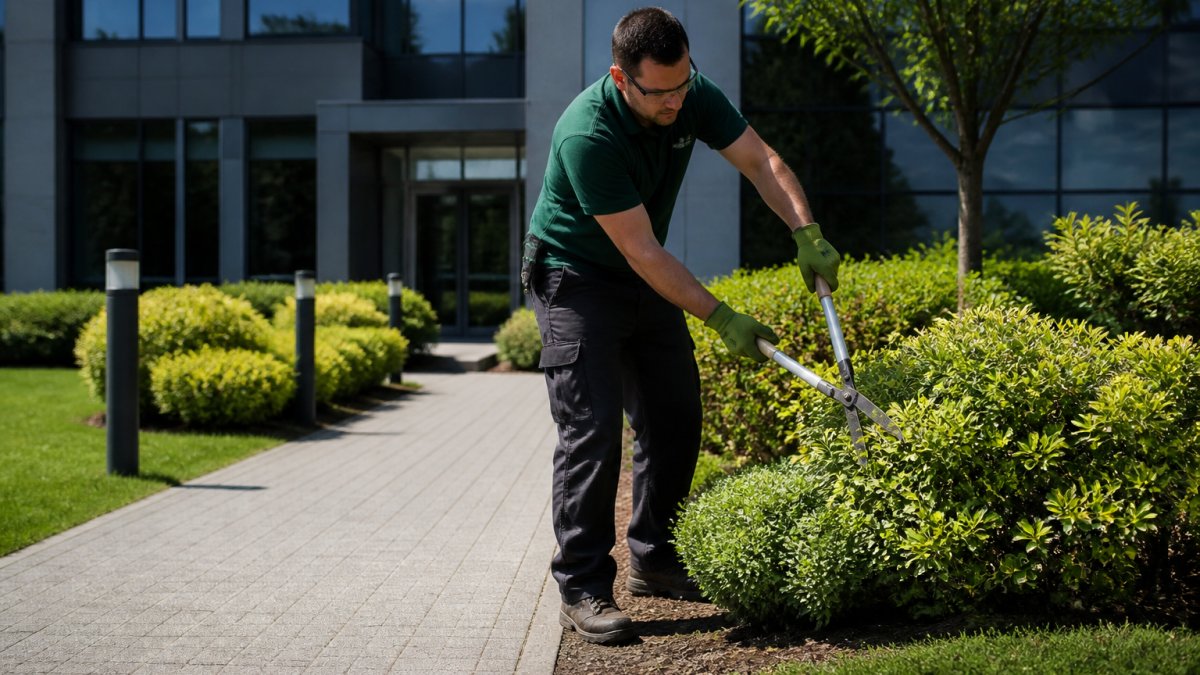
Xeriscaping eliminates or sharply reduces most of these. Mowing frequency drops when ornamental grasses, shrubs, and groundcovers replace expansive turf. Trimming becomes occasional, and replanting cycles extend because established native and adapted species persist for years.
Maintenance costs decline proportionally, freeing labour capacity for other site responsibilities and strategic improvements.
Equipment wear decreases too: mowers, trimmers, and irrigation gear run less often, extending lifespan and cutting replacement costs. Scheduling becomes predictable rather than weather-dependent, improving workforce planning.
Reliability matters most. A landscape designed to thrive locally rarely fails, so you're not managing stressed plants or emergencies. Grounds present professionally year-round, supporting market competitiveness and tenant retention, critical for business parks where appearance influences renewal decisions.
Implementation and Transition Planning
Transitioning to xeriscaping commercial properties requires planning, not wholesale replacement. Phase implementation: convert high-visibility areas first, then expand as budget allows and success becomes visible.
Assess the current landscape: water-intensive areas, struggling plants, peak maintenance demands. This audit identifies priority zones, typically entrances, parking perimeters, and highly visible areas where improved aesthetics deliver immediate impact.
Test soil composition, pH, and drainage before planting, and amend with organic matter to improve water retention and nutrients. This foundation work determines long-term success more than plant selection alone.
Plant in autumn or spring so roots develop before summer stress or winter dormancy. Newly planted species need supplemental watering through the first growing season, normal and temporary, not a permanent commitment.
Budget for upfront soil preparation, mulch, and plant material offset against long-term savings. These costs are typically recouped within 2-3 years through reduced water bills, lower maintenance labour, and fewer emergency repairs.
Eco-Friendly Landscaping Solutions for Office Buildings explores how professional landscaping services can support your implementation. Working with experienced contractors ensures proper soil preparation, appropriate plant selection, and correct installation techniques that maximise long-term success.
Starting Your Xeriscaping Project
Start with clear objectives: water conservation, maintenance costs, or curb appeal? Most properties pursue all three, but clarifying priorities guides design and budget.
Then assess the site: document sun exposure through the day, observe drainage during rainfall (low spots waterlog, high spots may need amendment), and note existing vegetation that performs well, it shows what thrives in your conditions.
Design must balance aesthetics with function: safe walking paths, clear sight lines at entrances and exits, and lighting for evening visibility. Professional design integrates these with visual appeal.
Choose species suited to your soil, drainage, and light rather than appearance alone. Prioritise native species, proven locally and supportive of regional biodiversity.
How to Choose Office Landscaping Contractors provides guidance on selecting experienced professionals for your project. The right contractor understands xeriscaping principles, knows which plants perform well in your region, and can execute installation properly. This expertise directly influences your project's success and long-term satisfaction.
At Pemigogardens, we work with commercial property owners and facilities managers throughout the Thames Valley to implement grounds maintenance that delivers visual appeal and operational efficiency. We understand local conditions, regional plant performance, and the maintenance requirements of different property types, designing landscapes that thrive with minimal intervention while maintaining professional appearance.
Transitioning to xeriscaping for commercial properties is a strategic investment in long-term efficiency and property value. Water conservation, reduced maintenance, and improved reliability compound over time, making your property more resilient, cost-effective, and competitive.
Xeriscaping transforms how commercial properties approach grounds maintenance, addressing rising water costs, labour demands, and maintenance complexity while delivering the presentation that influences business decisions. Whether you manage an office park, business complex, or standalone property, xeriscaping offers a proven path to efficient, reliable, attractive grounds. Sustainable Commercial Landscaping: Benefits for Your Business explores broader sustainability advantages. Native Planting for Commercial Grounds: Cost Reduction Guide details how native species cut water and maintenance costs.
Frequently Asked Questions
How much water can xeriscaping for commercial properties save?
Water savings vary by property type and climate conditions. Native plants and efficient irrigation systems can contribute to reductions in water consumption, directly lowering your utility bills and environmental impact.
What are xeriscape design principles I should follow?
Key xeriscape design principles include planning your layout for water efficiency, improving soil health with organic matter, grouping plants by water needs, using mulch to retain moisture, installing efficient irrigation, and choosing drought-tolerant species. These principles work together to create landscapes that thrive with minimal water, reducing both maintenance and operating costs.
Which drought-tolerant plants work best for commercial landscapes?
Native plants suited to your region, such as ornamental grasses, sedums, and Mediterranean shrubs, perform well in commercial xeriscaping. These species require less water, fertiliser, and pest management than traditional turf. Selecting plants adapted to local ecosystems also supports biodiversity and creates year-round visual interest with minimal maintenance intervention.
Does xeriscaping really reduce maintenance compared to traditional landscaping?
Yes. Low-maintenance commercial landscaping through xeriscaping eliminates frequent watering, reduces mowing, and minimises pest and disease pressure. Drought-tolerant plants need fewer seasonal enhancements and emergency repairs. Over time, this translates to lower labour costs, reduced equipment wear, and fewer site visits, freeing your team to focus on other property priorities.
TELL US Submit
Add pemigogardens.com as a preferred source on Google →

Comments