
Office Exterior Maintenance for Facility Managers: A Complete Guide
Table of Contents
Why Office Exterior Maintenance Matters for Facility Managers
Building a Commercial Building Exterior Maintenance Checklist Seasonal inspection tasks Monthly and quarterly checks
Seasonal inspection tasks
Monthly and quarterly checks
Facility Management Exterior Maintenance Best Practices Preventive versus reactive maintenance strategies Power washing and facade restoration Landscaping, groundskeeping, and litter removal Window cleaning and graffiti prevention
Preventive versus reactive maintenance strategies
Power washing and facade restoration
Landscaping, groundskeeping, and litter removal
Window cleaning and graffiti prevention
Understanding the Cost of Office Exterior Maintenance Capital expenditure planning for asset lifecycle management ROI calculation for exterior upgrades
Capital expenditure planning for asset lifecycle management
ROI calculation for exterior upgrades
Hiring Exterior Maintenance Contractors for Commercial Properties Evaluating contractor management and service level agreements Vendor management KPIs and compliance tracking
Evaluating contractor management and service level agreements
Vendor management KPIs and compliance tracking
Integrating Office Exterior Maintenance into Your CMMS
Common Mistakes Facility Managers Make with Exterior Maintenance
Conclusion
Office Exterior Maintenance for Facility Managers: A Complete Guide
Last Updated: July 21, 2026
Maintaining the exterior of a commercial office building protects your investment, influences client perception, and directly impacts operational efficiency. Office exterior maintenance for facility managers encompasses everything from routine power washing and landscaping to structural inspections and preventive repairs, and it's one of the highest-ROI investments most facilities overlook.
At Pemigogardens, we've worked directly with private offices and business parks across the Thames Valley and M40 corridor to understand what separates facilities that look neglected from those that command respect. The difference rarely comes down to budget. It comes down to strategy.
This guide covers the complete framework for office exterior maintenance: how to build a maintenance checklist that prevents costly repairs, how to balance preventive versus reactive approaches, how to calculate ROI on exterior upgrades, and how to hire contractors who show up consistently.
Why Office Exterior Maintenance Matters for Facility Managers
Your building's exterior is the first thing clients, employees, and investors see. That first impression takes seconds to form and months to change. Beyond aesthetics, exterior maintenance directly affects building integrity, safety compliance, and long-term asset value.
Research from Cornell's Facilities Management Review shows that facilities with consistent exterior upkeep report higher tenant satisfaction and lower vacancy rates. For office parks and private facilities, that translates to easier recruitment, better lease terms, and improved property valuations.
The real cost comes from deferred maintenance. A small crack in the building envelope becomes water infiltration. Water infiltration becomes structural damage. Structural damage becomes a six-figure repair bill. Office exterior maintenance is fundamentally about catching problems at stage one, not stage five.
Pro TipThe most common mistake facility managers make is treating exterior maintenance as a cost center rather than an asset protection strategy. Budget for preventive activity now or budget for emergency repairs later, one always costs less than the other.
Building a Commercial Building Exterior Maintenance Checklist
A proper commercial building exterior maintenance checklist is a structured asset inventory tied to inspection frequency, seasonal conditions, and your specific building type. Without a checklist, maintenance becomes reactive and inconsistent.

Start by documenting your building envelope: roof condition, facade material (brick, stone, glass, metal panels), window frames, sealants, drainage systems, and foundation. Each material has different failure modes and inspection intervals.
Seasonal Inspection Tasks
Spring and fall inspections catch seasonal damage before it compounds. In spring, look for winter damage: cracks from freeze-thaw cycles, debris in gutters, missing caulk around windows, and landscaping damage from salt and ice. Pressure wash the building base where salt spray has accumulated. Check that drainage systems are clear and functioning.
Fall inspections focus on preparation. Clear gutters and downspouts. Inspect roof condition and flashing. Trim tree branches away from the building to prevent storm damage. Check that sealants around windows and doors are intact.
Winter maintenance is limited but critical. Snow removal from walkways and parking areas is both a safety and liability issue. Inspect the building after heavy snow or ice for damage to gutters, downspouts, and roof edges.
Monthly and Quarterly Checks
Monthly inspections don't need to be comprehensive. Walk the perimeter and look for obvious issues: broken windows, damaged siding, graffiti, litter accumulation, or water stains on the facade. These quick 30-minute checks catch small problems before they become visible to clients.
Quarterly checks are more thorough. Inspect all accessible sealants and caulk. Look for cracks in the facade. Check landscaping for dead plants or overgrowth. Inspect parking areas for potholes or striping damage. Document findings with photos to create a visual record of your building's condition over time.
Facility Management Exterior Maintenance Best Practices
The difference between a well-maintained facility and a deteriorating one isn't the amount of money spent. It's the consistency of approach and the clarity of responsibility.
Preventive Versus Reactive Maintenance Strategies
Preventive maintenance means inspecting regularly and fixing small problems before they become big ones. A cracked sealant gets replaced for $200. That same sealant failure left unaddressed leads to water infiltration and costs $5,000 in drywall and structural repairs.
Reactive maintenance is what happens when you skip the inspections. The building looks fine until suddenly it doesn't. A window frame rots. A roof leak spreads across multiple rooms. A facade crack widens. By then, you're managing an emergency instead of a schedule.
Facilities that invest 5% of their budget in preventive activity typically spend 15-20% on reactive repairs. Facilities that invest 15% in preventive activity spend 5-8% on reactive repairs. Prevention costs less.
Key TakeawayA preventive maintenance plan reduces your total maintenance spend by 40-60% over a five-year period compared to reactive-only approaches.
Document your preventive schedule in a facility management system or spreadsheet. Assign responsibility: who inspects what, when, and how findings are reported.
Power Washing and Facade Restoration
Power washing removes accumulated dirt, algae, and salt deposits that degrade the building's appearance and materials. Algae growth on masonry accelerates deterioration. Salt deposits from de-icing corrode metal and damage concrete.
A professional power washing typically costs $1,500-$4,000 for a medium office building, depending on size and material type. It should happen annually or every 18 months depending on your climate and building material.
Facade restoration is deeper work. Cracks in masonry need to be sealed with appropriate caulk or mortar. Damaged siding needs repair or replacement. These tasks require expertise, wrong materials or techniques can cause more damage than the original problem.
When selecting contractors, verify that they understand your specific building material. Pressure washing a delicate stone facade requires different techniques than pressure washing a concrete base.
Landscaping, Groundskeeping, and Litter Removal
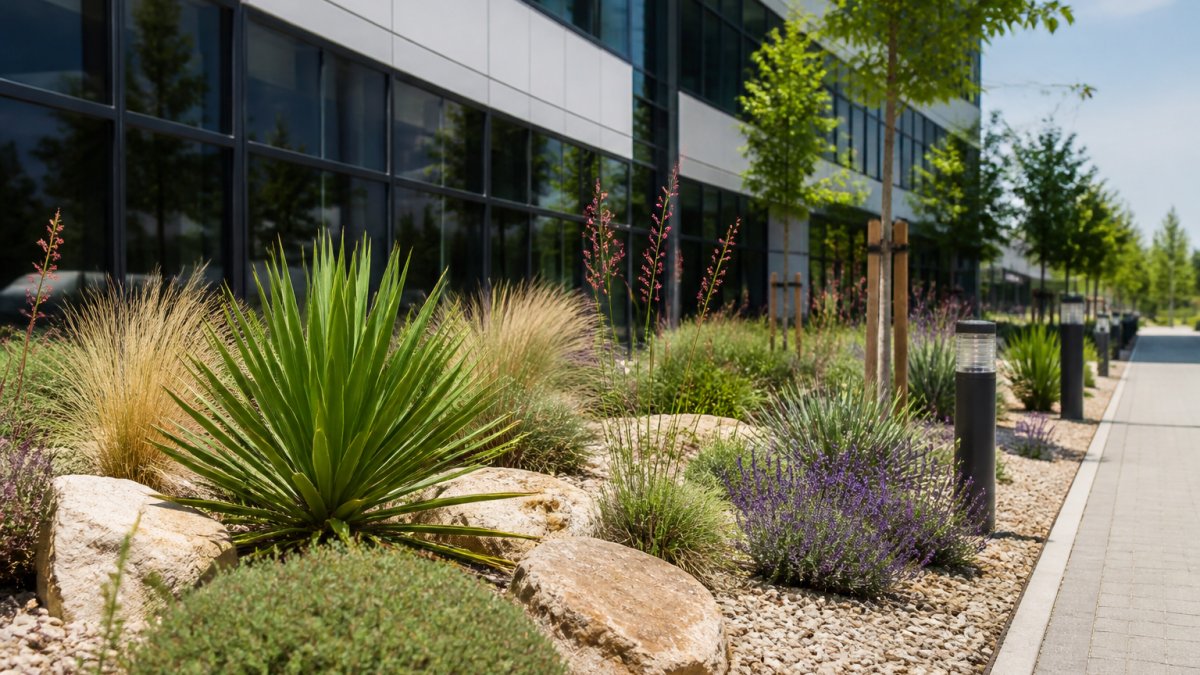
Landscaping isn't just about aesthetics, it protects your building envelope. Overgrown vegetation against the building traps moisture and accelerates facade deterioration. Dead plants signal poor facility management to visitors.
Regular groundskeeping includes mowing, edging, mulch maintenance, and seasonal planting. Litter removal should happen weekly at minimum for office parks and business facilities. A single piece of litter accumulates into a scattered, neglected appearance within days.
Tree maintenance is part of grounds upkeep. Dead branches near the building create hazards and look unprofessional. Branches overhanging the roof can damage gutters and roofing material. Regular tree trimming prevents these issues and keeps the landscape looking intentional.
Window Cleaning and Graffiti Prevention
Clean windows are non-negotiable for office buildings. Dirty windows make the entire facility look neglected. Window cleaning should happen quarterly for most facilities, more frequently in dusty or high-traffic areas.
Graffiti removal should happen within 24-48 hours of discovery. Graffiti that sits visible for weeks signals that the facility doesn't care about its appearance, which invites more tagging. Quick removal sends the opposite message: this facility is maintained and monitored.
Anti-graffiti coatings on vulnerable surfaces make removal easier and discourage repeat tagging. Adequate lighting around the building perimeter deters vandalism.
Understanding the Cost of Office Exterior Maintenance
Facility managers need to understand the cost structure of exterior maintenance to budget effectively. Costs fall into two categories: preventive maintenance (regular, predictable spending) and capital expenditures (larger repairs or upgrades).
Capital Expenditure Planning for Asset Lifecycle Management
Every building component has a lifespan. Roofing typically lasts 15-25 years. Sealants and caulk last 5-10 years. Exterior paint lasts 7-10 years. Understanding these lifecycles lets you plan major expenses rather than scramble for emergency funding.
Create an asset inventory with estimated replacement dates. A 20-year-old roof with 5 years of useful life left should be budgeted for replacement in your capital plan. A building envelope with failing sealants should be budgeted for restoration before water damage occurs.
Capital expenditure planning prevents the "surprise" of major repairs. Instead of a $50,000 roof replacement appearing suddenly, you've been planning and budgeting for it over three years.
ROI Calculation for Exterior Upgrades
Calculate ROI by comparing the cost of the upgrade to the measurable benefit. A $3,000 power washing that improves tenant satisfaction and helps retain one tenant (saving $8,000 in turnover costs) has an ROI of 167% in year one. A $15,000 facade restoration that prevents $50,000 in water damage over five years has an ROI of 233% over that period.
Energy efficiency upgrades (high-performance windows, cool roofing materials) have longer payback periods but significant lifetime value. A $20,000 window replacement that reduces HVAC costs by $200/month has a payback period of 100 months (8.3 years) but continues saving money for the 20+ year lifespan of the windows.
Understand your local market to prioritize upgrades that deliver the highest return for your specific situation.
Hiring Exterior Maintenance Contractors for Commercial Properties
Most facility managers don't have the expertise to perform all exterior maintenance in-house. Hiring the right contractors and managing them effectively is critical to consistent execution.
Evaluating Contractor Management and Service Level Agreements
A service level agreement (SLA) defines what the contractor will do, how often, and what quality standards they'll meet. Without an SLA, you're relying on goodwill and hope.
An SLA for power washing should specify: frequency (annual or semi-annual), pressure settings appropriate to your building material, cleaning solutions used, and weather conditions under which work will be performed. It should specify what happens if work is rescheduled or cancelled and include response time for emergency work like graffiti removal.
An SLA for landscaping should specify: mowing height and frequency, edging standards, mulch maintenance, seasonal planting (if applicable), and litter removal frequency. Specific language like "mow weekly to 2.5 inches, edge all beds, maintain 3-inch mulch depth" prevents misunderstandings.
Response time is critical. If graffiti appears on Monday, you need it removed by Wednesday. If a window breaks, you need it boarded up the same day. Your SLA should specify response times for different types of work.
Before signing a long-term contract, check references. Ask previous clients about reliability. Verify that the contractor has adequate staffing to handle your site plus their other clients.
At Pemigogardens, we work exclusively with private offices and business parks within the M40/M4/Thames Valley Corridor. This geographic focus means we're committed to our local clients. Our team holds health and safety training with Human Focus and delivers comprehensive service including tree surgery, cleaning, and clearance.
Vendor Management KPIs and Compliance Tracking
Track contractor performance against your SLA. Document every visit: what was done, what condition the facility was in, what issues were identified. This creates an audit trail and helps you spot patterns.
Key performance indicators for contractors include:
On-time completion rate
Quality score (based on your inspection of completed work)
Response time to emergency requests
Compliance with safety protocols
Communication responsiveness
Monthly contractor reviews keep everyone aligned. If performance is slipping, address it immediately. Contractors who feel valued and monitored tend to deliver better work.
Compliance tracking is critical for facilities in regulated industries. Document that all work was performed safely, that contractors carried appropriate insurance, and that any chemicals or materials used met environmental standards.
Integrating Office Exterior Maintenance into Your CMMS
A Computerized Maintenance Management System (CMMS) is software that tracks all maintenance activity, generates work orders, and manages contractor relationships. Integrating exterior maintenance into it creates a unified record of everything happening to your building.
Set up work order templates for recurring tasks: monthly perimeter inspections, quarterly detailed inspections, seasonal power washing, landscaping maintenance. The system generates reminders so nothing falls through the cracks.
CMMS integration also helps with compliance tracking. You can pull reports showing when each maintenance task was completed, by whom, and what was found. For contractors, a CMMS simplifies communication and creates accountability.
Common Mistakes Facility Managers Make with Exterior Maintenance
Treating exterior maintenance as a cost center. View exterior maintenance as asset protection, not an expense to minimize. This leads to deferred maintenance, emergency repairs, and ultimately higher total costs.
Inconsistent contractor relationships. Switching contractors every year creates continuity problems. A new contractor doesn't know your building's quirks or history. Consistency matters.
No documentation. Without photos and records of your facility's condition over time, you can't track whether maintenance is working or justify budgets.
Skipping seasonal work. Skipping fall gutter cleaning leads to spring water damage. Seasonal work prevents cascading problems.
Hiring the cheapest option. The lowest bid usually reflects lower quality. A contractor bidding 30% below market rate is either cutting corners or underbidding to win the contract then raising prices later.
Vague contractor agreements. Put everything in writing: what will be done, when, at what standard, and what happens if work isn't completed. A written SLA prevents most contractor conflicts.
Conclusion
Office exterior maintenance for facility managers is essential asset management. A well-executed exterior maintenance program protects your building, improves tenant and client perception, and prevents costly emergency repairs. The strategy is straightforward: prevent problems through regular inspection, respond quickly to issues that arise, and maintain consistent vendor relationships.
If you're managing an office or business park facility in the Thames Valley or M40 corridor, Pemigogardens provides the consistent, tailored grounds maintenance you need. We offer regular site visits throughout the year with comprehensive service including power washing, landscaping, tree surgery, and ongoing grounds upkeep. [TELL US Submit] to discuss how we can support your facility's exterior maintenance program.
Frequently Asked Questions
What does a comprehensive exterior maintenance plan for office buildings include?
A solid exterior maintenance plan covers routine tasks like power washing, window cleaning, landscaping, and litter removal, plus preventive inspections of the building envelope, facade, and structural elements. It should include seasonal tasks, inspection schedules, vendor management protocols, and clear service level agreements. The plan ties directly to your facility management strategy and helps protect property value while ensuring safety compliance.
How often should facility managers conduct inspections for office exterior maintenance?
Most facilities benefit from quarterly site audits, with monthly checks on high-traffic areas like car parks and entrances. After severe weather, conduct immediate inspections for damage. A formal inspection schedule embedded in your CMMS ensures nothing is missed. Climate-specific factors matter too, properties in wet climates may need more frequent gutter and drainage checks, while areas prone to graffiti require more frequent preventive monitoring.
What's the difference between preventive and reactive exterior maintenance?
Preventive maintenance involves scheduled tasks, power washing before buildup occurs, landscaping to maintain curb appeal, regular window cleaning, that stop problems before they start. Reactive maintenance addresses issues after they appear: emergency graffiti removal, facade repairs after damage, or corrective landscaping. Preventive strategies cost less over time, protect structural integrity, and maintain property value. Most facility managers find a 70/30 preventive-to-reactive split optimal.
How do I calculate ROI for office exterior maintenance upgrades?
Track capital expenditure against property value increases and operational savings. Document improvements in curb appeal, reduced emergency repairs, and lower long-term maintenance costs. For example, facade restoration may increase client perception and lease value; regular power washing prevents costly deep cleaning later. Compare quotes from multiple contractors and measure outcomes against baseline conditions. Service level agreements with vendors should include KPIs tied to visible results and compliance standards.
This article was written using GrandRanker

Comments