
Professional Business Landscaping: 8 Key Benefits
Table of Contents
Why Professional Business Landscaping Matters
Enhanced Curb Appeal and First Impressions
Increased Property Value Through Strategic Landscape Investment
Impact of Green Spaces on Workplace Productivity
Professional Image and Brand Identity
How to Choose a Commercial Landscaper What to Look for in Commercial Landscaping Maintenance Services
What to Look for in Commercial Landscaping Maintenance Services
Understanding the Cost of Commercial Landscaping
Year-Round Maintenance and Seasonal Transition Planning
Last Updated: July 15, 2026
Why Professional Business Landscaping Matters
A well-maintained commercial property signals competence, stability, and attention to detail, influencing how clients, employees, and visitors perceive your organization. Most business owners treat landscaping as a cost center rather than a strategic investment. Professional landscaping is actually a performance multiplier, affecting employee retention, client first impressions, property valuation, and operational efficiency simultaneously.
This guide covers eight critical benefits of professional business landscaping that directly influence your bottom line, how to evaluate whether professional maintenance makes sense for your property, and how to calculate return on investment.

Enhanced Curb Appeal and First Impressions
Your property's entrance is a silent salesman. Visitors form opinions about your business within seconds of arrival, and landscaping plays an enormous role in that judgment.
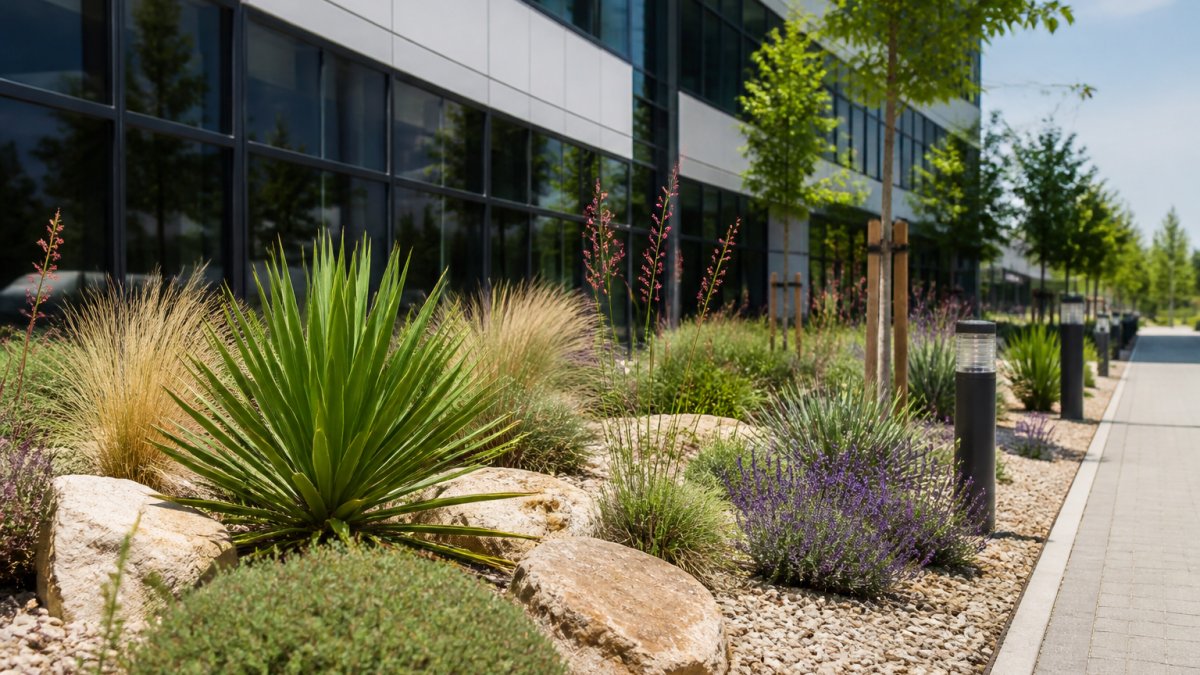
Professional landscape maintenance ensures polished, intentional appearance year-round through consistent mowing, edge trimming, seasonal plantings, and debris removal. When a prospect pulls into your parking lot and sees clean lines, healthy plants, and well-maintained hardscaping, they're already forming positive assumptions about your organization's competence. Research shows that properties with professional landscaping appear more trustworthy and established, translating directly into client acquisition for credibility-dependent businesses.
Professional landscapers understand how to refresh your property through seasonal transitions, spring plantings, summer color, autumn cleanup, winter structure, preventing the "we've given up" look that comes from sporadic maintenance.
Pro TipThe first 30 feet of your property's approach is worth more than the rest of the grounds combined. Focus professional maintenance efforts on entry corridors, parking areas, and the building facade first.
Increased Property Value Through Strategic Landscape Investment
Commercial real estate values are directly tied to property maintenance standards. A well-landscaped property commands higher lease rates, attracts better tenants, and sells for more when you decide to exit.
Professional landscaping contributes to property value by reducing the perception of deferred maintenance and extending the visual lifespan of hardscaping and building infrastructure. A property that looks newer is valued as newer, even if underlying systems are the same age. For investment properties, this translates into measurable returns, properties with professional grounds maintenance command premium lease rates compared to similar properties with basic upkeep. The landscape investment also protects infrastructure through proper drainage management and vegetation control that prevents damage to hardscaping.
Key TakeawayA commercial property with professional landscaping typically commands 5-15% higher lease rates and maintains stronger resale value compared to properties with deferred landscape maintenance.
Impact of Green Spaces on Workplace Productivity
Green spaces directly influence employee mood, stress levels, and productivity. Multiple studies document that employees with access to well-maintained green spaces report lower stress levels and higher job satisfaction, with measurable reductions in sick days and improved focus.
Professional landscaping creates usable outdoor spaces, pathways for walking breaks, seating areas positioned for shade and visual interest, and seasonal plantings that provide natural stress reduction. For business parks and office complexes, professional grounds maintenance directly supports employee retention, particularly among younger workers who value quality outdoor environments. Views of natural elements improve concentration and reduce mental fatigue, while outdoor break spaces encourage movement and social connection, both improving afternoon productivity.
Watch OutNeglected landscaping has the opposite effect. Overgrown plants, dead trees, and accumulated debris create visual stress and signal organizational neglect, directly impacting employee morale and retention.
Professional Image and Brand Identity
Your grounds are an extension of your brand. Professional landscaping communicates consistency, investment, and attention to detail, or the absence of those qualities.
For client-facing businesses, the landscape is part of your brand presentation. A law firm, accounting practice, or consulting firm with professional grounds conveys stability and success. The landscape doesn't need to be elaborate, it needs to be intentional and well-maintained. When showing prospects or clients around your property, grounds maintenance is one of the first things they notice and evaluate. For properties in competitive markets, professional landscaping differentiates you visibly from the street, parking areas, and inside the building. Staff members also feel better about working at a property that looks professional and well-maintained, more likely to recommend the workplace and take pride in their work output.
How to Choose a Commercial Landscaper
Selecting the right landscaping partner is critical. Start with specificity about what you need, regular maintenance only, or design consultation and seasonal enhancements? Do you need specialized services like tree surgery or irrigation management?
Look for contractors who work exclusively with business properties rather than residential clients. Commercial properties require consistency, efficiency, and the ability to work around operational schedules. Check references specifically from properties similar to yours. The service requirements differ enough that a stellar residential reference doesn't guarantee commercial success.
What to Look for in Commercial Landscaping Maintenance Services
Professional landscaping maintenance should include regular site visits (typically weekly during growing season and monthly during dormancy), tailored services matching your specific property needs and budget, and comprehensive offerings including mowing, edging, seasonal plantings, tree care, hardscape maintenance, and debris removal. One contractor handling multiple service types simplifies coordination and accountability.
Verify that the contractor carries proper insurance and maintains health and safety training. Ask about their approach to seasonal transitions and whether they have a winter strategy. Communication matters, you should have a clear point of contact, regular updates on work completed, and a straightforward process for addressing concerns.
Evaluation Criteria | What to Look For | Why It Matters |
Service Scope | Comprehensive (mowing, edging, plantings, tree care) | Reduces coordination complexity and ensures consistency |
Site Visit Frequency | Weekly during growing season, monthly dormancy | Maintains consistent appearance and catches issues early |
Specialization | Commercial properties, not primarily residential | Commercial requirements differ significantly in scale and scheduling |
Insurance & Training | Proper coverage and documented health & safety training | Protects your liability and ensures professional standards |
Seasonal Planning | Clear strategy for spring, summer, fall, winter transitions | Prevents appearance gaps and maintains year-round appeal |
Communication | Dedicated contact, regular updates, issue resolution process | Ensures accountability and quick response to problems |
Understanding the Cost of Commercial Landscaping
Landscaping costs vary based on property size, service scope, regional labor rates, and specific services needed. Most commercial landscaping operates on maintenance contracts providing regular weekly or bi-weekly service during growing season with reduced frequency during dormancy. This model provides consistency and allows contractors to plan resources efficiently.
For accurate pricing on your specific property, you'll need a site evaluation from a qualified contractor assessing square footage, existing vegetation, hardscape conditions, and specialized needs. When evaluating cost, don't compare quotes from contractors offering different service levels. Ensure you're comparing equivalent service packages. Consider the cost of NOT maintaining your property professionally, deferred maintenance becomes exponentially more expensive to address later, and the impact on property value and employee productivity compounds over time.
Pro TipRequest quotes from at least three contractors, but ensure each quote covers the same scope of services. A low-cost quote excluding seasonal maintenance or specialized services isn't a fair comparison to a comprehensive maintenance contract.
Year-Round Maintenance and Seasonal Transition Planning
Professional landscaping is a year-round commitment that changes in scope and focus through the seasons. Spring maintenance focuses on cleanup and renewal, winter debris removal, spring plantings, and transition from dormancy to active growth. Summer maintenance emphasizes consistency through regular mowing, edging, and watering, addressing growth issues and overgrown shrubs. Fall maintenance prepares for dormancy through leaf cleanup, fall plantings, and hardscape preparation. Winter maintenance is minimal for most properties but critical for those with snow and ice, requiring proper drainage management and plant protection.
A professional contractor should provide a seasonal maintenance calendar at the start of each year, outlining what will happen when and why, preventing surprises and ensuring intentional transitions between seasons.
Season | Primary Focus | Key Services | Timeline |
Spring | Cleanup and renewal | Debris removal, plantings, bed preparation | March-May |
Summer | Consistency and growth management | Mowing, edging, watering, weed control | June-August |
Fall | Dormancy preparation | Leaf cleanup, fall plantings, hardscape prep | September-November |
Winter | Protection and minimal maintenance | Drainage management, plant protection, snow removal | December-February |
Professional landscaping is a strategic asset affecting property value, employee productivity, client perception, and operational efficiency. The challenge most businesses face is finding a reliable partner who understands commercial properties and delivers consistent results year-round. Pemigogardens specializes in regular maintenance contracts for private offices and business parks, with comprehensive services including tree surgery, cleaning, and seasonal transitions. Contact Pemigogardens to discuss your property's specific needs and receive a tailored maintenance proposal.
Frequently Asked Questions
What are the main benefits of professional business landscaping?
Professional business landscaping delivers multiple benefits: enhanced curb appeal that creates positive first impressions, increased property value, improved employee productivity through green spaces, professional brand identity, year-round maintenance consistency, and reduced liability risks. Well-maintained commercial grounds also demonstrate attention to detail, boost client retention, and provide environmental health benefits. These advantages combine to deliver measurable ROI through both tangible property appreciation and intangible business reputation gains.
How does commercial landscaping maintenance improve workplace productivity?
Green spaces and well-maintained outdoor environments directly impact employee mood and focus. Research shows that access to landscaped areas reduces stress, improves mental clarity, and increases job satisfaction. Professional landscaping creates inviting outdoor workspaces where employees can take restorative breaks, leading to better concentration and reduced burnout. A property with quality landscape design and maintenance signals to staff that the organization values their well-being, which strengthens employee retention and morale.
How should I choose a commercial landscaper for my business property?
When selecting a commercial landscaper, prioritize companies with proven experience in commercial landscaping maintenance services tailored to your property type. Look for providers offering year-round maintenance contracts, health and safety certifications, and regular site visits. Request references from similar properties and verify they understand your specific needs, whether hardscaping, tree surgery, or seasonal transitions. Avoid one-time service providers; reliable landscapers focus on consistent, long-term maintenance relationships that keep your grounds in pristine condition throughout the year.
What should I expect to pay for professional commercial landscaping?
The cost of commercial landscaping depends on property size, service scope, location, and maintenance frequency. Factors affecting pricing include hardscaping complexity, tree care requirements, irrigation management, and seasonal needs. Rather than seeking generic price quotes, work directly with landscape providers to develop a tailored contract reflecting your specific site needs. Request detailed estimates that break down labor, materials, and equipment costs, and compare value, not just price, across providers to ensure sustainable, long-term landscape investment.
This article was written using GrandRanker

Comments