
Regular Grounds Maintenance for Offices: 7 Essential Benefits
Table of Contents
What Regular Grounds Maintenance for Offices Actually Includes Core Services: Lawn Mowing, Pruning, and Weed Control Extended Services: Tree Surgery, Cleaning, and Seasonal Work
Core Services: Lawn Mowing, Pruning, and Weed Control
Extended Services: Tree Surgery, Cleaning, and Seasonal Work
7 Key Benefits of Professional Grounds Maintenance for Your Office 1. Enhanced Curb Appeal and First Impressions 2. Improved Employee Morale and Productivity 3. Risk Mitigation and Site Safety 4. Property Value Protection 5. Preventative Maintenance Saves Money Long-Term 6. Professional Image and Corporate Reputation 7. Environmental Stewardship and Sustainability
1. Enhanced Curb Appeal and First Impressions
2. Improved Employee Morale and Productivity
3. Risk Mitigation and Site Safety
4. Property Value Protection
5. Preventative Maintenance Saves Money Long-Term
6. Professional Image and Corporate Reputation
7. Environmental Stewardship and Sustainability
Commercial Grounds Maintenance Checklist for Offices Weekly and Bi-Weekly Tasks Monthly and Quarterly Priorities
Weekly and Bi-Weekly Tasks
Monthly and Quarterly Priorities
Seasonal Grounds Maintenance Schedule for Businesses Spring: Growth and Renewal Summer: Active Management Autumn: Preparation and Cleanup Winter: Protection and Accessibility
Spring: Growth and Renewal
Summer: Active Management
Autumn: Preparation and Cleanup
Winter: Protection and Accessibility
Understanding the Cost of Commercial Groundskeeping What Affects Pricing and ROI Why Direct Contracts Offer Better Value Than Managing Agents
What Affects Pricing and ROI
Why Direct Contracts Offer Better Value Than Managing Agents
Choosing a Reliable Grounds Maintenance Partner for Regular Service Red Flags: Inconsistency, Subcontracting, and Hidden Costs What to Look for: Health and Safety Training, Direct Accountability, and Tailored Service
Red Flags: Inconsistency, Subcontracting, and Hidden Costs
What to Look for: Health and Safety Training, Direct Accountability, and Tailored Service
Conclusion: Invest in Consistent, Professional Grounds Maintenance
Regular Grounds Maintenance for Offices: 7 Essential Benefits
Last Updated: July 18, 2026
Regular grounds maintenance for offices is far more than aesthetic upkeep. Commercial properties that invest in consistent grounds care see measurable improvements in employee retention, client perception, and property valuations. At Pemigogardens, we've worked with private offices and business parks across the M40/M4 corridor to demonstrate that regular maintenance contracts, handled by dedicated teams rather than rotating vendors, deliver the reliability and consistency that busy facilities need. This guide covers what grounds maintenance includes, the seven critical benefits your office shouldn't ignore, and how to choose a partner you can trust.
What Regular Grounds Maintenance for Offices Actually Includes
Professional grounds maintenance encompasses core services that keep your property functional and extended services that elevate curb appeal and address seasonal challenges.
Core Services: Lawn Mowing, Pruning, and Weed Control
Lawn mowing forms the backbone of any regular grounds maintenance program. Professional mowing includes edging along walkways, blowing debris from parking areas, and adjusting cutting schedules based on seasonal growth rates. Spring and summer demand weekly or bi-weekly visits; autumn and winter shift to monthly cycles.
Pruning and shrub trimming prevent overgrowth that blocks sightlines, damages hardscaping, or creates safety hazards. Weed control, both preventative and reactive, stops invasive species from overwhelming flower beds and pathways. Most professional teams combine mechanical removal with targeted treatments.
Extended Services: Tree Surgery, Cleaning, and Seasonal Work
Tree surgery and removal require certified arborists and proper equipment. Professional teams assess tree health, identify hazards, and execute removals safely. Hardscape cleaning, pressure washing walkways, and clearing debris directly impact client perception upon arrival. Seasonal work includes spring mulching, summer pest management, autumn leaf removal, and winter de-icing on walkways and parking areas.
7 Key Benefits of Professional Grounds Maintenance for Your Office
The case for regular grounds maintenance rests on seven concrete benefits that affect your bottom line, team wellbeing, and competitive standing.
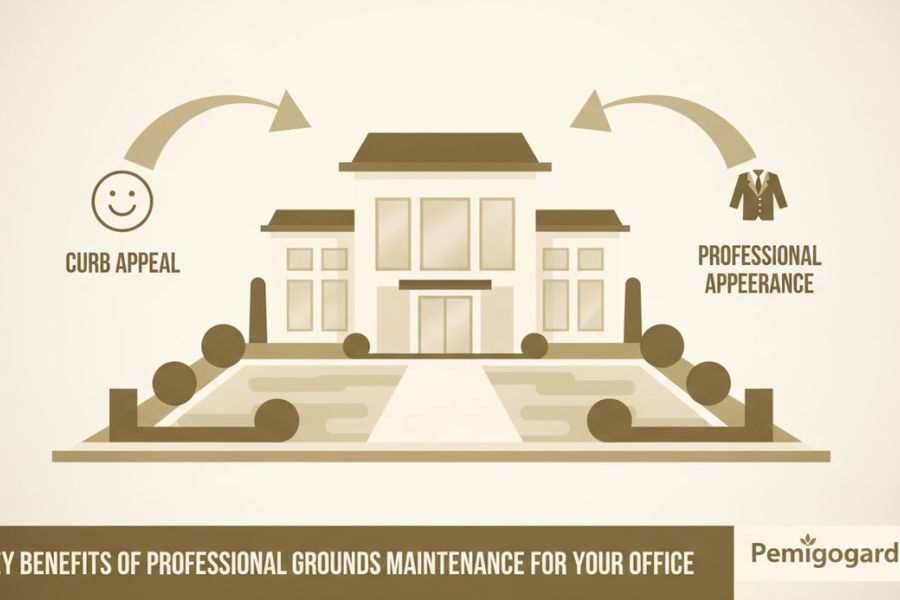
1. Enhanced Curb Appeal and First Impressions
Your grounds are the first thing clients, candidates, and partners see. A well-maintained landscape, clean pathways, and healthy turf signal competence and attention to detail. Research shows that first impressions formed outdoors influence how visitors perceive your entire operation. Regular grounds maintenance ensures your property consistently reflects your brand standards.
2. Improved Employee Morale and Productivity
Employees spend hours in and around your office environment. A well-maintained outdoor space improves daily experience and signals organizational investment in the workplace. Studies consistently link outdoor quality to employee satisfaction and retention.
3. Risk Mitigation and Site Safety
Overgrown vegetation blocks sightlines and creates trip hazards. Dead branches and weak trees pose falling-limb risks. Professional grounds maintenance includes regular safety audits, identifying hazards like broken pavers, water pooling, or overhanging branches before they become insurance claims. A documented maintenance program demonstrates due diligence if incidents occur.
4. Property Value Protection
Commercial real estate valuations account for site condition and curb appeal. Properties with well-maintained grounds command higher lease rates and sell at premiums. Deferred maintenance compounds: a single season of neglected weeding can lead to invasive species taking hold, requiring years of remediation. Regular maintenance prevents deterioration and protects your asset.
5. Preventative Maintenance Saves Money Long-Term
Reactive maintenance costs more than scheduled prevention. Regular pruning prevents branches from damaging gutters. Consistent weed control prevents deep root systems that damage hardscaping. A preventative contract typically costs less over five years than sporadic emergency calls.
6. Professional Image and Corporate Reputation
Your grounds are part of your corporate identity. A clean, well-maintained property reinforces professionalism; neglect undermines your messaging. This matters especially for industries where reputation drives business: professional services, finance, healthcare, and corporate headquarters.
7. Environmental Stewardship and Sustainability
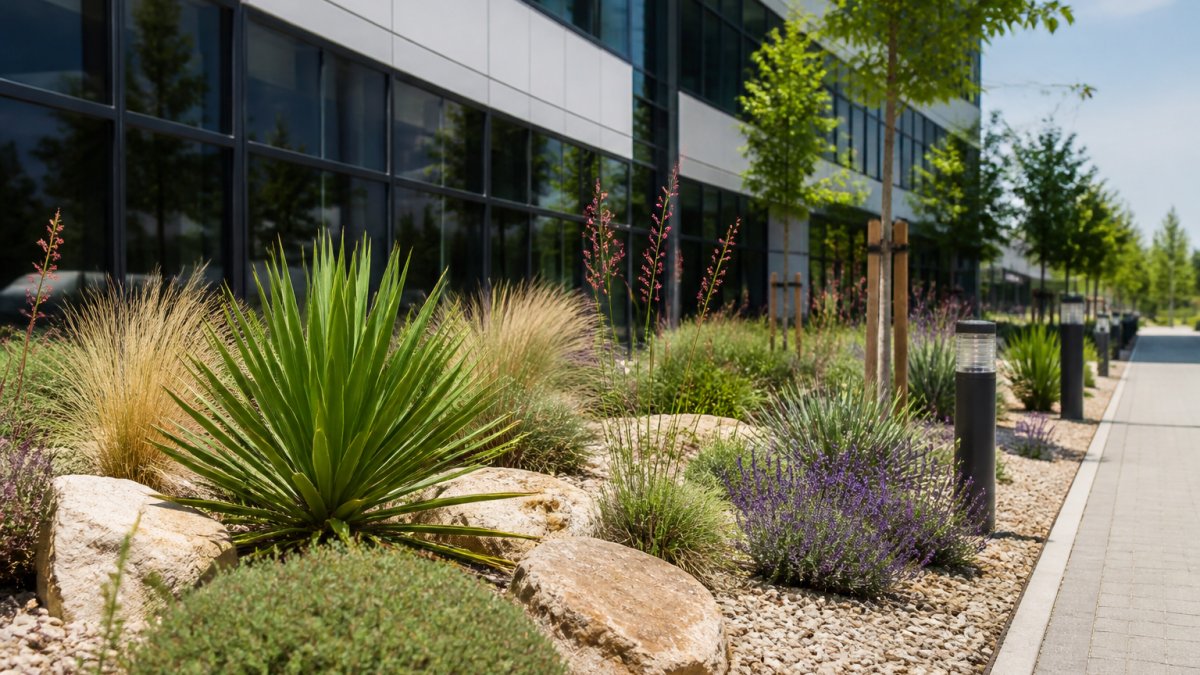
Professional grounds teams adopt sustainable practices: native plantings that reduce water demand, mulching that improves soil health, and integrated pest management that minimizes chemical use. Regular maintenance identifies opportunities for improvement, replacing thirsty turf with drought-resistant alternatives or upgrading irrigation systems.
Commercial Grounds Maintenance Checklist for Offices
A structured schedule ensures nothing falls through the cracks.
Weekly and Bi-Weekly Tasks
Task | Frequency | Duration | Notes |
Lawn mowing | Weekly (growing season) | 2-4 hours | Adjust height based on weather and growth rate |
Edging and blowing | Weekly (growing season) | 1-2 hours | Keeps pathways and parking areas clean |
Litter removal | 2-3x weekly | 30 minutes | Parking areas and building perimeters |
Weed spot-treatment | Weekly (growing season) | 1-2 hours | Prevents establishment in beds and cracks |
Monthly and Quarterly Priorities
Monthly tasks include shrub inspection for dead wood or pest damage, flower bed assessment, and hardscape cleaning. Quarterly work includes deeper pruning, mulch top-ups, and seasonal transitions. This rhythm prevents small issues from becoming major problems.
Seasonal Grounds Maintenance Schedule for Businesses
Each season brings distinct demands. A professional provider adjusts their approach throughout the year.
Spring: Growth and Renewal
Spring is when everything grows. Lawn mowing shifts to weekly schedules. Flower beds get mulched and refreshed. Winter damage, broken branches, and salt staining get addressed. Spring cleanup includes removing accumulated leaves and debris.
Summer: Active Management
Summer means consistent mowing, regular watering, and pest monitoring. Regular site visits catch infestations early. Hardscape maintenance becomes critical as pathway repairs prevent trip hazards during peak client visit periods.
Autumn: Preparation and Cleanup
Leaf removal dominates autumn. Accumulated leaves clog gutters and create slip hazards. Professional teams remove leaves systematically. This season also includes preparing perennials for winter and inspecting trees for winter storm risk.
Winter: Protection and Accessibility
Winter maintenance focuses on safety: de-icing pathways, clearing snow, and managing salt application. This is when many facilities discover their contract didn't cover winter work. A professional team clarifies winter scope upfront.
Understanding the Cost of Commercial Groundskeeping
Pricing depends on property size, complexity, service frequency, and local labor costs. The real ROI question isn't "What's cheapest?" but "What prevents expensive problems?"
What Affects Pricing and ROI
Site size is the primary driver. Complexity matters too: extensive flower beds and mature trees require more specialized work. Service frequency affects cost; weekly mowing costs more than bi-weekly but delivers better results during peak seasons. Geographic location and seasonal demands all factor in. A property that defers maintenance for two years and then needs emergency tree removal spends far more than one investing in consistent upkeep.
Why Direct Contracts Offer Better Value Than Managing Agents
Many offices contract through property-management companies. These middlemen add cost and reduce accountability. Managing agents typically rotate vendors, prioritize cost-cutting over consistency, and don't develop knowledge of your specific site needs.
Direct contracts with dedicated teams eliminate that middleman layer. You work with the same team season after season. They learn your site and preferences. They're accountable directly to you, not to a managing agent balancing dozens of properties. This consistency typically costs less over time because fewer mistakes happen and preventative work actually gets done.
Choosing a Reliable Grounds Maintenance Partner for Regular Service
Not all grounds maintenance providers are equal.
Red Flags: Inconsistency, Subcontracting, and Hidden Costs
Avoid providers who subcontract work to multiple crews. You want the same team showing up regularly. Providers who rotate crews deliver inconsistent results. Hidden costs emerge when contracts don't clarify what's included: winter de-icing, tree removal, pressure washing, flower bed maintenance. Vague contracts lead to disputes. Also watch for providers who disappear after the first year or raise rates dramatically on renewal.
What to Look for: Health and Safety Training, Direct Accountability, and Tailored Service
The best providers hold health and safety training certifications and carry appropriate insurance. Direct accountability matters enormously. Can you reach the same contact person when issues arise? Do they respond within 24 hours? Tailored service means the provider adjusts their approach based on your specific needs rather than treating every site identically.
Conclusion: Invest in Consistent, Professional Grounds Maintenance
Regular grounds maintenance for offices is an investment in property value, employee experience, client perception, and operational safety. The difference between well-maintained and neglected properties compounds over years. What starts as deferred weeding becomes invasive-species problems; skipped pruning becomes safety hazards.
Pemigogardens specializes in reliable, year-round grounds maintenance contracts for private offices and business parks across the M40/M4/Thames Valley Corridor. We work directly with clients, no managing agents or rotating crews, so you get the same team and accountability every season. Our approach includes regular site visits, tailored services matched to your needs, comprehensive work from routine mowing to tree surgery, and health and safety training that protects your liability.
TELL US about your grounds maintenance needs, and let's discuss how consistent, professional service can transform your property.
Frequently Asked Questions
What does regular grounds maintenance for offices include?
Regular grounds maintenance for offices covers lawn mowing, pruning, weed control, fertilization, litter removal, hardscape maintenance, and seasonal cleanup. Professional services also include tree trimming, shrub care, mulching, and site safety inspections. Comprehensive groundskeeping ensures your outdoor space remains safe, accessible, and visually appealing year-round, protecting both employee well-being and corporate image.
How often should office grounds be maintained?
Office grounds typically require weekly or bi-weekly maintenance during active growing seasons (spring and summer), with monthly or quarterly attention in autumn and winter. The exact frequency depends on your property size, climate, landscape complexity, and specific business needs. A tailored grounds maintenance schedule ensures consistent upkeep without unnecessary service interruptions, keeping your site looking professional and safe throughout the year.
What is the cost of commercial groundskeeping for offices?
The cost of commercial groundskeeping varies based on property size, service scope, location, and frequency. Pricing depends on quantity of landscaping, dates of service, and specific requirements like tree surgery or seasonal planting. Direct contracts with dedicated grounds maintenance providers often deliver better value than managing agent arrangements because you avoid middleman markups and benefit from personalized, consistent service tailored to your exact site needs.
How does professional grounds maintenance improve business operations?
Professional grounds maintenance enhances curb appeal, making strong first impressions on clients and visitors. It boosts employee morale by creating a pleasant outdoor environment, reduces safety risks through preventative maintenance, and protects property value. Well-maintained grounds also support site accessibility, reduce liability, and reinforce your corporate image, all factors that contribute to a professional, welcoming workplace that attracts and retains talent.
What should I look for in a reliable grounds maintenance partner?
Choose a provider with direct accountability (not subcontractors), proven health and safety training credentials, and a track record of consistent service. Verify they tailor maintenance to your specific needs rather than offering one-size-fits-all solutions. Request references and ensure they commit to regular site visits throughout the year. Avoid firms that ghost clients or disappear when busier jobs arise, reliability and direct communication are essential for maintaining professional grounds.
[EXTERNAL_LINK: Facility Management Association research on workplace environment impact | fmaa.org]
[EXTERNAL_LINK: Commercial property valuation standards and curb appeal factors | appraisal.org]
[EXTERNAL_LINK: OSHA guidelines on workplace safety and hazard prevention | osha.gov]
This article was written using GrandRanker

Comments