
Spring Landscaping Cleanup Checklist for Offices
Table of Contents
Spring Landscaping Cleanup: Why Your Office Grounds Need It
Step 1: Conduct a Full Site Assessment and Winter Damage Review
Step 2: Clear Debris and Refuse Removal from All Areas
Step 3: Prune Shrubs, Hedges, and Prepare Trees with Professional Tree Surgery Services
Step 4: Control Weeds and Apply Pre-Emergent Herbicide
Step 5: Mulch Application, Lawn Edging, and Soil Preparation
Establishing Commercial Grounds Maintenance Contracts for Year-Round Care
Understanding Commercial Waste Clearance Regulations for Office Landscaping
Frequently Asked Questions
Last Updated: September 22, 2026
Spring Landscaping Cleanup: Why Your Office Grounds Need It
A spring landscaping cleanup transforms how your office looks to clients before they even step inside. Winter damage, accumulated debris, and overgrown vegetation send a message about your business, and it's rarely the one you want. For facility managers and office owners across the Thames Valley, the difference between a neglected landscape and a maintained one affects first impressions, employee morale, and property value.
This guide covers everything you need to know about preparing your commercial grounds for the busy season ahead. A proper spring landscaping cleanup isn't just about aesthetics, it's about establishing the foundation for year-round site upkeep.
The five-step approach outlined here addresses the core tasks that matter most: assessing damage, clearing refuse, pruning vegetation, controlling weeds, and preparing beds for the growing season.
Key Takeaway Spring landscaping cleanup for offices typically runs March through May, depending on local frost risk. The earlier you start, the better your grounds look when client visits peak.
Step 1: Conduct a Full Site Assessment and Winter Damage Review
The first task in any spring landscaping cleanup is a thorough site walk-through to identify what winter has done to your grounds. Frost damage, broken branches, dead patches in turf, and structural damage to hardscape elements all need cataloguing before you plan repairs or removals.
Start at the perimeter and work inward, looking for fallen branches, uprooted shrubs, cracked paving, and water pooling damage. Winter kill, where plants die back completely due to frost or freeze-thaw cycles, is common in exposed beds. Document everything with photos, noting which areas need professional attention versus routine cleanup.

Pay particular attention to irrigation systems and hardscape. Winter damage to pipes, sprinkler heads, and concrete or brick paving creates trip hazards and aesthetic problems. Clear drainage channels and gullies of winter debris before heavy spring rains arrive.
This investment upfront prevents costly mistakes later, such as applying herbicide to areas where new planting is planned.
Pro Tip Take photos during your assessment and store them in a folder dated by season. This creates a visual record of your site's condition year to year, helping you spot recurring problems and plan preventative maintenance.
Step 2: Clear Debris and Refuse Removal from All Areas
Once you've identified damage, the next phase of your spring landscaping cleanup is refuse removal.
Start with large debris: fallen branches, broken limbs, and dead shrub material. Move to smaller debris, fallen leaves, twigs, and scattered plant matter, which accumulates heavily under hedges and in landscape beds.
Check gutters, downpipes, and drainage channels for blockages. Leaves and silt clog these systems, causing water to back up or pool. Clear them completely before spring rains arrive. Pay special attention to car park edges and perimeter areas where debris tends to accumulate.
Green waste must be separated from general refuse and either composted on-site, taken to an authorised waste facility, or collected by a licensed waste contractor. Many office parks benefit from establishing a regular collection schedule with a licensed contractor.
Step 3: Prune Shrubs, Hedges, and Prepare Trees with Professional Tree Surgery Services
Pruning directly impacts curb appeal. Winter damage leaves shrubs and hedges ragged with dead wood and broken branches; removing this restores shape and encourages healthy new growth.
Start with hedges. A light trim removes dead material and encourages dense regrowth. Cut back to just above healthy green growth, never into old wood unless doing a hard renovation.
Remove dead branches, crossing branches that rub together, and growth extending beyond natural form. For evergreen shrubs, prune in spring before active growth; for deciduous shrubs, prune spring-flowering types after bloom, summer bloomers before growth starts.
Trees often require professional tree surgery services, particularly if damage is significant or the tree is mature. A qualified arborist can remove broken limbs, thin crowns, and assess overall tree health. Never attempt large branch removal yourself; falling limbs are dangerous and improper cuts damage the tree permanently.
Professional pruning typically costs more than DIY work but delivers superior results and prevents damage. For office parks with mature trees, this investment protects valuable landscape assets and ensures safety compliance.
Watch Out Never top trees or cut main branches flush to the trunk. This damages the tree's natural healing response and creates entry points for disease. Proper pruning cuts are made just outside the branch collar, allowing the tree to compartmentalise the wound.
Step 4: Control Weeds and Apply Pre-Emergent Herbicide
Spring is when weeds germinate most actively. A proactive approach, applying pre-emergent herbicide before weeds establish, saves weeks of manual removal later. This is a critical step many facility managers overlook, only to spend May and June battling established weeds.
Pre-emergent herbicide works by preventing weed seeds from germinating. It must be applied before soil temperatures consistently reach 13°C, typically in March or early April depending on your location. Once applied, it creates a barrier in the top layer of soil that stops seedlings from establishing. This is far more effective than post-emergent removal after weeds are visible.
Manual weeding addresses established weeds that survived winter or grew before pre-emergent application. Hand-pull weeds in beds, use a hoe in open areas, and target perennial weeds like dandelions and thistles before they flower and set seed. For persistent problem areas, a second application of pre-emergent in late spring (May) catches later-germinating weeds.
In landscape beds, weed suppression improves dramatically when combined with mulch application (covered in the next step). Mulch blocks light and prevents weed seeds from reaching soil, complementing chemical weed control. The combination is more effective than either method alone.
Timing and consistency matter. A single application in March works well if followed by regular monitoring. Many office parks benefit from a scheduled maintenance contract that includes spring herbicide application and summer follow-up, ensuring consistent weed control throughout the season.
Step 5: Mulch Application, Lawn Edging, and Soil Preparation
The final major step in your spring landscaping cleanup is preparing beds and borders for the growing season. This involves mulch application, lawn edging, and soil amendment, work that directly improves aesthetic maintenance and plant health for months to come.
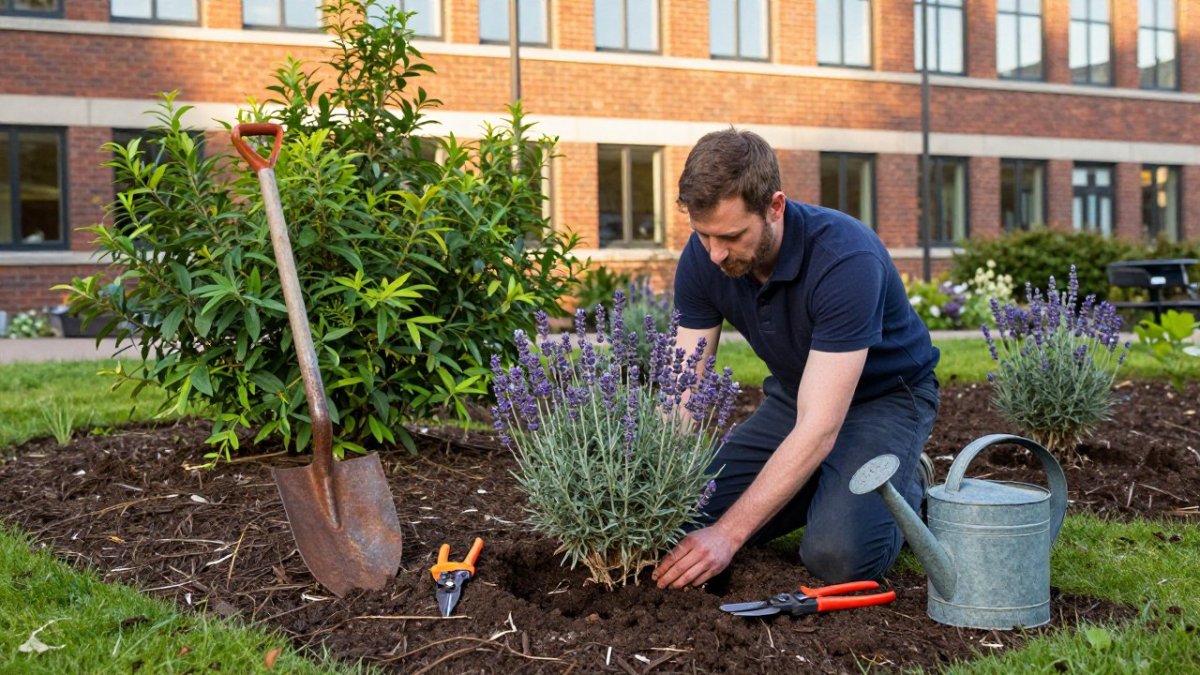
Mulch application serves multiple purposes: it suppresses weeds, retains soil moisture, regulates soil temperature, and improves visual appearance. Apply 50-75mm of mulch around shrubs and in landscape beds, keeping it 150mm away from tree trunks and shrub stems to prevent rot. Organic mulches (bark chips, wood fibre) break down over time and improve soil structure; inorganic mulches (gravel, slate) last longer but don't enrich soil. Most office parks prefer organic mulch for aesthetics and environmental benefits.
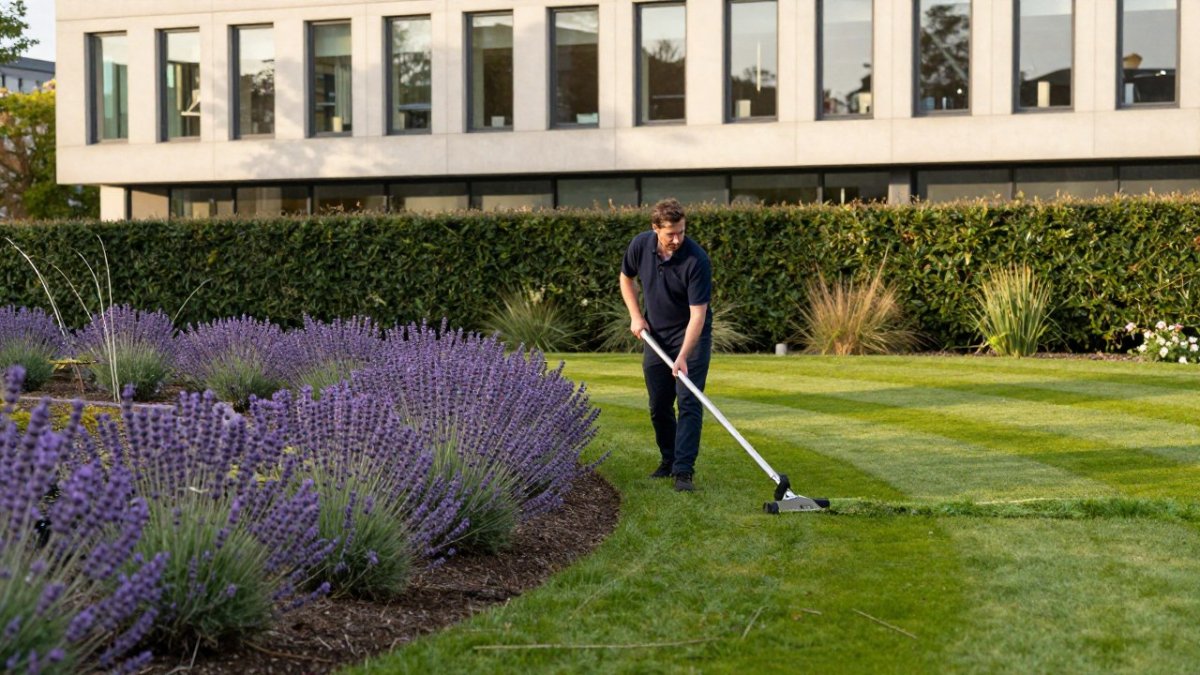
Lawn edging defines the boundary between turf and landscape beds, creating crisp lines that improve overall appearance. Hard edging (metal or plastic borders) lasts years and requires minimal maintenance. Soft edging (hand-cut or machine-cut borders) needs annual renewal but offers flexibility in bed shape. Well-defined edges make the entire landscape look intentional and maintained, even if other elements are modest.
Soil preparation addresses compaction and nutrient depletion from winter and previous seasons. Core aeration (removing small plugs of soil) relieves compaction, improves drainage, and encourages root growth. Adding compost or organic matter to beds improves soil structure and provides slow-release nutrients. This work is often overlooked but delivers measurable benefits in plant vigour and turf health through the season.
These tasks typically take 2-3 days for a standard office park.
Establishing Commercial Grounds Maintenance Contracts for Year-Round Care
Spring cleanup is a one-time effort, but maintaining those results requires consistent, planned maintenance through the year. A formal grounds maintenance contract ensures that your office landscape doesn't slip back into neglect by summer or autumn.
Best For Office parks with mixed plantings, regular client visits, and specific aesthetic requirements benefit most from tailored maintenance contracts. Standard mowing services miss the detail work that creates professional curb appeal.
Understanding Commercial Waste Clearance Regulations for Office Landscaping
Garden waste from spring landscaping cleanup must be disposed of according to environmental regulations. Understanding these rules prevents costly compliance issues and supports sustainable practice.
Task | Timing | Frequency | Outcome |
Site assessment and damage review | March-April | Once per spring | Identifies priorities and cost drivers |
Debris and refuse removal | March-April | Once per spring | Clear, safe grounds ready for maintenance |
Pruning shrubs, hedges, trees | March-May | Once per spring | Healthy growth, improved aesthetics |
Weed control and pre-emergent application | March-April | Once per spring, optional repeat May | Reduced weed pressure through season |
Mulch application and lawn edging | April-May | Once per spring | Improved appearance, reduced maintenance |
Establish maintenance contract | April onwards | Year-round | Consistent upkeep, predictable costs |
Frequently Asked Questions
What should be included in a commercial spring landscaping cleanup?
A thorough spring landscaping cleanup for office grounds covers site assessment for winter damage, debris and refuse removal, pruning of shrubs and hedges, weed control with pre-emergent herbicide application, mulch refreshing, lawn edging definition, and inspection of irrigation systems. The goal is to restore curb appeal, remove winter kill from plants, and prepare landscape beds for the growing season. Professional teams also check hardscape surfaces and drainage to prevent water pooling.
How often should office grounds be maintained in the spring?
Spring maintenance typically requires weekly or fortnightly visits during March through May as growth accelerates. Most office properties benefit from regular site visits on a fixed schedule, such as Thursday mornings before client meetings, to maintain consistent curb appeal. After initial spring cleanup, ongoing commercial grounds maintenance contracts usually shift to a maintenance rhythm that prevents weeds, manages new growth, and keeps landscape beds tidy throughout the season.
What regulations apply to commercial waste clearance from office landscaping?
All garden waste, pruning debris, and refuse from landscaping must be disposed of at licensed waste facilities or composted. Always confirm your contractor understands commercial waste clearance regulations before signing a contract.
Why is professional grounds maintenance important for business parks?
Professional grounds maintenance directly impacts client perception and property value. Well-maintained landscape beds, healthy turf, and tidy hardscape surfaces create a professional first impression that reflects on your business. Regular maintenance prevents costly problems, such as overgrown shrubs damaging buildings or poor drainage causing flooding, and extends the life of planted areas. For business parks with multiple tenants, consistent maintenance ensures all properties meet a unified standard, reducing complaints and supporting lease retention.
TELL US Submit
Comments