
How to Improve Office Curb Appeal: 7 Steps
Updated: Sep 16
Table of Contents
Why Office Curb Appeal Matters for Your Business
Step 1: Refresh Exterior Paint and Facade
Step 2: Upgrade Your Entrance and Front Door
Step 3: Commercial Landscaping Ideas UK for Your Site
Hardscaping and Walkway Maintenance
Seasonal Planting and Colour
Step 4: Install Professional Exterior Lighting
Step 5: Commercial Signage Regulations UK and Visibility
Step 6: Office Exterior Maintenance Tips for Year-Round Care
Cleaning Paths, Driveways, and Car Parks
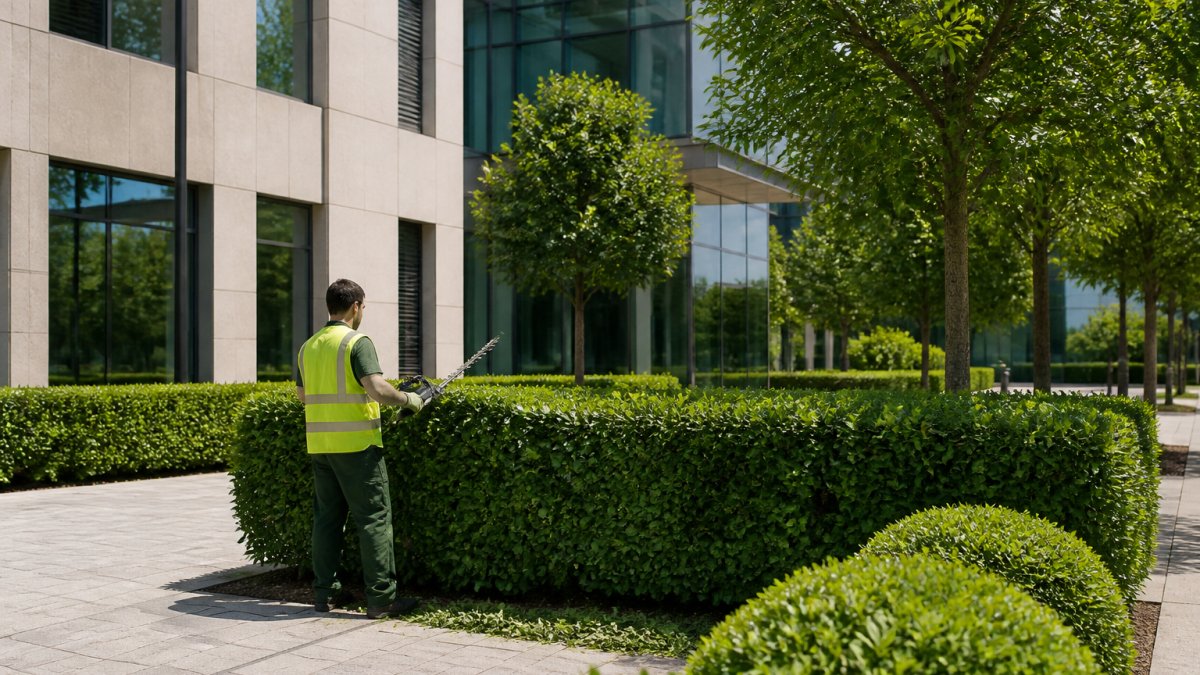
Regular Turf and Landscaping Maintenance Schedule
Step 7: Measure the Impact on Property Value and Brand Perception
Last Updated: August 10, 2026
Why Office Curb Appeal Matters for Your Business
Your office exterior is the first thing clients, partners, and potential employees see. A well-maintained facade, clean pathways, and professional landscaping signal competence and attention to detail. Conversely, peeling paint, overgrown vegetation, or cluttered entrances suggest neglect, regardless of how excellent your services are.
Improving office curb appeal directly influences how prospects evaluate your credibility. This matters particularly in the Thames Valley and M40 corridor, where private office buildings compete for tenants and clients based partly on physical presentation. A well-maintained property attracts better-quality enquiries and justifies premium rental rates.
Consistent grounds maintenance also protects your property investment. Regular attention to landscaping, exterior paintwork, and hardscaping prevents small issues from becoming expensive repairs. Seasonal planting keeps your site visually dynamic, while professional lighting transforms how your building appears after hours.
Below are seven actionable steps to elevate your office's exterior presentation. Whether you're managing a single building or multiple sites across Berkshire, Buckinghamshire, or Oxfordshire, these strategies deliver measurable improvements.
Step 1: Refresh Exterior Paint and Facade
Faded, peeling, or discoloured paint immediately communicates poor maintenance. A professional exterior refresh transforms the entire perception of your property.
Assess what needs attention by walking around your building in daylight and noting areas where paint is chalking, cracking, or showing water damage. Pay particular attention to south-facing walls, which weather faster due to UV exposure.
Neutral tones, soft greys, warm whites, and muted earth tones project professionalism and broad appeal. Avoid bold colours unless they align with your brand identity. Spring and autumn offer ideal conditions for painting: moderate temperatures and lower humidity allow paint to cure properly.
Professional painters will prepare surfaces thoroughly, including pressure washing and filling cracks, which extends the longevity of your finish. The investment typically pays for itself through improved property perception and delayed need for future maintenance.
Step 2: Upgrade Your Entrance and Front Door
Your entrance is where first impressions crystallize into lasting judgments. A worn, uninviting entry point undermines everything else you've done to improve office curb appeal.
Assess your current entrance honestly. Is the door scratched, faded, or difficult to operate? Modern entrance doors in aluminium or composite materials resist weathering better than older timber frames and require less maintenance long-term.
Lighting around your entrance is equally important. A well-lit doorway feels safer and more professional, particularly in winter months. Install recessed spotlights or contemporary wall lights that illuminate the entry without creating harsh shadows.
Replace worn door handles, hinges, and locks with quality fixtures that match your overall design aesthetic. These small touches contribute to the polished, professional appearance that attracts the right clients and tenants.
Step 3: Commercial Landscaping Ideas UK for Your Site
Thoughtful landscaping transforms bare ground into a curated extension of your brand identity. Commercial landscaping balances visual appeal with durability, low maintenance, and year-round performance.

Hardscaping and Walkway Maintenance
Hardscaping, paving, pathways, and structural elements, forms the backbone of your commercial landscape. Quality hardscaping materials create clean lines, define spaces, and improve accessibility. In the UK climate, choose materials that withstand moisture and frost cycles without becoming slippery or deteriorating rapidly.
Tarmac and block paving are common for car parks and main pathways. Tarmac needs resealing every 3-5 years to prevent cracking, while block paving benefits from occasional weeding and re-sanding. Natural stone, slate, granite, or sandstone, delivers a premium appearance and excellent durability, aging gracefully over time.
Cleanliness of hardscaping directly impacts how well-maintained your entire property appears. Pathways free of moss, algae, and debris signal active, professional management. Regular pressure washing keeps hard surfaces looking fresh.
Seasonal Planting and Colour
Static landscaping looks tired within months. Seasonal planting keeps your commercial property visually dynamic. Spring bulbs deliver reliable colour with minimal effort. Summer bedding offers flexibility: refresh displays as seasons change.
Choose plants suited to your site's conditions. Native species often perform better than exotic imports, requiring less water and fewer interventions. Evergreen shrubs provide year-round structure, while deciduous trees create seasonal interest and summer shade.
Planting beds benefit from clear edging and consistent mulching. Bark mulch suppresses weeds, regulates soil moisture, and looks professionally maintained. Refresh mulch annually. A maintenance schedule ensures your landscaping stays ahead of neglect.
Step 4: Install Professional Exterior Lighting
Darkness transforms how your building appears. Without strategic lighting, even a beautifully maintained office looks abandoned after sunset. Professional exterior lighting enhances aesthetics and improves security and wayfinding for evening visitors.

Uplighting on architectural features, stonework, trees, and signage creates visual interest. Pathway lighting improves safety and guides visitors to entrances. Downlighting from eaves illuminates landscaping without creating glare.
LED technology has transformed exterior lighting economics. Modern LED fixtures consume a fraction of the energy of older systems and last significantly longer. Warm white (2700K-3000K) feels welcoming, while cooler white (4000K) projects modernity.
Programmable systems adjust lighting based on daylight levels and time of year, ensuring your building always appears well-lit without wasteful overnight illumination. Professional installation ensures proper wiring, weatherproofing, and compliance with electrical standards.
Step 5: Commercial Signage Regulations UK and Visibility
Your signage is functional branding that tells visitors where to go and reinforces your business identity. Commercial signage regulations UK impose specific requirements on size, materials, lighting, and placement.
In England, most commercial signage falls under planning control. Signs must not obscure important architectural features, and their size must be proportionate to the building. Listed buildings have stricter requirements. Illuminated signs require electrical certification and must meet building regulations.
Visibility and legibility determine how effectively your signage works. Choose fonts and colours with sufficient contrast. Sans-serif typefaces read more clearly from distance. Dark text on light backgrounds ensures visibility in varying light conditions.
Material selection balances aesthetics with durability. Powder-coated aluminium resists weathering and fading. Acrylic or polycarbonate faces maintain clarity longer than painted wood. LED-lit signs offer flexibility and energy efficiency.
Professional sign companies understand local regulations and best practices. They'll advise on positioning for maximum visibility, material selection for your climate, and compliance with planning requirements.
Step 6: Office Exterior Maintenance Tips for Year-Round Care
Consistent maintenance prevents small issues from becoming expensive problems. A structured approach to year-round care keeps your property looking professional across seasons.
Cleaning Paths, Driveways, and Car Parks
Cleanliness is the most visible indicator of property management. Dirty pathways, oil-stained car parks, and debris-covered surfaces immediately suggest poor maintenance.
Pressure washing removes moss, algae, and accumulated grime from hard surfaces. In the UK's damp climate, organic growth develops quickly on north-facing surfaces. Regular pressure washing (quarterly or twice yearly) prevents slippery surfaces and maintains visual standards.
Car park maintenance deserves particular attention. Regular sweeping removes loose material. Absorbent granules address fresh oil spills. Repainting line markings annually maintains clarity. Pothole repair prevents vehicle damage and shows active management.
Winter maintenance is critical. Gritting paths and car parks prevents ice formation and improves safety. Clearing snow and ice promptly signals professional management.
Regular Turf and Landscaping Maintenance Schedule
A maintenance schedule ensures nothing falls through the cracks. Consistency matters more than intensity.
Spring (March-May): Prune winter-damaged growth, apply fresh mulch to planting beds, plant summer bedding after frost risk passes, scarify and overseed grass areas, pressure wash winter grime from hardscaping.
Summer (June-August): Deadhead flowering plants to encourage continued blooms, water during dry spells, mow grass regularly, monitor for pest or disease issues, trim back encroaching vegetation.
Autumn (September-November): Plant spring bulbs, clear fallen leaves from planting beds and gutters, prune deciduous plants, apply autumn feed to grass, prepare tender plants for winter.
Winter (December-February): Grit and salt paths and car parks, clear snow promptly, prune deciduous trees and shrubs, apply winter protection to tender plants, inspect hardscaping for frost damage.
Regular professional maintenance delivers consistency that in-house teams struggle to maintain. For offices across the M40/M4 corridor, Pemigogardens provides tailored maintenance contracts that adapt to your specific site needs.
Maintenance Task | Frequency | Season | Impact on Curb Appeal |
Pressure washing hard surfaces | Quarterly or twice yearly | Spring, autumn | High, immediately visible improvement |
Grass cutting | Weekly or fortnightly | Spring-autumn | High, overgrown grass signals neglect |
Planting bed maintenance | Monthly | Year-round | Medium, prevents weeds and decay |
Car park sweeping | Weekly or bi-weekly | Year-round | High, cleanliness is immediately obvious |
Gritting and salt application | As required | Winter | High, safety and professional appearance |
Deadheading and pruning | Monthly | Growing season | Medium, maintains plant health and shape |
Mulch refresh | Annually | Spring | Medium, improves appearance and function |
Line marking refresh | Annually | Spring | Medium, maintains organization and clarity |
Step 7: Measure the Impact on Property Value and Brand Perception
Improving your office curb appeal delivers measurable returns. Property value correlates directly with condition and appearance. A well-maintained exterior with professional landscaping, updated entrance features, and strategic lighting commands higher lease rates and attracts better-quality tenants.
Brand perception shifts subtly but powerfully when you improve office curb appeal. Clients arriving at a well-presented building form positive impressions before entering. Employees feel pride working at a professionally maintained property. Job candidates evaluate your company partly through physical environment.
Photograph your property before improvements. Document visitor feedback and client comments. Track any changes in enquiry volume or quality after improvements. For businesses managing multiple properties, consistent standards reinforce brand consistency.
Professional grounds maintenance ensures sustained improvement. Initial investment in refreshing paint, upgrading entrances, and installing lighting delivers immediate impact. Maintaining that improvement requires ongoing attention. Pemigogardens works exclusively with private offices and business parks across the M40/M4 corridor, providing regular maintenance contracts that keep your property looking professional year-round.
Improving your office curb appeal isn't a one-time project, it's a commitment to how your property presents itself to the world. From refreshed exterior paintwork to professional landscaping and strategic lighting, each element contributes to a cohesive impression of competence and care. When you maintain these improvements consistently, your property becomes a genuine asset to your business. Pemigogardens helps private offices and business parks across Berkshire, Buckinghamshire, and Oxfordshire maintain this standard through tailored, reliable grounds maintenance contracts. TELL US your specific site needs, and we'll create a maintenance schedule that keeps your exterior looking professional throughout the year.
Frequently Asked Questions
How does landscaping impact business curb appeal?
Professional landscaping creates an immediate visual impact that signals competence and care to visitors and clients. Well-maintained turf, seasonal planting, and hardscaping define the exterior aesthetics of your office, influencing first impressions within seconds. Regular landscaping maintenance demonstrates proactive property care, which directly affects how potential clients and employees perceive your business's professionalism and stability.
What are the most cost-effective ways to improve office exterior appearance?
Start with high-impact, low-cost improvements: clean driveways and pathways, refresh entrance signage, add seasonal colour through planting, and install basic exterior lighting. These enhancements deliver strong visual results without major investment. Regular maintenance schedules prevent costly repairs later. Professional grounds maintenance contracts ensure consistent upkeep throughout the year, protecting your property value and brand identity without unexpected expenses.
Do local planning regulations affect office exterior renovations in the UK?
Yes. Commercial signage must comply with local planning authority regulations regarding size, illumination, and positioning. Facade changes, new landscaping features, and external lighting may require planning permission depending on your location and the scale of work. The Local Government Association provides guidance for your specific area. Consulting your local planning authority before major exterior work prevents costly delays and ensures compliance with building regulations.
How often should a business refresh its exterior signage and entrance?
Signage and entrance features should be inspected quarterly and refreshed every 2-3 years or when showing visible wear. Weather, UV exposure, and foot traffic degrade paint and materials quickly. Regular maintenance extends the lifespan and keeps your brand identity sharp. For seasonal colour and landscaping, plan refreshes at least twice yearly, spring planting and autumn/winter preparation. Consistent, proactive care maintains your professional appearance year-round.
TELL US Submit
This article was written using GrandRanker


Comments