
Year-Round Grounds Maintenance: 7 Key Benefits
Table of Contents
Why Year-Round Grounds Maintenance Matters for Commercial Properties
1. Enhanced Curb Appeal and First Impressions
2. Increased Property Value Through Consistent Landscaping
3. Early Detection and Prevention of Lawn and Turf Problems
4. Effective Weed and Pest Control Throughout the Year
5. Improved Soil Health and Root Development
6. Creating a Grounds Maintenance Checklist for Seasonal Care Spring Tasks Summer Tasks Autumn Tasks Winter Tasks
Spring Tasks
Summer Tasks
Autumn Tasks
Winter Tasks
7. Cost Savings and Long-Term ROI of Preventative Grounds Maintenance DIY vs. Professional Service: Where the Real Value Lies Commercial vs. Residential ROI Considerations
DIY vs. Professional Service: Where the Real Value Lies
Commercial vs. Residential ROI Considerations
Last Updated: July 22, 2026
Why Year-Round Grounds Maintenance Matters for Commercial Properties
Consistent grounds maintenance extends far beyond aesthetics. Commercial properties receiving seasonal care command higher occupancy rates, attract premium tenants, and project stability to clients. Reactive maintenance allows small problems to compound, dead trees require removal, weeds spread into hardscaping, and soil degradation weakens root systems. According to research on commercial property maintenance, properties with well-maintained landscapes experience lower vacancy rates and faster lease renewals.
The real challenge is maintaining consistency across all four seasons. Spring requires debris removal and soil preparation. Summer demands regular mowing, irrigation management, and pest control. Autumn needs leaf collection and dormancy preparation. Winter involves monitoring for damage and planning improvements. Without a structured approach and reliable contractor, maintenance gaps emerge and problems multiply.
Below, we'll show you exactly how year-round grounds maintenance benefits your property, why professional consistency matters, and how to build a maintenance calendar that works.
1. Enhanced Curb Appeal and First Impressions
Curb appeal is foundational to commercial success. Properties with manicured landscape beds, healthy turf, and debris-free grounds communicate professionalism immediately. A landscape bed filled with healthy mulch and seasonal color signals investment. Bare patches, overgrown weeds, and scattered leaves signal indifference.
Consistency matters more than perfection. A property that looks slightly better every week outperforms one that looks pristine once yearly then deteriorates. Regular mowing maintains uniform turf height. Weekly debris removal prevents accumulation. Seasonal plantings refresh visual interest. These small, consistent improvements compound into a property that always looks managed.
Pro TipSchedule grounds maintenance visits before peak client meeting times. If your office park hosts Friday morning client meetings, ensure mowing and cleanup happen Thursday afternoons.
2. Increased Property Value Through Consistent Landscaping
Landscape investment directly affects property valuation. Commercial real estate appraisers factor grounds maintenance into assessments. According to commercial real estate valuation standards, properties with professional landscape maintenance see 5-10% higher assessed values. For a $5 million office park, that's a $250,000 to $500,000 difference.
Consistency amplifies this effect. A landscape maintained every season shows stability. Trees grow healthier. Soil improves. Plantings mature. Professional landscaping also prevents costly damage, regular tree inspection catches disease early, soil health monitoring prevents erosion, and weed suppression prevents hardscape damage.
3. Early Detection and Prevention of Lawn and Turf Problems
Problems hide until they're severe. A small patch of disease spreads across your entire lawn in weeks. A single pest infestation multiplies into thousands. Year-round grounds maintenance catches these issues early, when solutions are simple and affordable.
Regular site visits reveal problems before they become emergencies. A grounds maintenance professional notices the first signs of fungal disease, pest activity, or nutrient deficiency. Early intervention, adjusting irrigation, applying targeted treatments, or modifying soil, prevents widespread damage. By the time a problem becomes visible to clients, it's already expensive.
Watch OutIgnoring small turf problems costs 10-20 times more to fix later. A fungal disease caught in week two costs $500 to treat. The same disease left untreated for two months requires complete turf replacement at $5,000+.
4. Effective Weed and Pest Control Throughout the Year
Weed suppression is a seasonal strategy, not a single task. Spring brings dormant weed seeds to life. Summer requires aggressive management. Autumn needs preparation to prevent winter germination. Year-round grounds maintenance addresses weeds at each life stage, preventing infestations that devastate landscape beds and turf.
Different pests emerge in different seasons. Grubs damage turf in summer and fall. Insects damage ornamental plantings in spring. Rodents shelter in winter. Professional weed and pest control uses timing and prevention. Proper mulching suppresses weeds mechanically. Healthy turf outcompetes weeds naturally. Seasonal treatments target pests at vulnerable life stages. Consistency is critical, skipping one month of weed management allows seeds to set, and missing one pest treatment window allows populations to explode.
5. Improved Soil Health and Root Development
Healthy soil is foundational. Poor soil produces weak plants, thin turf, and persistent problems. Excellent soil produces vigorous growth, disease resistance, and long-term stability. Year-round grounds maintenance builds soil health through consistent care.
Soil improvement happens slowly. Aeration improves compaction and nutrient absorption. Organic matter additions improve water retention and microbial activity. Proper fertilization schedules ensure nutrient availability during growth cycles. Regular soil testing reveals nutrient deficiencies and pH imbalances before they cause visible problems. Adjusted fertilization schedules match plant growth cycles, spring applications support new growth, summer applications maintain vigor, autumn applications prepare roots for dormancy.
Root development depends on soil conditions. Compacted soil restricts root penetration. Poor drainage causes root rot. Nutrient-poor soil produces shallow, weak roots. Professional grounds maintenance addresses these factors through dethatching, aeration, and proper amendment.
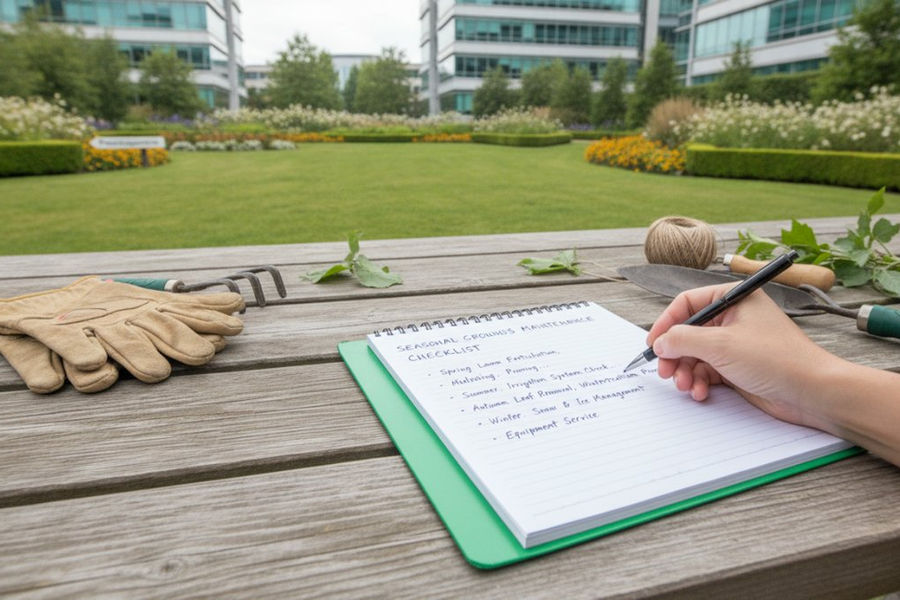
6. Creating a Grounds Maintenance Checklist for Seasonal Care
A grounds maintenance checklist transforms seasonal work from chaotic to systematic. Without it, critical tasks slip through gaps.
Spring Tasks
Spring is the critical foundation season. Winter damage needs assessment and repair. Growing season preparation determines summer success.
Spring maintenance checklist:
Inspect landscape beds for winter damage, fallen branches, and debris
Remove winter mulch and replace with fresh, seasonal color plantings
Aerate turf to address compaction from winter foot traffic
Apply pre-emergent weed control before weed seeds germinate
Test soil and apply spring fertilization based on results
Inspect and repair irrigation systems before summer watering begins
Prune winter-damaged branches from trees and shrubs
Clear gutters and drainage areas of winter debris
Spring tasks typically require 2-3 weeks of focused work. Delaying spring maintenance compresses work into summer when heat stress complicates establishment of new plantings.
Summer Tasks
Summer maintenance focuses on growth support and pest/disease management. Heat stress and pest pressure peak during these months.
Summer maintenance checklist:
Mow turf on schedule (typically weekly) at proper height for heat tolerance
Monitor irrigation for efficiency and coverage uniformity
Scout for pest activity and disease symptoms weekly
Apply targeted pest and disease treatments before populations explode
Deadhead seasonal plantings to encourage continued flowering
Water landscape beds during dry periods
Monitor soil moisture and adjust irrigation based on rainfall
Inspect trees for pest damage, disease, or structural issues
Summer tasks require consistent weekly attention. Missing even two weeks allows weed growth and pest population explosion to compound.
Autumn Tasks
Autumn is preparation season. Tasks completed now prevent winter damage and establish conditions for spring success.
Autumn maintenance checklist:
Remove fallen leaves regularly to prevent smothering turf
Apply fall fertilization to support root development before dormancy
Reduce irrigation gradually as temperatures drop
Plant fall-color perennials and shrubs to establish before winter dormancy
Dethatch turf if thatch layer exceeds half-inch thickness
Aerate again if spring aeration was incomplete
Prune summer-damaged growth and shape shrubs for winter appearance
Apply dormant oil treatments to prevent overwintering pest populations
Clear gutters and drainage systems of leaves and debris
Autumn tasks are time-sensitive. Leaf removal must happen continuously, and fall fertilization timing is critical.
Winter Tasks
Winter maintenance is minimal but strategic. Tasks focus on monitoring, safety, and planning.
Winter maintenance checklist:
Monitor grounds for ice damage, settling, or erosion issues
Clear snow and ice from hardscaping and walkways for safety
Inspect trees for storm damage and remove hazardous branches
Plan spring plantings and improvements during dormant season
Service equipment and tools during slow period
Review past season's performance and adjust next year's schedule
Monitor for rodent activity in landscape beds
Inspect irrigation systems for freeze damage
Winter is when property managers can review the past year and plan improvements. Contractor scheduling for spring work should happen in winter when availability is highest.
Season | Primary Task | Frequency | Timing Window |
Spring | Aeration, soil prep, mulch refresh | 1-2 times | March-April |
Summer | Mowing, pest management, irrigation | Weekly | June-August |
Autumn | Leaf removal, fall fertilization, dethatching | Weekly/monthly | September-November |
Winter | Monitoring, equipment service, planning | Monthly | December-February |
Key TakeawayThe most important insight: consistency beats intensity. A property visited weekly for 2 hours outperforms one visited quarterly for 8 hours.
7. Cost Savings and Long-Term ROI of Preventative Grounds Maintenance
Year-round grounds maintenance seems expensive until you compare it to the cost of neglect. Emergency tree removal costs $3,000-$10,000 per tree. Complete turf replacement costs $5,000-$15,000 per acre. Hardscape repair from root damage costs $10,000+. A single emergency situation can exceed a year's maintenance budget.
Annual grounds maintenance for a 5-acre office park typically costs $15,000-$25,000. Preventative care also extends asset lifespan. Trees maintained properly live 50+ years; neglected trees die in 15-20 years. Turf maintained properly lasts indefinitely; neglected turf requires replacement every 5-10 years. Hardscaping protected from root damage lasts 30+ years; damaged hardscaping fails in 10-15 years.
A property that maintains grounds consistently gains 5-10% property value increase. That $5 million property becomes $5.25-$5.5 million. The difference exceeds the total cost of 10 years of maintenance.
DIY vs. Professional Service: Where the Real Value Lies
Some property managers consider DIY grounds maintenance to reduce costs. This rarely works for commercial properties. In-house staff get pulled to other priorities, creating inconsistency. Most in-house teams lack expertise in soil testing, disease identification, and pest management. Professional equipment costs thousands, and renting is expensive. In-house staff injuries create workers' compensation claims. Spring and autumn require intense labor that in-house teams can't scale.
Professional service advantages include consistency, scheduled visits happen regardless of other priorities. Professionals diagnose problems correctly and implement solutions efficiently. They own and maintain specialized equipment, avoiding your capital costs. Professional contractors carry insurance, reducing your liability exposure. Seasonal labor needs are managed by the contractor, not your staff.
For most commercial properties, professional grounds maintenance is more cost-effective than DIY. The consistency alone justifies the expense.
Commercial vs. Residential ROI Considerations
Commercial and residential grounds maintenance have different ROI profiles. Commercial properties see direct revenue impact, maintained grounds attract tenants and reduce vacancy. A 10% reduction in vacancy on a $5 million property generates $500,000 in additional annual revenue. Maintained properties command 5-10% higher lease rates. Well-maintained grounds prevent injury claims and litigation. Employees work in better environments, improving morale.
Residential ROI is slower but substantial. Maintained grounds increase home value 5-10%. Excellent grounds command faster sales and higher prices. Preventative care avoids expensive repairs. Homeowners enjoy better outdoor spaces.
For commercial properties like office parks and business centers, the benefits of year-round grounds maintenance are measurable: higher occupancy rates, premium lease pricing, reduced liability, and increased asset value.
Maintaining commercial grounds year-round solves a specific problem: property managers can't afford the downtime, liability, and lost revenue that come with neglected landscapes. Pemigogardens delivers regular site visits throughout the year, tailored maintenance contracts that match your specific needs, and consistent upkeep that keeps your office park or business facility looking managed every single day. Get started with Pemigogardens and transform your grounds from a source of stress into a competitive advantage that attracts tenants and protects your investment.
Frequently Asked Questions
What specific benefits does year-round grounds maintenance provide for commercial property value?
Year-round grounds maintenance directly supports property value landscaping by ensuring consistent turf health, vibrant landscape beds, and well-maintained hardscaping throughout all seasons. Properties with regular maintenance contracts demonstrate professional upkeep to potential clients and tenants, improving perceived value. Early detection of lawn disease, effective weed suppression, and preventative care prevent costly damage that diminishes curb appeal. Commercial properties maintained year-round command stronger lease rates and attract higher-caliber clients who value reliability and attention to detail.
How does a seasonal grounds care schedule prevent costly problems?
A structured seasonal grounds care schedule identifies and addresses issues before they escalate. Spring tasks catch winter damage and pest activity early. Summer monitoring prevents drought stress and heat-related turf decline. Autumn dethatching and debris removal prepare soil health for winter. Winter inspections catch structural damage to hardscaping and landscape beds. This preventative grounds maintenance approach stops small problems, early weed growth, minor pest infestations, or soil compaction, from becoming expensive repairs that damage curb appeal and require emergency intervention.
What's the difference between DIY grounds maintenance and professional year-round contracts?
DIY maintenance is inconsistent and reactive, you address problems when you notice them, often too late. Professional year-round contracts provide scheduled, proactive care tailored to your site's specific needs. Professionals understand growth cycles, seasonal stress, and preventative care timing. They bring equipment, expertise, and accountability; you get reliability and consistent results. For commercial properties with client-facing grounds, professional contracts ensure your landscape reflects your brand every single day, not just when internal staff have time to handle it.
How does year-round grounds maintenance improve soil health and root development?
Consistent year-round care, including lawn aeration, proper fertilization schedules, mulching, and debris removal, directly enhances soil structure and nutrient absorption. Aeration relieves soil compaction, allowing roots to penetrate deeper and access water and nutrients more efficiently. Regular mulching maintains moisture and stabilizes soil temperature. Seasonal dethatching removes dead organic matter that blocks nutrient flow. Preventative grounds maintenance prevents environmental stress from poor soil conditions. Healthy soil supports stronger turf, deeper root systems, and more resilient landscapes that withstand seasonal changes and require less remedial intervention.
This article was written using GrandRanker

Comments