
Create Pollinator Zones in Business Parks
Updated: Sep 16
Table of Contents
Why Pollinator Zones Matter for Commercial Grounds
Step 1: Assess Your Site and Plan the Layout
Step 2: Select Native Wildflower Species for Your Region
Step 3: Native Wildflower Meadow Maintenance Throughout the Year
Step 4: Integrate Hedges, Shrubs, and Flowering Trees
Biodiversity Net Gain for Commercial Sites: Planning Permission and Credits
BREEAM Land Use and Ecology Credits Through Pollinator Zones
Common Implementation Mistakes to Avoid
Last Updated: August 22, 2026
Why Pollinator Zones Matter for Commercial Grounds
Pollinator populations have declined significantly across the UK, and business parks remain largely sterile environments. Creating pollinator zones isn't just environmental stewardship, it's a practical business decision that improves property aesthetics, enhances biodiversity credentials, and unlocks planning credits.
Most facility managers overlook this entirely, maintaining grounds as mown grass and tarmac. A strategic approach transforms underutilised space into functioning habitat whilst improving how your site looks to clients and visitors. Properties with visible ecological commitment attract tenants and investors who increasingly value environmental responsibility. Native wildflower meadows, hedgerows, and flowering shrubs create visual interest that generic landscaping cannot match. Beyond aesthetics, pollinator zones contribute to biodiversity net gain calculations required by planning authorities and support BREEAM accreditation pathways.
At Pemigogardens, we work with private office parks and business complexes across the Thames Valley to integrate pollinator-friendly landscaping into existing grounds maintenance contracts. The approach works because it's phased, cost-effective, and designed around your actual site constraints.
Pro Tip Start small. A single wildflower meadow section or flowering hedge can establish the concept, build team buy-in, and demonstrate results before expanding further. Most facility managers find that a phased rollout over 12-18 months is more manageable than wholesale redesign.
Step 1: Assess Your Site and Plan the Layout
Walk your site and identify candidate areas: unused corners, edges of car parks, buffer zones between buildings, or verges currently maintained as mown grass. Look for spots that receive at least four to six hours of direct sunlight daily, this is non-negotiable for wildflower meadows (rhs.org.uk). Shaded areas under mature trees won't support the species you need.
Consider access and visibility. Position zones where they're seen from main entrances, meeting rooms, or outdoor break areas. This visibility drives engagement and reinforces your environmental commitment.
Assess soil conditions. Wildflowers thrive in poor, well-drained soils; rich soil encourages vigorous grass growth that outcompetes wildflowers. If your candidate area is heavily fertilised or compacted, you'll need soil preparation work.
Check for underground services by contacting Dial Before You Dig to identify buried cables, pipes, and utilities before any ground disturbance.
Planning Consideration | Action | Typical Timeline |
Site assessment and mapping | Walk site, photograph, measure candidate areas | 1-2 weeks |
Soil testing | Sample soil pH and nutrient levels | 2-3 weeks |
Underground services check | Contact Dial Before You Dig | 1 week |
Stakeholder approval | Brief facilities team and building management | 1-2 weeks |
Layout design | Finalise zone placement and size | 1-2 weeks |
Document your findings in a simple site plan. Mark candidate zones, note sunlight exposure, flag service locations, and identify constraints.
Watch Out Avoid placing pollinator zones in high-traffic areas or where they'll interfere with car park operations, emergency access, or building maintenance. A well-intentioned [wildflower meadow](/post/sustainable-grounds-maintenance-for-modern-offices-a-2026-guide) in the wrong location creates friction with facilities teams and may not survive if constantly trampled or sprayed with herbicide.
Step 2: Select Native Wildflower Species for Your Region
Native wildflower species are the foundation of effective pollinator habitat. They've evolved alongside native pollinators, producing nectar and pollen when insects need them most.
For the UK, select species based on your local region and soil type. Key nectar-rich species suitable for most business parks include cornflowers, bird's-foot trefoil, ox-eye daisies, knapweed, poppies, and vetch. These flower at different times across spring through autumn, ensuring continuous food supply.
Consult regional wildflower guides or contact your local wildlife trust for species recommendations specific to your area. This is far more reliable than generic wildflower seed mixes, which often contain species that won't establish well in your environment.
Consider the flowering calendar. Early-season pollinators need nectar in March and April. Late-season species sustain insects through September and October. By selecting a mix with staggered bloom times, you create reliable food sources across the entire growing season.
Avoid treated seed or mixes containing non-native species. Budget typically ranges from £15 to £40 per 100 square metres of wildflower meadow, depending on species mix and seed quality.

Buy from established seed suppliers with verifiable UK native seed stock. Poor-quality seed often contains weed seeds or low germination rates.
Key Takeaway Native wildflowers establish ecological corridors that connect fragmented habitat across urban and commercial landscapes. This connectivity is essential for pollinator populations; isolated patches support fewer species than linked networks.
Step 3: Native Wildflower Meadow Maintenance Throughout the Year
Wildflower meadow maintenance is straightforward but requires consistency. Most failures occur because facility teams don't understand the rhythm and cut meadows at the wrong time.
Spring (March to May): Allow early flowers to establish. Resist the urge to mow. If winter grass growth is excessive, a single light cut in early March before wildflowers emerge helps, but avoid this if possible.
Early summer (June): First cut occurs after the main flowering flush. Wait until at least 50% of wildflowers have set seed, typically mid to late June (buglife.org.uk). Use a scythe, strimmer, or topper set high, never a conventional lawn mower. Remove all cut material entirely to gradually deplete soil fertility.
Late summer through autumn (July to October): Leave the meadow uncut. Secondary flowers bloom, insects feed, and seed dispersal continues. The "messy" appearance is functioning habitat.
Autumn (September to November): A second cut occurs after autumn flowers have set seed, typically late September or early October. Remove all cut material.
Winter (November to February): Leave the meadow untouched. Dead stems provide shelter for overwintering insects.
Common mistake: cutting too frequently or too short. Facility teams accustomed to neat lawns often see wildflower meadows as "unkempt" and cut them monthly. This destroys the habitat. A wildflower meadow requires only two cuts per year, after flowering is complete.
Another frequent error: leaving cut material on the ground. This returns nutrients to soil, which feeds vigorous grass growth that outcompetes wildflowers. Always remove clippings.
Monitor for invasive species. Hand-pull small populations of docks, thistles, and bindweed before they spread. Avoid blanket herbicide application, which kills wildflowers alongside weeds.
Step 4: Integrate Hedges, Shrubs, and Flowering Trees
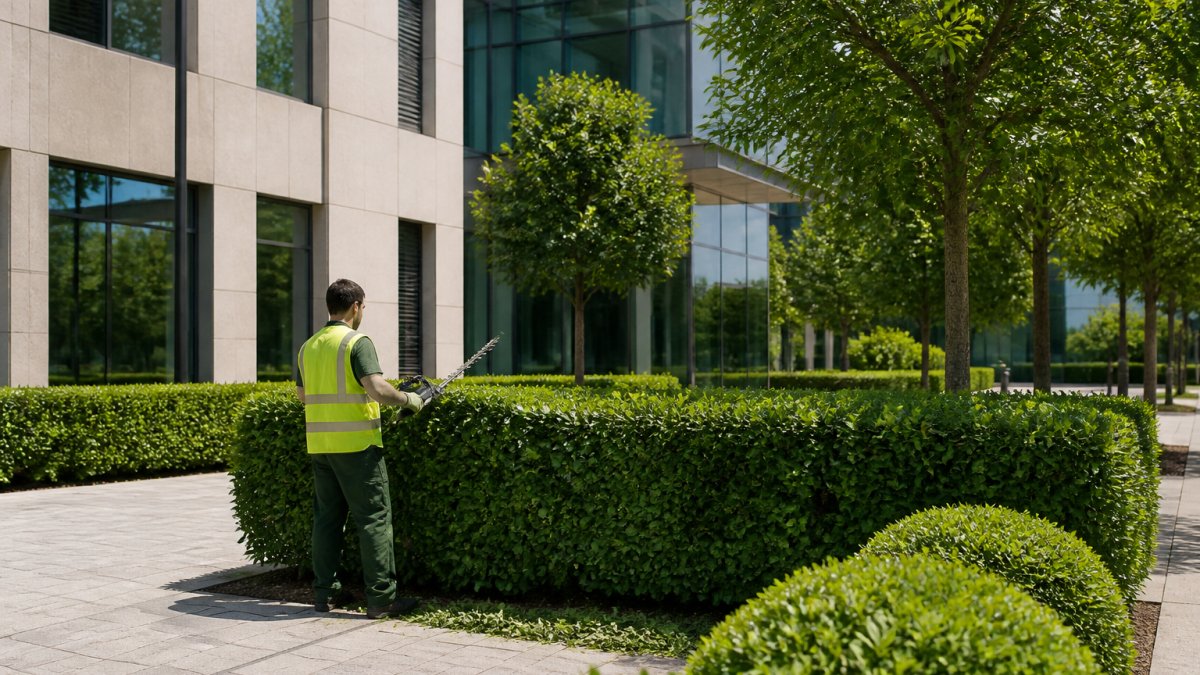
Hedges and flowering shrubs provide structure, nesting habitat, and extended foraging opportunities that wildflower meadows alone cannot deliver. A mature hawthorn hedge creates three-dimensional habitat supporting far more species than flat meadow.
Native hedging species suitable for business parks include hawthorn, blackthorn, field maple, and holly. These establish quickly and provide berries and seeds for birds alongside pollen and nectar for insects.
Plant hedges in autumn or early spring when dormant. Space plants 30-45 centimetres apart for a dense hedge that establishes within three to four years (hedgelink.org.uk). Allow hedges to grow without cutting in the first two years.
Flowering shrubs extend habitat value. Viburnum, dogwood, and flowering currant bloom at different times and provide food sources beyond the main wildflower season. Aim for a mix of spring bloomers, summer bloomers, and autumn-fruiting species.

Mature trees with flowering or berry-producing varieties add canopy structure. Oak, ash, rowan, and crab apple support hundreds of insect species. Where space allows, plant native trees as part of long-term habitat development.
Integrate hedges and shrubs with wildflower meadows to create layered habitat. Position shrub clusters at meadow edges rather than scattered randomly.
Best For Business parks with 2-5 hectares of grounds and existing maintenance budgets. Phased integration of hedges and shrubs works alongside wildflower meadows without requiring wholesale site redesign.
Biodiversity Net Gain for Commercial Sites: Planning Permission and Credits
Biodiversity net gain is now a statutory requirement for most development and redevelopment projects in the UK. Even where not mandated, calculating and demonstrating net gain improves planning applications and environmental credentials.
Wildflower meadows, hedges, and habitat creation generate measurable biodiversity credits that satisfy planning requirements. For commercial sites, biodiversity net gain calculations typically use the Defra Biodiversity Net Gain metric, which assigns habitat units based on habitat type, size, and quality. A newly created wildflower meadow on previously mown grass generates significant units.
Work with an ecologist or environmental consultant to complete formal biodiversity surveys and net gain calculations. Costs typically range from £1,500 to £4,000 depending on site size and complexity, but the resulting documentation supports planning applications and demonstrates environmental responsibility.
Document baseline conditions with photographs and notes. Record existing habitat types, species observed, and soil conditions. Maintain detailed records of habitat creation work: dates of planting, species installed, maintenance activities, and any ecological monitoring.
BREEAM Land Use and Ecology Credits Through Pollinator Zones
BREEAM (Building Research Establishment Environmental Assessment Method) is the dominant environmental assessment standard for commercial property in the UK. BREEAM credits for land use and ecology directly reward pollinator-friendly landscaping.
Creating wildflower meadows, hedgerows, and native planting generates credits under several criteria:
LE01 - Site Selection: Demonstrating ecological enhancement on existing sites contributes to credits.
LE02 - Ecological Value: Creating new habitat where none existed, such as wildflower meadows on previously mown grass, generates credits.
LE03 - Pollinator Protection: This criterion specifically rewards measures supporting pollinator populations. Native wildflower meadows, flowering shrubs, and hedges directly satisfy this criterion.
LE04 - Bird and Bat Protection: Creating nesting habitat and food sources through hedges, shrubs, and trees earns credits.
A comprehensive pollinator zone strategy combining wildflower meadows, hedges, and flowering trees can generate 5-15 BREEAM credits depending on scale and existing site conditions.
Engage a qualified BREEAM assessor early in your planning process to ensure habitat creation activities are properly documented and credited. This typically costs £2,000 to £6,000 but unlocks significant value through improved environmental ratings and tenant appeal.
Common Implementation Mistakes to Avoid
Most pollinator zone failures stem from predictable errors.
Mistake 1: Insufficient site preparation. Grass outcompetes wildflowers unless soil is properly prepared. Remove turf or scalp the existing sward to expose bare soil. Without this step, germination rates plummet.
Mistake 2: Wrong seed mixes. Generic "wildflower mixes" often contain non-native species or inappropriate varieties. Source regionally appropriate seed from reputable suppliers.
Mistake 3: Cutting at the wrong time. Cutting wildflower meadows in July or August destroys the entire season's flowering and seed production. The only correct cutting times are late June (after first flowering flush) and late September (after autumn flowers set seed).
Mistake 4: Removing cut material. Leaving clippings on the meadow returns nutrients to soil, encouraging grass growth that suppresses wildflowers. Always remove cut material entirely.
Mistake 5: Placing zones in unsuitable locations. Shaded areas, waterlogged ground, or highly trafficked spots rarely succeed. Assess site conditions thoroughly before committing resources.
Mistake 6: Neglecting stakeholder communication. Facility teams and tenants may perceive wildflower meadows as poorly maintained. Explain the ecological purpose and demonstrate benefits to prevent premature cutting or complaints.
Mistake 7: Underestimating hedge establishment time. Hedges take three to four years to establish and begin flowering. Communicate timelines clearly and protect young hedges from disturbance.
Mistake 8: Treating pollinator zones as one-time projects. Successful habitat requires ongoing maintenance. Budget for annual cuts, monitoring, and adaptive management.
Pollinator zones transform commercial grounds from sterile landscapes into functioning habitat. The process is straightforward: assess your site, select appropriate native species, maintain consistently, and integrate structural elements like hedges and shrubs. Results improve property aesthetics, support biodiversity credentials, and unlock planning and BREEAM benefits.
At Pemigogardens, we integrate pollinator zone creation and maintenance into comprehensive grounds management contracts for private offices and business parks across the Thames Valley. Our team handles site assessment, species selection, habitat installation, and ongoing maintenance, ensuring your pollinator zones thrive year after year. We understand the specific constraints of commercial properties and design solutions that work within your operational requirements. TELL US about your site, and we'll develop a phased implementation plan tailored to your budget and timeline.
Frequently Asked Questions
Q: Which native plants are best for pollinator zones in the UK?
A: Native wildflowers such as bird's-foot trefoil, vetch, cornflower, and poppy provide nectar and pollen throughout the season. Combine these with native shrubs like hawthorn, blackthorn, and elder, plus flowering trees such as cherry and apple. These species flower at different times, ensuring foraging zones remain active from spring through autumn. Local native species are always preferred because pollinators have evolved alongside them.
Q: What maintenance is required for a commercial pollinator zone?
A: Native wildflower meadows require minimal intervention once established. Cut once annually in late summer or early autumn after flowering and seed dispersal. Remove cuttings to reduce soil fertility and prevent competitive species from dominating. Avoid pesticides and herbicides entirely. Hedges need light trimming every 2-3 years in winter. This low-maintenance regime can reduce ground maintenance costs compared to formal landscaping whilst supporting pollinator populations.
Q: How do pollinator zones align with BREEAM or biodiversity net gain requirements?
A: Pollinator zones contribute to BREEAM Land Use and Ecology credits by creating habitat for wildlife and increasing urban biodiversity. They help satisfy biodiversity net gain for commercial sites, a requirement under the Environment Act 2021 for many new developments and major works. Demonstrating ecological corridors and native planting through pollinator zones strengthens planning applications and regulatory compliance whilst providing measurable environmental stewardship value.
Q: What guarantees do I have that my pollinator zone will actually attract pollinators?
A: Native plants and habitat creation are proven to support pollinator populations when properly maintained. Results depend on site location, surrounding landscape connectivity, and consistent upkeep. Business parks with established wildflower meadows and flowering shrubs typically see increased bee and butterfly activity within the first full growing season. Pemigogardens provides year-round maintenance contracts ensuring your pollinator zones remain productive and well-managed.
TELL US Submit
This article was written using GrandRanker


Comments