
Office Grounds Maintenance Safety Standards: A Practical Guide
Updated: Sep 16
Table of Contents
What Office Grounds Maintenance Safety Standards Cover
HSE Grounds Maintenance Regulations and Compliance
Personal Protective Equipment and Hazard Identification
PPE Requirements for Common Tasks
Machinery Guarding and Safe Operating Procedures
Creating a Commercial Grounds Maintenance Risk Assessment Template
Site Inspection and Hazard Documentation
Control Measures and Emergency Procedures
Grounds Maintenance Health and Safety Checklist for Daily Operations
Pre-Shift Equipment Inspection
On-Site Safety Verification
Chemical Handling, COSHH Compliance, and Environmental Safety
Manual Handling, Working at Heights, and Lone Worker Considerations
Manual Handling Techniques and Load Assessment
Ladder Safety and Working at Heights
Mental Health and Lone Worker Safety Protocols
Incident Reporting, First Aid, and Preventative Maintenance
Last Updated: August 7, 2026
What Office Grounds Maintenance Safety Standards Cover
Office grounds maintenance safety standards encompass regulations, procedures, and protective measures required to keep commercial landscapes safe for workers and visitors. In the UK, these are governed primarily by the Health and Safety at Work etc. Act 1974 and supported by specific guidance from the Health and Safety Executive (HSE).
The standards apply to all aspects of grounds maintenance work: mowing and grass cutting, hedge trimming and tree surgery, leaf clearance, weed management, chemical applications, manual handling of materials, and work at height. Each task carries specific hazards that require documented control measures.
At Pemigogardens, we understand that safety is foundational to professional grounds maintenance. Whether you're managing a single office building or a multi-site business park across the Thames Valley, understanding these standards directly impacts your legal compliance, worker protection, and operational reliability.
Pro Tip The most common compliance gap we see is incomplete risk assessments. A proper assessment takes 2-3 hours but prevents costly enforcement action and protects your team.
HSE Grounds Maintenance Regulations and Compliance
The Health and Safety Executive provides specific guidance for grounds maintenance operations through HSE guidance on managing health and safety in horticulture. Compliance is a legal requirement that applies to every commercial grounds maintenance operation in the UK, regardless of size.
Key regulatory frameworks include the Management of Health and Safety at Work Regulations 1999, which requires you to identify hazards, assess risks, and implement control measures. The Control of Substances Hazardous to Health Regulations 2002 (COSHH) applies specifically to pesticides, herbicides, and cleaning chemicals. The Provision and Use of Work Equipment Regulations 1998 (PUWER) governs the safe use of machinery like mowers, strimmers, and chainsaws.
For tree work specifically, BS 3998 (Tree Work: Recommendations) and BS 5837 (Trees in Relation to Design, Demolition and Construction) set professional standards for arboricultural operations.
You remain legally responsible for compliance regardless of who performs the work. You must verify that any contractor you engage holds appropriate certifications, maintains insurance, and follows documented procedures.
Key Takeaway Compliance is your legal responsibility, not your contractor's alone. You must verify certifications, review risk assessments, and maintain incident records regardless of who performs the work.
Personal Protective Equipment and Hazard Identification
Proper hazard identification determines which PPE is required for each task. Start with a systematic hazard walk-through of your site. Identify slip and trip hazards, uneven ground, proximity to roads or car parks, overhead hazards like branches or power lines, and noise sources.
Common hazards in grounds maintenance include noise exposure from machinery, eye and face hazards from flying debris, hand and foot injuries from sharp tools, skin exposure to chemicals or irritant plants, respiratory hazards from dust or chemical fumes, and vibration exposure from handheld machinery.
PPE Requirements for Common Tasks
For routine mowing and grass cutting, minimum PPE includes safety boots with ankle support, high-visibility clothing, eye protection, and hearing protection if noise levels exceed 80 decibels. Most commercial mowers exceed this threshold.
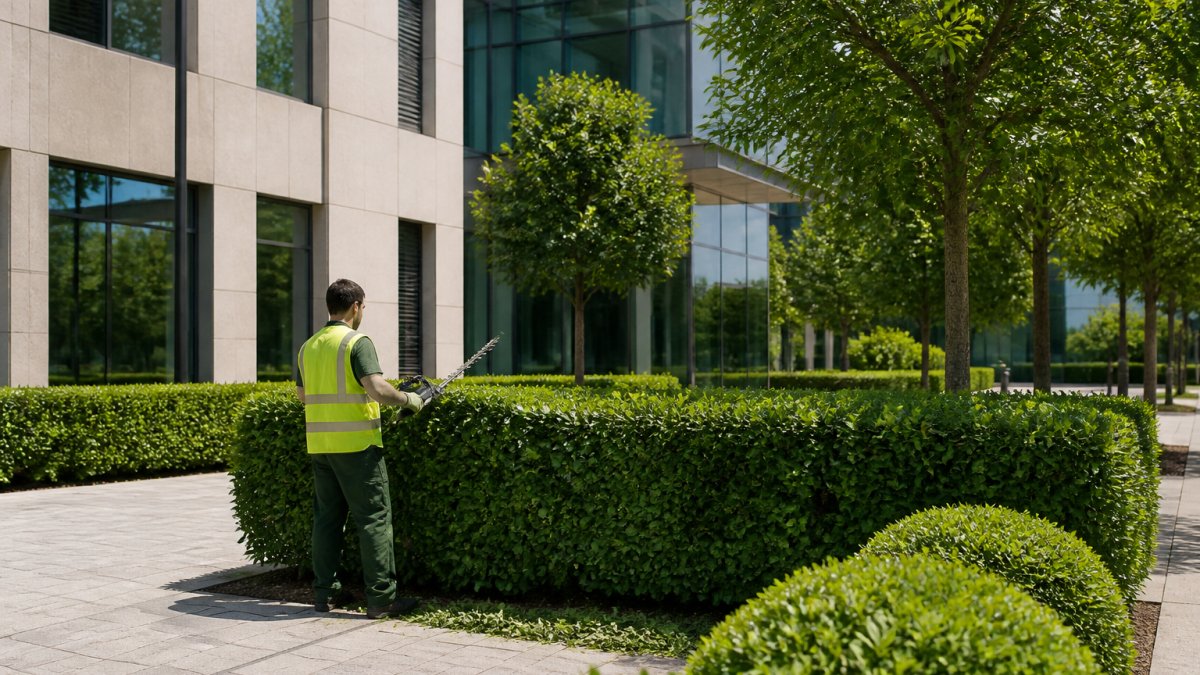
Hedge trimming and strimming require the same baseline plus cut-resistant gloves. If using powered hedge trimmers, add leg protection.
Tree surgery and chainsaw work demands the highest level of PPE: helmet with face shield and ear defenders, high-visibility clothing, cut-resistant trousers or chaps, steel-toed boots, and hand protection. Chainsaw operators should hold PA1 or PA6 certification (Proficiency in Arboriculture qualifications).
Chemical application for weed control or pest management requires chemical-resistant gloves, eye protection, and respiratory protection if the product requires it. Always consult the product Safety Data Sheet (SDS) to determine specific PPE needs.

Machinery Guarding and Safe Operating Procedures
Machinery guarding prevents contact with moving parts, blades, belts, and chains that can cause serious injury. All machinery must have guards in place and functional. Damaged or missing guards take equipment out of service immediately.
Safe operating procedures for each piece of equipment must be documented and followed consistently. Machinery should be inspected before each use: check that guards are secure, blades are not damaged, fuel is at correct level, and controls respond properly.
Watch Out Equipment with safety defects must be taken out of service immediately. Using damaged equipment exposes you to enforcement action and puts workers at direct risk of serious injury.
Creating a Commercial Grounds Maintenance Risk Assessment Template
A proper risk assessment is the foundation of your safety system. It documents what you've identified, what the risks are, and what you're doing about them. The HSE provides a five-step risk assessment framework that applies directly to grounds maintenance: identify hazards, decide who might be harmed, evaluate existing controls, implement additional controls, and review regularly.
Your assessment should be site-specific. A small office building has different hazards than a sprawling business park.
Site Inspection and Hazard Documentation
Begin with a thorough site walk-through. Document the physical layout, including terrain, slopes, proximity to buildings and roads, vegetation types, and existing infrastructure. Photograph areas of concern.
Identify all machinery and equipment that will be used on site. List chemicals that will be applied. Note any overhead hazards like power lines or overhanging branches.
For each hazard identified, record: the hazard itself, who might be harmed, the current controls in place, and whether additional controls are needed. Involve your grounds maintenance team in this process; they identify hazards that desk-based assessments miss.
Control Measures and Emergency Procedures
For each identified hazard, implement control measures in this order: elimination, substitution, engineering controls, administrative controls, and PPE. This hierarchy ensures you're not relying on PPE as your primary control.
Document emergency procedures for your specific site. Where is the first aid kit? Who is trained in first aid? How do workers raise an alarm in case of injury? What's the access route for emergency services? For sites with lone workers, how will an injured person get help?
Grounds Maintenance Health and Safety Checklist for Daily Operations
A practical checklist ensures consistent implementation of your safety system.
Pre-Shift Equipment Inspection
Before work begins, inspect all equipment that will be used. Check that guards are secure and undamaged. Verify that all safety features function properly. For powered equipment, confirm fuel and oil levels are correct.
Document these inspections. A simple log with date, equipment, inspector name, and any issues found creates a record that proves you're taking maintenance seriously.
On-Site Safety Verification
Before the team starts work, verify that site conditions are safe. After rain, check for slipping hazards. After wind, check for fallen branches or debris. Confirm that access routes are clear.
Brief the team on any site-specific hazards or changes from previous visits. A 5-minute safety briefing at the start of each shift prevents most incidents. During work, supervise to ensure procedures are being followed.
Chemical Handling, COSHH Compliance, and Environmental Safety
Chemical handling in grounds maintenance requires specific attention. COSHH regulations require you to assess the risks from chemical exposure and implement control measures.
Start with the Safety Data Sheet for every chemical you use. This document specifies hazards, required PPE, safe storage conditions, and emergency procedures. Keep SDS documents accessible on site.
Chemicals must be stored securely in a designated area, away from food, water sources, and high-traffic areas. Storage containers must be clearly labelled. Spill kits must be available near chemical storage areas.
Chemical application requires documented procedures. Mixing ratios must be correct. Application must be done according to the product label. Avoid applying chemicals in wind that might carry spray drift, and don't apply if rain is forecast within the required drying period.
Environmental compliance is part of chemical safety. Design application procedures to minimize runoff. Avoid applying chemicals near drainage areas or water features.
Pro Tip Always follow the label instructions precisely; they're based on safety testing and legal requirements.
Manual Handling, Working at Heights, and Lone Worker Considerations
Manual handling injuries are among the most common workplace injuries in grounds maintenance.
Manual Handling Techniques and Load Assessment
Before lifting anything, assess the load. The HSE guidance suggests that loads above 20 kg for men and 15 kg for women require careful assessment and potentially mechanical assistance. Use proper technique: bend your knees, keep your back straight, hold the load close to your body, and avoid twisting.
For repeated handling tasks, rotate workers between tasks to avoid repetitive strain. Provide rest breaks. If a task requires frequent heavy lifting, mechanical assistance becomes essential.
Ladder Safety and Working at Heights
Any work above 2 metres requires fall protection measures. Ladders must be inspected before use. Check for damage, cracks, or missing rungs. Position the ladder at the correct angle: the base should be one quarter of the ladder's length away from the wall or structure it's leaning against.
Never stand on the top two rungs of a ladder. Never overreach; move the ladder instead. Never carry loads while climbing a ladder.
For tree work or significant work at height, use a work platform or harness system rather than a ladder.
Mental Health and Lone Worker Safety Protocols
Grounds maintenance often involves lone working. Implement a check-in system for lone workers. A simple phone call or text at the start and end of each shift confirms the worker is safe.
Provide mental health support and training. Ensure that lone workers have access to first aid equipment and know how to raise an alarm. Consider providing a personal alarm or safety app for workers in isolated locations.

Incident Reporting, First Aid, and Preventative Maintenance
Every incident, whether it results in injury or not, must be recorded. The HSE requires reporting of serious injuries, deaths, and incidents that prevent work for more than seven days. Incident records reveal patterns that help you prevent future incidents.
Create a simple incident report form that captures: date, time, location, person involved, what happened, what was injured, witnesses, and what was done immediately after. Include a section for root cause analysis.
Review incidents regularly. If you've had multiple incidents of the same type, your control measures aren't working. Adjust your procedures, training, or equipment.
First aid provision must match your site's hazards and distance from emergency services. At minimum, you need a first aid kit and someone trained in first aid.
Preventative maintenance of equipment and facilities prevents many incidents. A maintenance schedule for your specific site, documented and followed consistently, demonstrates that you're taking prevention seriously.
Safety Element | Frequency | Responsibility | Documentation |
Equipment inspection | Daily before use | Operator | Inspection log |
Site hazard walk-through | Weekly | Supervisor | Hazard register |
Risk assessment review | Annually or after incidents | Manager | Assessment document |
First aid training refresh | Every 3 years | HR/Training | Certificate record |
COSHH assessment | Annually | Manager | Chemical register |
Incident review | Monthly | Manager | Incident log |
Office grounds maintenance safety standards exist because grounds work carries genuine hazards. Compliance is the framework that keeps your team safe and protects your business from liability.
Pemigogardens operates with health and safety training from Human Focus and maintains comprehensive documentation of all safety procedures. When you work directly with a dedicated team rather than through managing agents, you gain the oversight and consistency that genuine safety requires. Get in touch to discuss how we can provide grounds maintenance that meets these standards while delivering the consistent, tailored service your office park deserves.
Frequently Asked Questions
What are the key HSE grounds maintenance regulations that apply to UK office sites?
The Health and Safety Executive (HSE) requires all grounds maintenance work to follow the Health and Safety at Work etc. Act 1974 and the Management of Health and Safety at Work Regulations 2015. Employers must conduct site risk assessments, provide appropriate PPE, ensure machinery is properly guarded, and implement safe operating procedures. For tree work and herbicide application, compliance with BS 3998 and BS 5837 standards is essential. All staff must receive relevant training, and incidents must be reported under the Reporting of Injuries, Diseases and Dangerous Occurrences Regulations (RIDDOR).
What should a commercial grounds maintenance risk assessment template include?
A comprehensive risk assessment template must identify all hazards present on your site, evaluate who might be harmed, assess the likelihood and severity of risk, and document control measures. Include sections for machinery hazards, chemical handling (COSHH), manual handling tasks, working at heights, environmental factors like weather and noise exposure, and emergency procedures. Document the assessment date, reviewer name, and schedule regular reviews, at minimum annually or when site conditions change. Include action plans with responsible parties and completion dates for any identified control improvements.
How often should grounds maintenance health and safety checklists be completed?
Daily pre-shift equipment inspections and on-site safety verifications should be completed before work begins. Weekly comprehensive checklists covering machinery condition, chemical storage, and site hazards are recommended. Monthly detailed inspections of PPE condition, emergency equipment, and incident logs help identify trends. Quarterly reviews of the overall safety programme, including staff training records and near-miss reports, ensure continuous improvement. This layered approach catches emerging hazards early and demonstrates due diligence to regulators and insurers.
What are the main differences between working with a dedicated grounds maintenance team versus a managing agent?
A dedicated team working directly with your office provides consistent site knowledge, tailored service schedules timed to your specific needs, direct accountability, and reliable staff continuity. Managing agents typically coordinate multiple contractors across numerous sites, which can lead to inconsistent quality, delayed response times, and staff rotation. Direct relationships mean you control service frequency, can specify exact requirements like Thursday pre-meeting site sweeps, and have a single point of contact for safety concerns. This direct model is particularly valuable for offices with specific seasonal planting needs or car park maintenance requirements that demand precision and reliability.
TELL US Submit
This article was written using GrandRanker


Comments