
5 Best Sustainable Commercial Landscaping Practices
Updated: Sep 16
Table of Contents
1. Native and Drought-Tolerant Planting for Sustainable Commercial Landscaping
Why native species reduce maintenance and costs
Selecting species suited to your site conditions
2. Commercial Water Conservation Techniques and Smart Irrigation
Drip irrigation and precision watering systems
Reducing water waste through soil management
3. Biodiversity Net Gain Commercial Landscaping Through Habitat Creation
Creating wildlife corridors and pollinator-friendly zones
Wildflower meadows and native plant communities
4. Organic Soil Amendments and On-Site Composting
Building soil health with compost and mulch
On-site composting to close the nutrient loop
5. Chemical-Free Pest and Weed Management
6. Green Infrastructure and Climate Resilience Planning
Green roofs and living walls for urban cooling
Designing for flood resilience and carbon sequestration
7. Low-Noise, Zero-Emission Equipment and Sustainable Grounds Maintenance
Why Sustainable Practices Improve Your Bottom Line and BREEAM Rating
Last Updated: August 19, 2026
1. Native and Drought-Tolerant Planting for Sustainable Commercial Landscaping
Native and drought-tolerant planting reduces maintenance burden, cuts water consumption, and supports local ecosystems. Species adapted to your local climate work with nature rather than against it, translating directly to lower costs and fewer headaches.

Why native species reduce maintenance and costs
Native plants thrive in local conditions without extra water, resist pests and diseases, and rarely need fertiliser. This matters enormously for commercial properties where maintenance budgets are scrutinised. Native wildflowers, grasses, and shrubs deliver visual interest across all seasons, feathery seed heads in autumn, winter structure, spring colour, without fussy deadheading and feeding.
Native plants support local pollinators, birds, and beneficial insects because those creatures evolved alongside them. Non-native ornamentals provide nothing. For commercial properties, this means creating landscape that actively improves environmental credentials rather than merely looking tidy.
Pro Tip When specifying natives, source from growers who harvest seed locally. Trebrown Nurseries, Britain's largest native tree supplier, selects seed from locally adapted provenances, particularly south-west UK genetics, ensuring plants are genetically suited to your site and boosting establishment success rates significantly.
Selecting species suited to your site conditions
Site assessment determines which species will thrive without intervention. Drainage, soil type, aspect, and microclimate are non-negotiable. Clay-loving natives like hawthorn and alder perform brilliantly where other species fail. Sandy soils suit heather, gorse, and silver birch. Wet ground opens possibilities for native wetland species, alder carr woodland, marsh marigold, and purple loosestrife create habitat while managing drainage naturally.
South-facing slopes favour drought-tolerant natives like bird's-foot trefoil and salad burnet. North-facing boundaries stay cooler and damper, where ferns, wood avens, and shade-tolerant shrubs perform better. Getting this right at the outset eliminates years of struggling with unsuitable species.
At Pemigogardens, we conduct detailed site walkovers to understand soil, drainage, and existing conditions before recommending species. This upfront work prevents costly replanting later.
2. Commercial Water Conservation Techniques and Smart Irrigation
Smart irrigation systems and soil management techniques can reduce water consumption by 40-60% compared to traditional overhead sprinklers, which waste enormous volumes through evaporation and runoff.
Drip irrigation and precision watering systems
Drip irrigation delivers water directly to plant root zones through low-pressure tubing, allowing soil to absorb it fully. Soil moisture sensors detect when soil dries to a predetermined threshold, triggering irrigation automatically. This prevents both under-watering during hot spells and over-watering during wet periods.
Reducing water waste through soil management
Soil structure determines how much water it holds and how quickly it drains. Poor, compacted soil either sheds water or becomes waterlogged. Building soil health through organic amendments and mulching transforms water retention without adding irrigation infrastructure.
Organic mulch, wood chips, compost, shredded bark, reduces evaporation, keeps soil cooler during hot spells, and gradually improves soil structure. A 50-75mm mulch layer can reduce irrigation demand by 25-30% across the growing season.
On-site composting closes the nutrient loop while improving soil. Ridan Food Waste Composters process green waste and food waste into nutrient-rich compost that you return to beds and borders, reducing reliance on imported fertilisers and cutting waste disposal costs simultaneously.
3. Biodiversity Net Gain Commercial Landscaping Through Habitat Creation
Biodiversity net gain is increasingly a regulatory requirement for commercial developments. Creating genuine habitat that supports wildlife, pollinators, and natural predators transforms your landscape from a mowed monoculture into a functioning ecosystem.

Creating wildlife corridors and pollinator-friendly zones
Wildlife corridors are continuous strips of habitat, hedgerows, shrub borders, or planted verges, that allow birds, insects, and small mammals to move safely across the landscape. Pollinator-friendly zones cluster nectar and pollen-rich plants that support bees, butterflies, and hoverflies. A hoverfly larva consumes hundreds of aphids before pupating, building natural pest control into your landscape.
Native wildflower seed mixes from suppliers like Emorsgate Seeds, harvested from UK farmland, establish quickly and support local insect populations immediately. A wildflower meadow sown in spring reaches full flowering by mid-summer, attracting pollinators and creating visual impact.
Wildflower meadows and native plant communities
Wildflower meadows deliver biodiversity, low maintenance, and striking seasonal colour. Unlike mown grass, a meadow is cut once or twice yearly after flowering, allowing seeds to mature naturally. This single management change transforms a site's ecological value while cutting maintenance labour significantly.
Native plant communities work because species evolved together. A wet meadow includes marsh marigold, ragged robin, and devil's-bit scabious alongside sedges and rushes. A dry meadow combines bird's-foot trefoil, salad burnet, and cowslip. These plant groups support specific insect communities, which support birds and small mammals, creating a functioning food web.
Salix River & Wetland Services specialises in native wetland and wild flowering plants grown peat-free. For commercial sites with drainage challenges or wet areas, their specialist species transform problem areas into habitat assets.
4. Organic Soil Amendments and On-Site Composting
Soil is the foundation of every landscape. Living soil, rich in organic matter and microbial life, sustains plants naturally, improves water retention, and builds carbon sequestration capacity.
Building soil health with compost and mulch
Organic amendments improve soil structure, increase water-holding capacity, and feed the microbial communities that make nutrients available to plants. A single 25-50mm compost application across planted areas improves soil measurably, with faster plant establishment, reduced irrigation demand, and visibly healthier growth within a season.
Mulching with organic material suppresses weeds, moderates soil temperature, improves moisture retention, and gradually decomposes into humus that feeds soil life. Wood chip mulch from tree surgery work is ideal, it's free or low-cost and exactly what your soil needs.
On-site composting to close the nutrient loop
On-site composting transforms waste into a resource. Instead of paying to remove green waste and then buying compost, you process your own material on-site and return nutrients to the landscape. Ridan composters handle both green waste and food waste, producing finished compost in months.
For commercial properties generating regular green waste, on-site composting pays for itself within 2-3 years through waste savings alone. You're cycling nutrients within your own site, efficient, economical, and increasingly expected by regulators.
5. Chemical-Free Pest and Weed Management
Chemical pesticides and herbicides are expensive, toxic to non-target organisms, and increasingly restricted by regulation. Chemical-free pest and weed management relies on ecological principles: building soil health, encouraging natural predators, and using mechanical and cultural methods.
Healthy soil and diverse planting communities support beneficial insects, hoverflies, ladybirds, parasitic wasps, that control pest populations naturally. A single hoverfly larva consumes hundreds of aphids. By creating habitat for these insects, you're building a self-regulating system that requires minimal intervention.
Weeds are often a symptom of poor soil or bare ground. Dense planting, adequate mulch, and healthy soil biology suppress weeds mechanically and biologically. Where weeds do establish, hand-pulling, hoeing, or strimming removes them without chemicals. For persistent perennial weeds, repeated cutting eventually exhausts the plant's reserves.
Watch Out If you're currently using chemical pesticides or herbicides, switching to chemical-free management takes planning. Some persistent weeds require 2-3 seasons of repeated cutting to exhaust. Budget time for transition, and expect slightly higher labour costs in year one. By year two, maintenance typically stabilises at lower cost than chemical regimes.
6. Green Infrastructure and Climate Resilience Planning
Green infrastructure, green roofs, living walls, permeable surfaces, and integrated water management, delivers multiple benefits simultaneously: stormwater management, urban cooling, biodiversity, and carbon sequestration.
Green roofs and living walls for urban cooling
Green roofs are vegetated layers installed on flat or sloping roofs. They provide insulation, reducing heating and cooling demand; absorb stormwater, reducing flood risk; support plant and insect communities; and extend roof lifespan by protecting the membrane from UV damage.
The Wallbarn M-Tray Modular Green Roof System offers quick, clean installation. Pre-grown sedum vegetation in modular trays interlocks seamlessly, providing immediate greenery without mess. Living walls, vertical planting systems on building facades, deliver similar benefits in compact footprint, cooling building surfaces through evapotranspiration and creating striking visual impact.
Designing for flood resilience and carbon sequestration
Climate resilience planning means designing landscapes that perform during extreme weather. Permeable paving, rain gardens, and swales manage stormwater on-site rather than overwhelming drainage systems. Native tree planting sequesters carbon while providing shade and habitat.
A single mature tree sequesters approximately 20kg of carbon annually. A landscape of 50-100 native trees stores 1-2 tonnes of carbon per year. Over 20 years, that's 20-40 tonnes of carbon locked into wood and soil, equivalent to offsetting several vehicles' annual emissions.
Trees also moderate temperature extremes. Urban heat island effect is well-documented. Native tree canopy reduces surface temperatures by 2-4°C during hot spells, reducing cooling demand and improving outdoor comfort.
7. Low-Noise, Zero-Emission Equipment and Sustainable Grounds Maintenance
Sustainable grounds maintenance requires rethinking equipment. Battery-powered alternatives deliver equivalent performance to petrol-powered tools with zero emissions, dramatically lower noise, and reduced operating costs.
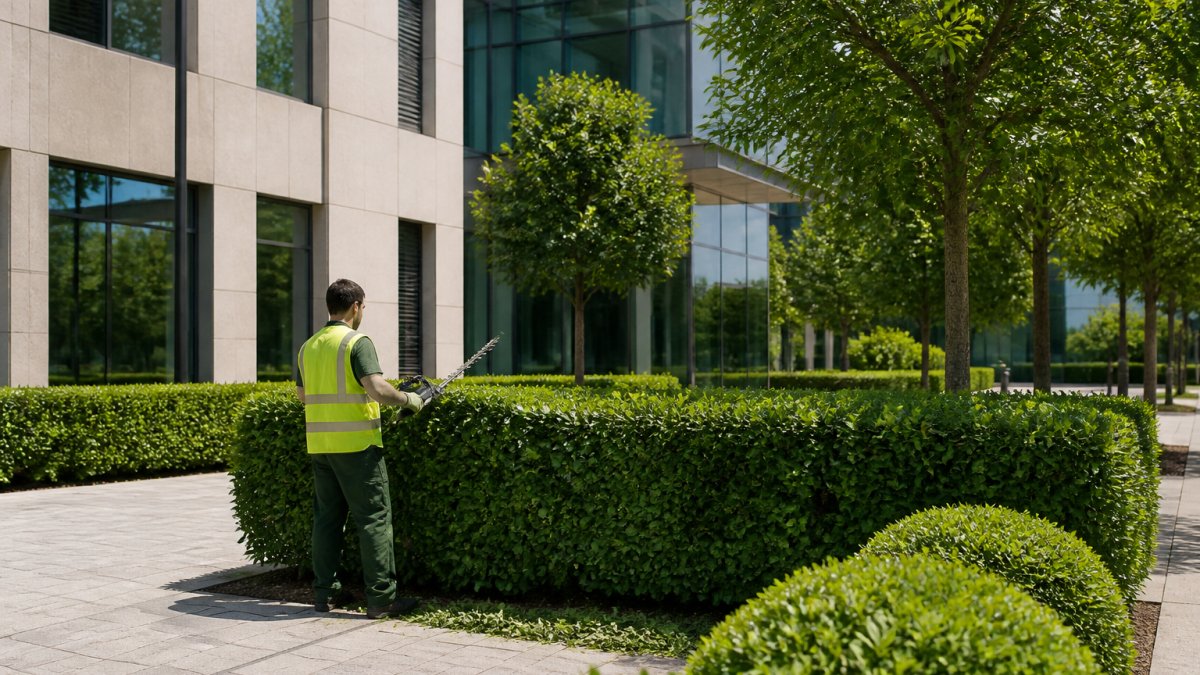
The Toro Revolution Battery-Powered Handheld Tools range includes blowers, hedge trimmers, and string trimmers, all electric and professional-grade. The Flex-Force battery system is compatible across the range. For a typical grounds maintenance team, switching to electric equipment reduces noise pollution, improves air quality, and cuts fuel costs by 70-80%.
Mean Green Electric Mowers offer commercial-grade performance with up to 7 hours of operating time per charge. For properties with large turf areas, electric mowers eliminate fuel costs and maintenance while delivering zero emissions. The upfront investment recovers within 3-4 years through lower running costs.
Low-noise equipment allows flexible scheduling without noise complaints, particularly valuable for commercial properties where early-morning or late-afternoon maintenance might otherwise disturb clients or neighbouring businesses.
Pro Tip When transitioning to electric equipment, invest in adequate battery charging infrastructure. Purpose-built charging stations (wall-mounted or mobile) ensure tools are ready when needed and extend battery lifespan through proper charging protocols.
Why Sustainable Practices Improve Your Bottom Line and BREEAM Rating
Sustainable commercial landscaping practices are financially rational. Native planting reduces water bills and maintenance labour. On-site composting eliminates waste disposal costs. Electric equipment cuts fuel spending. These are substantial, measurable reductions in operational expenditure.
BREEAM (Building Research Establishment Environmental Assessment Method) certification increasingly influences property valuations and tenant attraction. Landscapes with native planting, wildlife habitat, permeable surfaces, and low-chemical management score significantly higher. For commercial properties, a higher BREEAM rating translates to competitive advantage in attracting quality tenants and commanding premium rents.
Regulatory compliance is tightening. Water restrictions, pesticide bans, and biodiversity net gain requirements are becoming standard. Landscapes designed around sustainable principles comply with emerging regulations automatically, whereas conventional approaches require costly retrofitting.
At Pemigogardens, we deliver sustainable commercial landscaping through regular, tailored maintenance contracts. Our team understands the specific requirements of private offices and business parks across the Thames Valley, and we're committed to reliable, consistent site upkeep that actually delivers on sustainability promises. We hold health and safety training with Human Focus, ensuring every site visit meets the highest standards.
Sustainable practices improve your bottom line through reduced water and fuel costs, lower maintenance labour, and avoided waste disposal expenses. They improve your BREEAM rating and regulatory compliance. They enhance your property's visual appeal and environmental credentials.
Sustainable commercial landscaping requires commitment to practices that work with nature rather than against it. Native planting, water conservation, habitat creation, organic soil building, chemical-free pest management, green infrastructure, and electric equipment form an integrated approach that reduces costs while improving environmental performance.
Pemigogardens specialises in delivering these practices through reliable, year-round maintenance contracts tailored to your specific site. We work directly with private offices and business parks across the M40/M4 corridor, ensuring consistent implementation of sustainable principles that actually improve your bottom line. Get in touch with Pemigogardens today and transform your commercial grounds into a landscape that performs environmentally and financially.
Sustainable Practice | Key Benefit | Implementation Complexity |
Native and drought-tolerant planting | Reduced water use, lower maintenance labour | Moderate, requires upfront site assessment |
Smart irrigation and drip systems | 40-60% water reduction | Moderate to high, requires system design |
Wildflower meadows and habitat creation | Biodiversity net gain, pollinator support | Moderate, requires site preparation and monitoring |
On-site composting | Waste reduction, free soil amendments | Low to moderate, requires dedicated space |
Chemical-free pest management | Regulatory compliance, ecosystem health | Low, requires labour and mindset shift |
Green roofs and living walls | Stormwater management, urban cooling | High, requires professional installation |
Electric equipment | Zero emissions, reduced noise and costs | Moderate, requires battery infrastructure investment |
Frequently Asked Questions
How can commercial landscaping improve a business's BREEAM rating?
Sustainable landscaping practices directly contribute to BREEAM credits under the Land Use and Ecology category. Native planting, biodiversity net gain, green roofs, and chemical-free maintenance all score points. Water-efficient irrigation systems and permeable hard landscaping reduce surface water runoff, earning additional credits. A dedicated maintenance team ensuring consistent upkeep demonstrates long-term environmental commitment, which assessors value. Many commercial properties gain 3-5 additional BREEAM points through integrated sustainable grounds management.
What native plant species are best for low-maintenance commercial landscaping?
Species like hawthorn, blackthorn, hazel, and rowan thrive with minimal intervention once established. For ground cover, native sedges and fescues reduce mowing frequency. Wildflowers such as bird's-foot trefoil, ox-eye daisy, and cornflower support pollinators without fertiliser or pesticides. Suppliers like Trebrown Nurseries and Salix specialise in locally adapted native species proven to succeed in your region. The key is matching species to your soil type and drainage conditions, this ensures survival rates above 85% and cuts replacement costs significantly.
How does sustainable grounds maintenance reduce long-term operational costs?
Native, drought-tolerant plants need less water, fertiliser, and pest control, cutting annual input costs by 30-50%. Smart irrigation systems reduce water bills by up to 40%. On-site composting eliminates green waste disposal fees and creates free soil amendment. Chemical-free management reduces health and safety liability costs. Electric equipment lowers fuel expenses and maintenance. Over a 5-year contract, these savings typically offset the initial investment in system design and installation, delivering net cost reduction while improving site appearance and compliance.
What's the difference between working with Pemigogardens and a managing agent for commercial grounds maintenance?
Pemigogardens works directly with private office owners and business parks, no intermediaries. This means you speak directly with your dedicated team, not a managing agent who may prioritise other clients. Your maintenance schedule is tailored to your specific needs: Thursday morning car park sweeping before client meetings, seasonal planting in exact locations, tree surgery on your timeline. Direct relationships ensure accountability; if something isn't right, you resolve it immediately with the team you know. Most managing agents use rotating contractors, which creates inconsistency and makes it harder to implement long-term sustainable practices.
Can sustainable landscaping practices work on a tight budget?
Yes. Start with native planting in high-visibility areas, this delivers immediate visual impact and reduces ongoing costs. Implement drip irrigation on existing beds rather than replacing entire systems. Begin composting green waste on-site to eliminate disposal fees. Switch to electric handheld tools gradually as equipment needs replacement. Many sustainable practices, mulching, natural pest control, wildflower seeding, cost less than chemical alternatives once you account for labour time. Pemigogardens tailors phased approaches to your budget, prioritising changes that deliver both environmental and financial returns first.
[EXTERNAL_LINK: BREEAM certification and environmental assessment framework | breeam.com]
[EXTERNAL_LINK: UK water conservation guidance for commercial properties | gov.uk]
[EXTERNAL_LINK: Biodiversity net gain requirements and compliance standards | environment-agency.gov.uk]
TELL US Submit
This article was written using GrandRanker


Comments