
How to Choose Landscaping for Corporate Offices
Updated: Sep 16
Table of Contents
Why Landscaping Matters for Corporate Offices
Assess Your Site and Define Your Landscaping Goals
Sustainable Corporate Garden Design for Year-Round Appeal
Biophilic Design and Native Plants
Hardscape and Permeable Paving
Selecting Shrubs for Business Landscapes
Commercial Landscaping Maintenance Costs and Contract Terms
Plan Your Seasonal Maintenance and Irrigation
Choose a Reliable Landscaping Partner
Conclusion
Last Updated: August 14, 2026
Why Landscaping Matters for Corporate Offices
Well-maintained landscaping signals professionalism and investment in your environment. Yet many facilities managers treat grounds maintenance as an afterthought, cycling through contractors without a clear strategy.
Choosing the right landscaping for corporate offices requires more than finding someone to mow grass regularly. It demands a deliberate approach that balances aesthetics, functionality, sustainability, and cost.
At Pemigogardens, we've worked with private office buildings and business parks across the Thames Valley and seen firsthand what happens when property owners approach landscaping strategically versus reactively. The strategic approach consistently delivers better results: improved curb appeal, lower maintenance costs over time, and grounds that genuinely enhance the working environment.
This guide walks you through how to choose landscaping for corporate offices. We'll cover site assessment, design principles that deliver year-round interest, plant selection, maintenance planning, and how to evaluate potential landscaping partners.
Key Takeaway The real decision isn't just about hiring a contractor, it's about defining what success looks like for your specific site, then finding a partner who can deliver it consistently.
Assess Your Site and Define Your Landscaping Goals
Before thinking about plants or hardscaping, understand your site and articulate what you want landscaping to accomplish.
Evaluate physical conditions: sunlight exposure varies dramatically across your property, south-facing borders get full sun while areas near buildings or under trees may be heavily shaded. Soil quality matters equally; compacted soil near car parks behaves differently from cultivated beds. Drainage patterns affect what plants will survive. A professional site evaluation identifies these conditions so your landscaping choices suit the environment rather than fighting it.
Next, define your landscaping goals. Are you improving curb appeal for clients? Creating pleasant outdoor workspace for employees? Reducing maintenance costs? Enhancing biodiversity? Most offices benefit from multiple goals, but prioritising them matters.
Consider your maintenance capacity and budget honestly. An ambitious design requiring weekly attention will disappoint you if you're not prepared to fund it. The best landscaping strategy aligns design ambition with your actual resources.
| Assessment Factor | What to Evaluate | Why It Matters | |---| | Sunlight exposure | Full sun, partial shade, full shade areas | Determines which plants will thrive | | Soil conditions | Compaction, drainage, pH, fertility | Affects plant health and irrigation needs | | Existing features | Trees, structures, utilities | Creates design constraints and opportunities | | Maintenance capacity | Available time and budget | Ensures design matches your resources | | Business objectives | Aesthetics, wellness, accessibility, cost | Guides all subsequent decisions |
Pro Tip Document your site conditions with photos taken at different times of day and seasons. This reference becomes invaluable when discussing options with landscaping contractors.
Sustainable Corporate Garden Design for Year-Round Appeal
Sustainable corporate garden design creates landscapes that look good throughout the year while minimising environmental impact and maintenance burden.
Year-round appeal means planning for visual interest across all four seasons. Many offices default to summer-focused designs that look tired from September onwards. A strategic approach incorporates spring bulbs and early flowering shrubs, summer colour from perennials and annuals, autumn foliage and seed heads, and winter structure from evergreens and architectural plants.
Sustainability typically addresses three areas: water management, chemical inputs, and habitat value. Water-efficient irrigation systems and drought-tolerant plants reduce consumption. Minimising fertilisers and pesticides protects groundwater and supports beneficial insects. Native plant selection supports local biodiversity and often requires less intensive care than non-native alternatives.

Biophilic Design and Native Plants
Biophilic design incorporates natural elements into built environments to improve wellbeing. For corporate offices, this means integrating plants, water features, and natural materials in ways that create connection to nature. Research consistently shows that employees with views of greenery experience lower stress and higher productivity.
Native plants form the foundation of sustainable corporate gardens. These species naturally occur in your region; in the Thames Valley, that includes hawthorn, beech, holly, and wild cherry. Native plants have evolved to thrive in local conditions, so they typically require less water, fertiliser, and pest management than non-native alternatives. They also support local insects, birds, and other wildlife.
The practical benefit: native plant gardens cost less to maintain. They're naturally adapted to local rainfall patterns, soil conditions, and seasonal cycles.
When selecting native plants, consider both functional and aesthetic qualities. Structural plants like evergreen shrubs provide year-round form. Seasonal interest plants like flowering perennials deliver colour at specific times. Ground cover plants suppress weeds and reduce maintenance. The combination creates a layered landscape that's both visually interesting and functionally efficient.
Hardscape and Permeable Paving
Hardscape, the non-plant elements like paths, patios, and edging, serves both practical and aesthetic functions. Permeable paving has become standard in responsible corporate landscaping because it addresses a real problem: conventional impermeable surfaces increase flood risk and prevent water from reaching soil and plant roots.
Permeable paving options include gravel, permeable concrete, and specially designed paving blocks that allow water infiltration. These solutions reduce surface water runoff, recharge groundwater, and support plant health.
Hardscape design also affects maintenance costs. Well-designed paths and edging reduce the area requiring regular mowing or planting maintenance. Raised beds and defined borders make it easier for grounds maintenance teams to work efficiently.
Watch Out Avoid over-hardscaping corporate offices. Excessive paving can create sterile environments that feel unwelcoming despite their low maintenance. The goal is balance: enough hardscape for functionality and accessibility, enough soft landscaping to create a pleasant environment.
Selecting Shrubs for Business Landscapes
Shrubs form the backbone of commercial landscaping. Unlike herbaceous plants that die back seasonally, shrubs provide permanent structure, year-round form, and relatively low maintenance.
Start with shrubs that match your site conditions. A north-facing border with heavy shade requires different shrubs than a south-facing sunny border. Match the plant to the conditions rather than forcing the plant to adapt.
For most corporate offices in the Thames Valley, reliable shrub selections include:
Evergreen structure: Box, holly, yew, and privet provide year-round form
Flowering shrubs: Viburnum, weigela, philadelphus, and forsythia deliver seasonal colour
Coloured foliage: Photinia, Japanese maple, and copper beech add visual interest
Ground cover shrubs: Cotoneaster, euonymus, and heathers suppress weeds and reduce maintenance
Size matters significantly. Many offices plant shrubs that will eventually outgrow their space, requiring constant pruning or removal. Specifying shrubs that reach their mature size within your available space prevents this expensive problem.
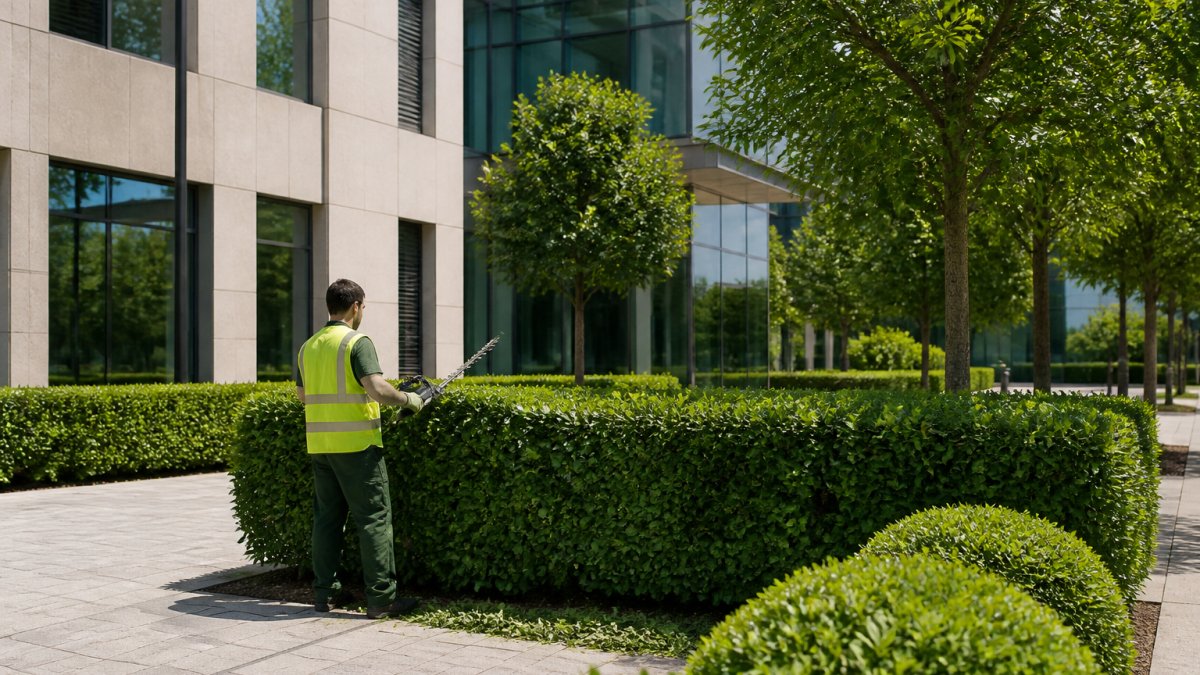
Maintenance requirements vary significantly. Some shrubs need annual pruning to maintain shape; others thrive with minimal intervention. Formal landscapes with clipped hedges require regular attention. Naturalistic landscapes with shrubs left to their natural form require less work but need good initial selection to look intentional rather than neglected.
Pro Tip When evaluating shrub options, ask your landscaping contractor what each shrub will look like at maturity and how often it requires pruning. This conversation often reveals whether the proposed design is realistic for your maintenance capacity.
Commercial Landscaping Maintenance Costs and Contract Terms
Understanding maintenance costs helps you budget realistically and evaluate contractor proposals. Maintenance costs vary dramatically based on design intensity, site conditions, and your performance expectations. A simple design with native shrubs costs far less than a complex design with seasonal bedding changes and intensive pruning.
Several factors drive maintenance costs. Frequency of visits affects total annual cost; a site visited weekly costs more than one visited fortnightly. Labour-intensive tasks like seasonal bedding changes, hedge trimming, and tree work cost significantly more than basic mowing and edging.
When evaluating contract terms, clarity matters enormously. A good maintenance contract specifies exactly what's included: frequency of visits, specific tasks performed, seasonal variations, and what's excluded.
Common contract structures include:
Fixed monthly fee: You pay the same amount regardless of seasonal variation. This suits budgeting but requires accurate scoping of work
Seasonal pricing: Costs vary by season. This reflects actual work variation but complicates budgeting
Task-based pricing: You pay for specific services as needed. This offers flexibility but less predictability
The contract should specify what happens if the contractor can't deliver. How much notice do you get? What's the process for addressing poor work? Can you terminate if service becomes unreliable?
At Pemigogardens, we work exclusively with private offices and business parks on regular maintenance contracts tailored to your specific site needs. We focus on reliability and consistency; the same team visits regularly, understands your site's seasonal patterns, and delivers the same high standard each visit.
Plan Your Seasonal Maintenance and Irrigation
Seasonal maintenance planning ensures your landscaping looks good year-round and prevents expensive problems. Different seasons demand different work: spring requires planting and pruning, summer focuses on watering and deadheading, autumn involves clearing and preparing for winter, and winter includes tree work and structural maintenance.
Irrigation strategy depends entirely on your site conditions and plant selection. Native plants and mature shrubs typically require minimal supplementary watering once established. New plantings need regular water during their first growing season. Understanding what irrigation your specific design actually needs prevents both waste and plant failure.
Modern irrigation systems range from simple soaker hoses to sophisticated automated systems with soil moisture sensors. The right choice depends on your site size, plant types, and budget.
Seasonal timing matters significantly. Spring planting should happen early enough that plants establish before summer stress. Summer maintenance focuses on watering and pest management. Autumn work includes clearing summer bedding and planting spring bulbs. Winter is ideal for tree work and structural pruning.
Key Takeaway The most important seasonal task is planning. Decide in autumn what spring will look like, plan summer watering before hot weather arrives, and schedule winter tree work before the season becomes urgent.
Choose a Reliable Landscaping Partner
Your landscaping contractor becomes a permanent part of your property management. Choosing the right partner matters far more than saving a few pounds on the initial quote. A reliable contractor who understands your site and delivers consistent results is worth significantly more than a cheap contractor who disappears or delivers inconsistent work.

Evaluate potential contractors on several dimensions. Do they understand your specific site and its conditions, or are they offering generic solutions? Have they worked with similar properties? Can they articulate what your landscaping will look like at different seasons?
Ask about their team and processes. Will it be the same people each visit, or will you get different teams? What training and certifications does their team hold?
Check references from current clients. Ask about consistency, quality, and communication. References from similar properties are more valuable than generic testimonials.
Understand their approach to how to choose landscaping for corporate offices. Do they start with a thorough site assessment and clear goal-setting? Do they involve you in design decisions? The best partnerships involve clear communication about what you want to achieve and regular discussion about whether results match your expectations.
At Pemigogardens, we work exclusively with private offices and business parks and focus entirely on reliable maintenance contracts. Our team holds health and safety training with Human Focus and understands the specific needs of corporate grounds. We've worked with properties including the Duke of Edinburgh Awards, De Le Cuona, Adair House in Windsor, and Comino House in Bourne End. We operate within the M40/M4/Thames Valley Corridor and focus on delivering consistent, tailored service.
The key difference is commitment. When you work directly with a dedicated landscaping team rather than cycling through contractors, you get reliability. The same people understand your site's seasonal patterns, know what plants need, and take pride in consistent results.
Choosing landscaping for corporate offices is ultimately about alignment: matching your site's conditions, your business objectives, your budget, and your maintenance capacity into a coherent strategy. Start by understanding your site thoroughly and defining what success looks like. Select plants and hardscape that suit your conditions and goals. Plan maintenance realistically around your resources. Then find a landscaping partner who understands your vision and can deliver it consistently.
The grounds surrounding your office building represent a significant investment. Done well, landscaping improves employee wellbeing, impresses clients, and reflects your business values. The difference often comes down to planning and choosing a partner who treats your property as their own.
Get in touch with Pemigogardens to discuss how we can help your corporate office grounds deliver the professional appearance and reliable upkeep your business deserves. We'll start with a thorough site assessment, understand your specific needs, and deliver consistent results throughout the year.
Frequently Asked Questions
What are the main benefits of professional landscaping for corporate offices?
Professional landscaping improves curb appeal, creating a strong first impression for clients and visitors. It boosts employee wellbeing by providing outdoor workspace and natural environments that reduce stress. Well-maintained grounds also protect your property value and demonstrate corporate social responsibility. Biophilic design elements like native plants and water features enhance biodiversity whilst lowering maintenance demands over time.
How do you choose sustainable plants for a corporate garden?
Select native plants suited to your local climate and soil conditions, they require less water, fertiliser, and maintenance. Choose species that provide multi-season interest with varied flowering times, foliage colours, and textures. Avoid high-maintenance ornamentals and invasive species. Group plants by water needs to improve irrigation efficiency. Work with a landscaper experienced in sustainable grounds care to ensure your selections support local biodiversity whilst meeting your aesthetic goals.
What should be included in a commercial landscaping maintenance contract?
A solid contract specifies visit frequency, seasonal tasks, and response times for urgent work. It should detail what's covered: mowing, hedge trimming, planting, irrigation management, and clearance. Include provisions for weather-related delays and emergency tree surgery. Confirm who supplies materials and whether the contractor carries liability insurance and health and safety training. Define how changes or additional work are approved and priced to avoid surprises.
How does regular landscaping maintenance improve office property value?
Consistent grounds maintenance protects your landscape investment and prevents costly repairs from neglect. Well-maintained exterior spaces signal professional management to potential tenants and buyers, justifying higher rental or sale prices. Hardscape durability, healthy plant establishment, and proper irrigation systems reduce long-term costs. Regular seasonal maintenance prevents damage from weather and pests, whilst biophilic design features attract quality tenants seeking employee wellness benefits.
TELL US Submit
This article was written using GrandRanker


Comments