
How to Improve Office Exterior Appeal: 8 Steps
Updated: Sep 16
Table of Contents
Why Office Exterior Appeal Matters for Your Business
Step 1: Assess Your Current Exterior and Create a Maintenance Checklist
What to evaluate first
Building your maintenance schedule
Step 2: Upgrade Landscaping and Hardscaping
Step 3: Install and Refresh Exterior Lighting
Step 4: Repair Siding, Paint, and Facade Restoration
Step 5: Enhance Your Entryway and Wayfinding Signage
Step 6: Maintain Parking Lots and Walkways
Commercial Property Kerb Appeal Ideas on Budget and Premium Tiers
Budget-tier improvements
Premium-tier enhancements
Last Updated: August 3, 2026
Why Office Exterior Appeal Matters for Your Business
The exterior of your office building is the first impression clients, partners, and employees have of your organisation. At Pemigogardens, we've worked with private offices and business parks across the Thames Valley, and we can tell you with certainty: how to improve office exterior appeal directly affects how potential clients perceive your business before they ever step inside. A well-maintained, visually appealing exterior signals professionalism, stability, and attention to detail.
Research from Pew Research Center on first impressions in business environments shows that environmental factors significantly influence client perception and decision-making. Your building's facade, landscaping, lighting, and entryway aren't cosmetic luxuries, they're business assets that influence whether prospects walk through your door or choose a competitor.
Below, we'll show you exactly how to improve office exterior appeal through eight practical, implementable steps designed for facility managers and business owners managing commercial property in Berkshire, Buckinghamshire, Oxfordshire, and the broader M40/M4 corridor.
Step 1: Assess Your Current Exterior and Create a Maintenance Checklist
Before you spend a pound on improvements, conduct a thorough audit of your building's current condition. Walk the perimeter at different times of day, noting what light reveals about your facade, landscaping, parking areas, and entryway.
What to evaluate first
Document the condition of your siding, brickwork, or cladding. Look for cracks, discolouration, algae growth, or peeling paint. Check your roof from ground level for missing tiles, sagging gutters, or moss growth.
Examine your landscaping critically. Are shrubs overgrown? Is grass patchy? Do trees look diseased? Assess your hardscaping: are walkways clean and level? Are there weeds in cracks? Document your parking lot condition: is the surface cracked, are line markings faded, is debris accumulating?
Look at your exterior lighting. Do fixtures work and highlight your entrance? Check your signage: is it clean, well-lit, and clearly visible? Finally, evaluate your entryway. Is your front door clean and in good repair? Are windows clear?
Building your maintenance schedule
Create a spreadsheet listing each element, its current condition, and priority level (immediate, 3-month, 6-month, annual). Assign responsibility for each task. Some work, like regular grass cutting and parking lot sweeping, benefits from a dedicated grounds maintenance contractor on a fixed schedule. Other tasks, like roof inspection or facade restoration, happen less frequently but demand professional expertise.
Exterior Element | Inspection Frequency | Typical Issue | Priority Action |
Landscaping and shrubs | Monthly visual check | Overgrowth, dead patches | Quarterly trimming |
Parking lot surface | Quarterly | Cracks, debris, faded lines | Annual reseal or repair |
Exterior lighting | Monthly | Non-functional bulbs, poor positioning | Replace and reposition |
Siding and facade | Bi-annually | Discolouration, cracks, algae | Annual cleaning or repair |
Entryway and signage | Monthly | Dirt, clutter, faded appearance | Weekly cleaning, annual refresh |
Roof and gutters | Annually | Moss, debris, missing tiles | Professional inspection |
Step 2: Upgrade Landscaping and Hardscaping
Well-maintained landscaping transforms how your office building looks. It's the difference between "tired commercial property" and "established, professional business."

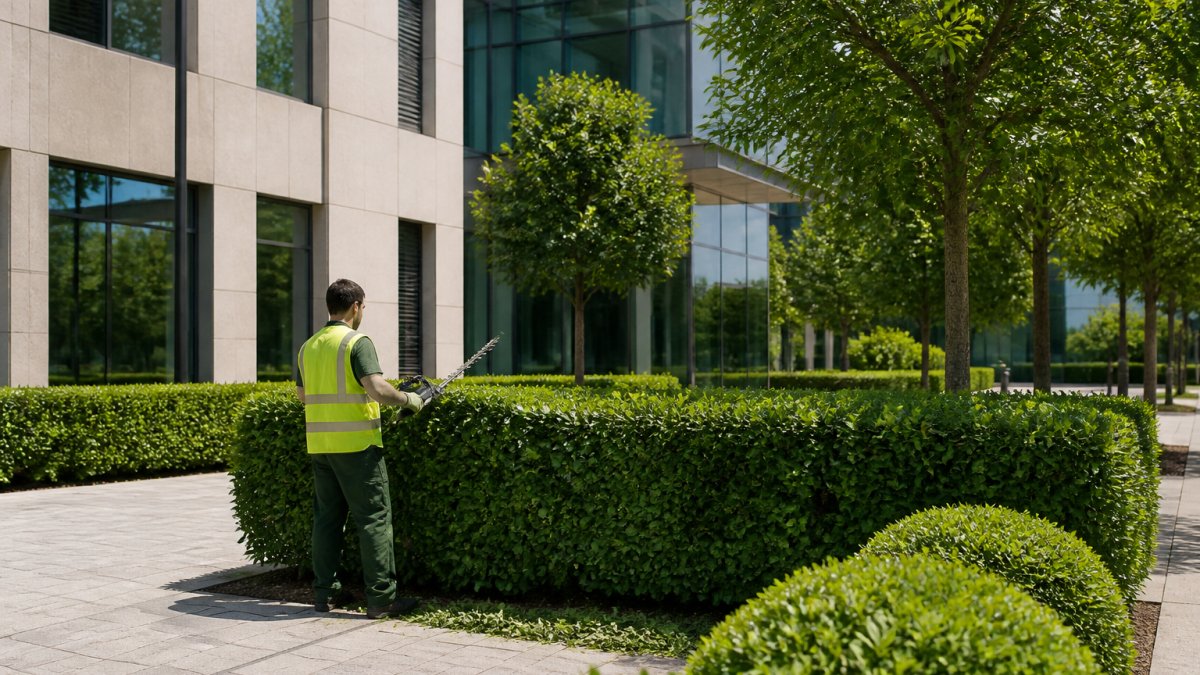
Start with the basics. Trim shrubs to clean, defined shapes and remove dead wood. If you have hedging, maintain a regular cutting schedule, typically two to three times per year.
Consider the colour palette. Green is calming and professional, but strategic use of seasonal planting adds visual interest. Many offices in the Thames Valley use spring bulbs and summer bedding to refresh their appearance twice yearly. Consistency is key: neglected plants are worse than no plants at all.
Hardscaping grounds your landscape and creates order. Cracked or sunken paving looks unprofessional and poses trip hazards. Repair damaged walkways and power-wash dirty ones.
Tree management deserves attention. Mature trees add character, but poorly maintained trees look dangerous. Remove dead branches and prune trees overhanging your roof or blocking views of your signage. If trees are diseased or unstable, professional tree surgery may be necessary.
Step 3: Install and Refresh Exterior Lighting
Exterior lighting makes your building visible and safe after dark while highlighting architectural features. Poor lighting leaves your office looking dark and unwelcoming.

Assess your current lighting. Do you have functional lights at your entrance that illuminate the door and surrounding area clearly? If not, upgrade them. A simple uplighter or wall-mounted fixture makes an immediate difference.
Consider accent lighting for your building facade. Uplighting highlights architectural details and creates visual interest. Downlighting can illuminate landscaping and walkways.
Pathway lighting is practical and attractive. Low-level LED fixtures guide people safely without harsh shadows and are energy-efficient and long-lasting.
Lights should activate at dusk and turn off after business hours. Motion sensors can reduce energy use for areas that don't need constant illumination, but your main entrance and key architectural features should be lit throughout the evening.
Step 4: Repair Siding, Paint, and Facade Restoration
Your building's facade is its face. Peeling paint, stained siding, and visible damage communicate neglect. Facade restoration doesn't always mean expensive renovation; sometimes it's simply cleaning, repainting, or targeted repairs.
Start with cleaning. Many buildings look tired because they're dirty, not damaged. Algae, moss, and grime accumulate on north-facing walls and shaded areas. Power-washing can restore the original appearance of brick, stone, or rendered surfaces.
Paint colour matters. Neutral tones, whites, creams, soft greys, are professional and timeless. Choose quality exterior paint designed for your climate. The Thames Valley's wet winters mean you need paint that resists mould and algae growth.
Address visible damage. Cracks in siding or render should be repaired before they worsen. Damaged brickwork should be repointed. Rusted metal fixtures should be replaced or refinished.
If your siding is genuinely worn out, modern cladding systems are durable, low-maintenance, and available in professional finishes. Get professional advice before committing to replacement.
Step 5: Enhance Your Entryway and Wayfinding Signage
Your entryway is where first impressions crystallise. A neglected, unclear, or poorly lit entrance undermines everything else you've done.
Start with your front door. It should be clean, in good repair, and clearly visible. If it's showing its age, consider replacement. A new entrance door signals professionalism. Ensure the door number or company name is clearly visible and well-lit.
Windows flanking your entrance should be clean and transparent. Dirty windows or frosted glass make your space feel closed-off.
Your business name should be visible from the street and clearly readable. If you're in a business park with multiple tenants, ensure your unit is clearly marked. Signage should be professional, well-maintained, and lit if in a shaded area or visible after dark.
Consider adding a small planting area at your entrance. A pair of large planters with seasonal plants or a feature tree frames your entrance and adds character without significant expense.
Step 6: Maintain Parking Lots and Walkways
Parking lots and walkways are high-traffic areas where maintenance directly affects safety and appearance. A cracked, dirty, or poorly marked parking lot tells clients you don't care about details.
Parking lot maintenance includes surface condition, line markings, and debris removal. If your surface is degraded, seal-coating extends its life and improves appearance. Line markings should be clear and regularly refreshed. Ensure parking spaces are appropriately marked and that disabled spaces meet accessibility requirements under the Equality Act 2010.
Regular sweeping, ideally weekly or fortnightly, keeps areas clean and professional-looking.
Walkways should be level, clear of trip hazards, and free of algae or moss growth. Slippery surfaces are safety risks. If you have gravel or loose surfaces, rake and refresh them regularly. Power-wash paved areas periodically.
Drainage is critical. Standing water looks bad and creates safety hazards. Ensure gutters, drains, and channels are clear and functioning.
Commercial Property Kerb Appeal Ideas on Budget and Premium Tiers
How to improve office exterior appeal depends partly on your budget. Some improvements deliver high visual impact for modest investment. Others require significant capital but transform your property's appearance and long-term value.
Budget-tier improvements
Focus on high-impact, low-cost actions. Regular cleaning and power-washing your facade, parking lot, and walkways often delivers the biggest visual improvement for the least expense. Dirt and algae make properties look neglected; cleaning alone can make a tired building look cared-for.
Landscaping maintenance is affordable. Regular grass cutting, hedge trimming, and weed removal cost far less than renovation but maintain professional appearance. Removing dead plants and replacing them with healthy ones is inexpensive but noticeable.
Fresh paint on doors, trim, or smaller exterior features is affordable and impactful. Replacing worn hardware costs little but improves perceived quality. New entrance signage, if your current sign is faded or damaged, is often surprisingly affordable.
Adding seasonal planting refreshes appearance without permanent investment. Container planting near your entrance is flexible and relatively inexpensive.
Lighting upgrades can be budget-friendly. Adding a simple uplighter to illuminate your entrance or installing solar-powered pathway lights keeps costs down while improving safety and appearance.
Premium-tier enhancements
Premium improvements transform your property's appearance and long-term value. Facade restoration, cleaning, repainting, or replacing damaged siding, costs more but creates dramatic change. New cladding systems provide durability, low maintenance, and a contemporary appearance.
Hardscaping upgrades, replacing or resurfacing parking areas, installing new pathways, or adding decorative paving, are significant investments but create structure and professionalism. Premium landscaping includes specimen plants, structured planting beds, water features, or living walls.
Architectural lighting, professionally designed systems that highlight your building's best features, transforms evening appearance. This might include facade uplighting, accent lighting on architectural details, or feature lighting on trees.
Entrance enhancements at the premium tier include new doors, canopies, or covered entry areas that create a distinctive, welcoming arrival experience. Architectural features add character and perceived value.
Building renovation or cladding replacement represents the highest investment tier but delivers the most dramatic transformation.
Improvement Type | Budget Tier Cost Range | Premium Tier Cost Range | Time to Impact | Maintenance Frequency |
Cleaning and power-washing | £200-500 | £500-1,500 | Immediate | Quarterly to annually |
Landscaping maintenance | £150-400/month | £400-800/month | Ongoing | Weekly to monthly |
Exterior painting | £2,000-5,000 | £5,000-15,000 | 2-4 weeks | Every 5-7 years |
Lighting installation | £500-2,000 | £2,500-8,000 | Immediate | Annual bulb/fixture checks |
Parking lot resurfacing | £3,000-8,000 | £8,000-20,000 | 1-2 weeks | Every 5-10 years |
Signage replacement | £500-2,000 | £2,000-6,000 | 1 week | Annual cleaning |
Hardscaping/pathways | £2,000-6,000 | £6,000-20,000 | 2-4 weeks | Annual maintenance |
Improving your office exterior appeal is an ongoing commitment to maintaining the first impression your business makes. Many facility managers in the Thames Valley struggle with inconsistent maintenance because they're juggling multiple contractors or dealing with services that disappear when busier jobs arise. At Pemigogardens, we focus exclusively on private offices and business parks in the M40/M4 corridor, offering regular maintenance contracts tailored to your specific site needs. Our team holds health and safety training and provides reliable, consistent site upkeep throughout the year, from landscaping and tree surgery to car park maintenance and clearing. Equality Act 2010 accessibility requirements for commercial properties ensures your site is not only visually appealing but legally compliant. Get started with Pemigogardens today and transform how clients perceive your business from the moment they arrive.
Frequently Asked Questions
How do I know regular maintenance will actually improve how my office looks to clients?
Consistent exterior maintenance prevents deterioration and keeps your property presentation fresh. Regular visits ensure landscaping stays trimmed, parking areas stay clean, and minor issues like debris or weathering are addressed before they become visible problems. A dedicated maintenance contract with scheduled visits means your office always presents professionally to clients, unlike sporadic work that leaves gaps between services.
What's the difference between working directly with a landscaper versus using a managing agent for office exterior maintenance?
Direct relationships with your grounds maintenance team mean customised scheduling tailored to your specific needs, such as Thursday morning sweeps before client meetings or seasonal planting in particular areas. You communicate directly about priorities and changes, and you get consistent staff who understand your site. Managing agents typically apply standardised service levels across multiple properties, which may not match your exact requirements or timeline.
What does an office building exterior maintenance checklist typically include?
A comprehensive checklist covers landscaping and greenery maintenance, parking lot and walkway sweeping, exterior lighting inspection, facade and siding condition, signage cleanliness, waste management and clutter removal, and roof inspection. Regular monitoring of these areas helps identify repairs needed before they affect your property's appearance. A tailored checklist reflects your specific site layout and business needs rather than a generic template.
How much should I budget for office exterior renovation in the UK?
Costs vary widely depending on scope. Budget-tier improvements like landscaping refreshes, power washing, and minor repairs typically cost £500-£2,500. Mid-range projects including new exterior lighting and siding touch-ups range from £3,000-£8,000. Comprehensive renovations with facade restoration, new hardscaping, and major structural repairs can exceed £15,000. Get quotes for your specific site to establish realistic figures for your property.
Get Started Today
This article was written using GrandRanker


Comments