
Office Landscaping and Tenant Retention: Impact and Strategy
Updated: Sep 16
Table of Contents
How Office Landscaping Improves Tenant Retention
The Role of Curb Appeal in First Impressions and Lease Renewals
Commercial Grounds Maintenance Benefits for Property Value and Occupancy
ROI of Office Landscaping: Financial Impact on Tenant Satisfaction and Turnover
Best Practices for Business Park Landscaping: Creating Outdoor Spaces That Matter
Green Spaces and Biophilic Design
Seasonal Planting and Year-Round Maintenance
Safety, Liability, and Professional Site Maintenance Standards
Conclusion
Last Updated: August 24, 2026
How Office Landscaping Improves Tenant Retention
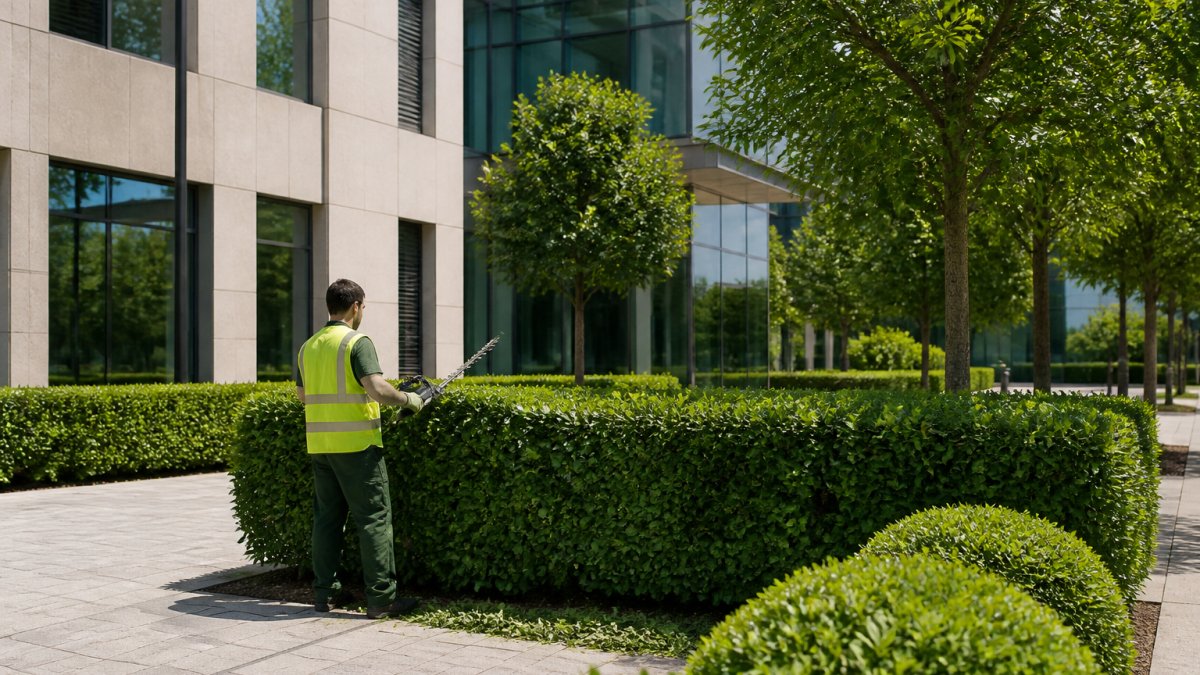
Well-maintained commercial grounds directly influence whether tenants renew their leases or move elsewhere. Office landscaping improves tenant retention by creating an environment that feels professional, welcoming, and cared for, signals that extend far beyond aesthetics into how tenants perceive the entire property and management.

Tenants notice their surroundings daily. A neglected car park, overgrown planting beds, or dead hedging signals that the property isn't a priority. Conversely, consistent seasonal planting, regular mowing, and cleared pathways signal competence and attention. That perception shapes tenant satisfaction and their decision to stay.
At Pemigogardens, we've observed this pattern repeatedly across private offices and business parks in the Thames Valley. Properties that invest in regular grounds maintenance see fewer tenant inquiries about moving. Tenants evaluate lease renewal based on total experience, and the physical environment is part of that calculation.
Pro Tip Consistency matters more than perfection. Tenants tolerate seasonal variation, but they notice gaps in regular maintenance. A property maintained every two weeks performs better for retention than one maintained sporadically, even if the sporadic visits are more intensive.
Properties with well-maintained grounds command higher rental premiums. Tenants accept paying more for space that feels professionally managed. This means office landscaping improves tenant retention whilst simultaneously enabling rent increases, a dual benefit most property owners don't fully leverage.
The Role of Curb Appeal in First Impressions and Lease Renewals
First impressions determine whether prospective tenants consider your property seriously. Curb appeal isn't superficial marketing; it's the opening statement about operational standards and property value.

When a prospect arrives at a commercial property, they assess the grounds within seconds. Unkempt landscaping, debris, or faded paintwork create doubt that translates into lower lease valuations, longer vacancy periods, and reduced renewal likelihood. Clean, well-planted grounds with professional maintenance immediately establish credibility.
A property that looks maintained suggests the building systems, tenant services, and management responsiveness are equally attended to. This halo effect influences lease decisions disproportionately. For lease renewals, consistent curb appeal reinforces that the property remains a strong choice.
Key Takeaway Curb appeal is the non-negotiable foundation of tenant retention strategy. It operates before any other factor, before lease terms, service quality, or pricing. Get the grounds right, and tenants are predisposed to stay.
In business parks, shared grounds are visible to all tenants constantly. A park with degraded landscaping creates collective doubt about management competence. Regular maintenance of common areas, seasonal planting, and professional upkeep create collective confidence that translates into higher renewal rates across all tenants.
Commercial Grounds Maintenance Benefits for Property Value and Occupancy
Property value in commercial real estate is inseparable from occupancy rates and lease stability. Commercial grounds maintenance directly influences both metrics, making it a financial lever, not merely a cosmetic expense.
Properties with consistent occupancy command higher valuations. A property with 95% occupancy and strong renewal history is worth significantly more than an identical property with 75% occupancy and high turnover. Grounds maintenance directly supports occupancy by reducing tenant turnover.
A property where tenants stay longer requires less marketing spend to fill vacancies. Turnover costs, repainting, repairs between tenants, and marketing are eliminated. That operational efficiency translates into higher net operating income, which directly increases property valuation.
Regular grounds maintenance also reduces liability exposure. Well-maintained pathways, cleared car parks, and properly trimmed vegetation reduce slip-and-fall incidents and damage claims. Insurance carriers often offer better rates for properties demonstrating consistent maintenance standards.
Watch Out Deferred grounds maintenance creates a downward spiral. As grounds deteriorate, tenant satisfaction drops, renewal rates fall, occupancy declines, and property value decreases. Each stage accelerates the next. The cost of reversing this cycle far exceeds the cost of consistent maintenance.
ROI of Office Landscaping: Financial Impact on Tenant Satisfaction and Turnover
The financial case for office landscaping investment rests on measurable data. When property managers quantify the true cost of tenant turnover against grounds maintenance spend, the ROI becomes undeniable.
The True Cost of Tenant Turnover
Tenant turnover in commercial real estate is significantly more expensive than most property owners calculate. Beyond marketing spend, vacancy periods, and refurbishment, turnover creates hidden costs: lost rental income during void periods, administrative overhead for lease negotiations, potential rent concessions to attract replacement tenants, and operational disruption. Research from the Royal Institution of Chartered Surveyors suggests that a single tenant departure from a mid-sized commercial unit costs between 10-20% of annual rent in direct and indirect expenses. For a 5,000 sq ft office space let at £20 per sq ft annually (£100,000 rent), a single turnover event costs £10,000-£20,000.
Multiply this across a business park with 15-20 tenants, and a 15% annual turnover rate represents £150,000-£300,000 in annual turnover costs.
Grounds Maintenance as Turnover Prevention
Consistent grounds maintenance directly reduces turnover rates. Properties implementing professional, scheduled maintenance report renewal rates that are generally higher than properties with reactive maintenance. Preventing tenant departures against an annual grounds maintenance budget delivers a strong return on investment.
Tenants at well-maintained properties accept modest rent increases (2-3% annually) more readily than tenants at properties with visible grounds deterioration. Over a 10-year lease cycle, this incremental rent growth compounds significantly. A tenant accepting a 2.5% annual increase on £100,000 annual rent generates an additional £12,500 in cumulative rent revenue over the lease term.
Operational Efficiency and Insurance Impact
Professional grounds maintenance reduces operational costs through insurance premium reductions. Properties with documented, consistent grounds maintenance may qualify for reductions on public liability insurance premiums.
Well-maintained grounds also reduce slip-and-fall claims and property damage incidents. The Health and Safety Executive's guidance on workplace premises emphasises that property owners have a duty to maintain safe grounds. Properties demonstrating this duty face fewer claims and lower litigation exposure.
Property Valuation Impact
Commercial property valuations are directly tied to occupancy rates and lease stability. A property with 90% occupancy and 88% renewal rates commands a significantly higher valuation multiple than an identical property with 70% occupancy and 65% renewal rates. Grounds maintenance, by supporting occupancy and renewal, directly increases property valuation. For investors considering sale, this valuation uplift often exceeds the cumulative grounds maintenance spend over the holding period.
Timing and Proactive Versus Reactive Maintenance
Proactive, scheduled maintenance prevents grounds deterioration and maintains tenant satisfaction continuously. Reactive maintenance, undertaken only after grounds visibly decline, requires more intensive (and expensive) intervention and fails to prevent the tenant satisfaction damage that triggers renewal decisions. A property investing in proactive maintenance can avoid the higher cost of reactive restoration.
Financial Scenario | Annual Grounds Maintenance Cost | Tenant Renewal Rate | Annual Turnover Cost | Net Financial Impact |
Proactive scheduled maintenance | Varies | Generally higher | Generally lower | Positive impact |
Reactive maintenance (after decline) | Varies, often higher | Generally lower | Generally higher | Negative impact |
No professional maintenance | £0 | Generally lowest | Generally highest | Significant annual cost |
Grounds maintenance is not a discretionary expense, it is a strategic financial tool that directly impacts the bottom line through retention, rent growth, reduced turnover costs, and improved property valuation.
Best Practices for Business Park Landscaping: Creating Outdoor Spaces That Matter
Linking Landscaping to Tenant Employee Productivity
The most overlooked dimension of office landscaping is its direct impact on tenant employee productivity and retention. Landscaping that improves employee experience creates a B2B2C value chain: better grounds → higher employee satisfaction → lower tenant staff turnover → tenant lease renewal.
Research from environmental psychology demonstrates that access to green space reduces employee stress, improves focus, and increases job satisfaction. Employees working in buildings with visible green space often report higher job satisfaction scores and may take fewer sick days.
Business parks incorporating outdoor workspaces, seating areas, break zones with vegetation, or planted pathways, enable tenants to offer their employees outdoor break facilities. This amenity is increasingly expected in competitive labour markets. Practical implementation includes outdoor seating areas with shade, walking paths through planted areas, quiet zones with seating, and biodiversity features that create visual interest.
These elements require ongoing maintenance to deliver their productivity benefit. A neglected seating area or overgrown pathway becomes a liability rather than an asset. Consistent maintenance signals to tenant employees that the property owner values their experience.
Green Spaces and Biophilic Design: Quantifying the Impact
Biophilic design, the integration of natural elements into built environments, has moved from trend to operational standard in commercial real estate. Tenant satisfaction surveys from well-maintained business parks consistently show that visible green space ranks as a significant factor influencing lease renewal decisions (alongside location and rent).
Effective biophilic elements for business parks include specimen trees (native species such as oak, beech, or birch) positioned to provide shade and visual structure, planted borders using mixed perennial planting to soften hard edges, seasonal flowering displays in high-traffic areas, green screens to obscure service areas, and water features that add visual interest and support biodiversity.
The maintenance requirement for these elements is non-negotiable. A poorly maintained green space creates the opposite effect: neglect signals mismanagement and reduces tenant confidence. Consistency in seasonal planting, regular weeding, pruning, and deadheading maintains the psychological and environmental benefits.
Seasonal Planting Strategy and Year-Round Maintenance Standards
Commercial grounds require different maintenance approaches across seasons, and this variation must be planned and executed professionally.
Spring (March-May): Spring bulb displays provide early-season colour and signal active management. Perennial borders are cut back and divided. Lawn maintenance increases to weekly or fortnightly mowing. This period sets the tone for the year.
Summer (June-August): Summer bedding provides sustained colour. Mowing continues weekly. Deadheading maintains visual impact. Smart irrigation systems (soil moisture sensors, weather-responsive scheduling) maintain plant health whilst reducing water waste. This is the highest-visibility season.
Autumn (September-November): Autumn-flowering perennials extend the growing season. Leaf clearance becomes a major maintenance task; accumulated leaves obscure pathways and create slip hazards. Properties that maintain clear, tidy grounds through autumn demonstrate commitment to year-round standards.
Winter (December-February): Winter maintenance focuses on safety and protection. Gritting and snow clearance of pathways and car parks are essential. Evergreen planting maintains visual structure. Properties that maintain professional standards through winter establish themselves as professionally managed.
Year-round maintenance prevents the visual decline that triggers tenant concerns. A property that looks sharp in summer but deteriorates visibly in winter sends mixed messages about management priorities.
Integration with Smart Building Technology
Modern grounds maintenance increasingly integrates with smart building systems, creating operational efficiencies that reduce cost and improve tenant experience.
Smart irrigation systems use soil moisture sensors and weather data to optimise watering schedules, reducing water consumption whilst maintaining plant health. IoT-enabled lighting in outdoor spaces can be programmed to respond to occupancy and daylight levels, reducing energy consumption. Maintenance scheduling software enables property managers to document and track all grounds maintenance activities, creating a clear audit trail of professional management.
These technologies are increasingly expected by sophisticated tenants and their employees. Integration demonstrates that the property owner is committed to modern, efficient operations.
Safety, Liability, and Professional Site Maintenance Standards
Professional grounds maintenance directly reduces safety and liability risks. Overgrown vegetation obscures hazards. Debris accumulation creates slip-and-fall risks. Unmaintained pathways develop cracks and trip hazards. Each creates liability exposure for property owners.
Regular site maintenance eliminates these hazards systematically. Professional grounds maintenance teams identify and address risks before incidents occur. This proactive approach reduces insurance claims, lowers premiums, and demonstrates duty of care to tenants and visitors.
Professional site maintenance ensures compliance with health and safety expectations. The Health and Safety at Work etc. Act 1974 establishes general duties for property owners to maintain safe premises. Well-maintained grounds demonstrate this compliance clearly.
For business parks, professional site maintenance extends to car park management, pathway clearing, and removal of hazardous debris. These elements directly impact safety and tenant satisfaction.
Pemigogardens maintains health and safety training through Human Focus, ensuring our team operates to current professional standards. This commitment to training reflects our approach to site safety, consistent, professional, and compliant with current expectations.
The decision to invest in office landscaping ultimately reflects a choice about property management philosophy. Properties that treat grounds maintenance as essential operational expense retain tenants, command higher valuations, and operate more profitably. The financial and operational benefits compound over time, creating properties that tenants choose to stay in and that investors choose to acquire.
For private offices and business parks in the Thames Valley seeking reliable grounds maintenance, the approach matters as much as the service itself. Regular scheduled maintenance, consistent quality, and direct accountability to property owners ensure that grounds remain a tenant satisfaction asset rather than a liability. That consistency transforms landscaping from a cost line into a strategic retention tool.
When you work with Pemigogardens, you're engaging a team committed to reliable, scheduled maintenance that directly supports your tenant retention and property value objectives.
Frequently Asked Questions
How does commercial landscaping impact tenant retention rates?
Well-maintained office landscaping directly influences tenant satisfaction and lease renewal decisions. Professional grounds maintenance demonstrates property investment and care, which tenants interpret as reliable management. Properties with poor grounds maintenance report higher turnover as tenants seek better-maintained alternatives. Regular landscaping, seasonal planting, and clean outdoor spaces reduce vacancy periods and encourage long-term occupancy, protecting your rental income and asset value.
What is the ROI of office landscaping for business park owners?
Office landscaping delivers measurable financial returns through reduced tenant turnover, higher lease renewal rates, and increased rental premiums. Properties with professional grounds maintenance command higher occupancy rates and allow owners to charge premium rents. The cost of regular maintenance contracts is offset by lower turnover costs and longer tenant tenure. A well-maintained landscape is an investment that protects and appreciates your property asset.
What are the best practices for business park landscaping?
Effective business park landscaping includes consistent year-round maintenance, seasonal planting programmes, clean car park upkeep, and green spaces that support employee wellbeing. Professional grounds maintenance should be scheduled regularly and tailored to your specific site needs. Biophilic design elements like planted areas and green spaces improve the tenant experience. Reliability matters: consistent, scheduled maintenance from a dedicated team prevents the appearance of neglect and supports tenant satisfaction.
Do tenants expect professional grounds maintenance as part of their lease?
Yes. Modern commercial tenants view professional grounds maintenance as a standard expectation, not a luxury. Well-maintained exteriors are factored into lease decisions and renewal negotiations. Tenants expect regular site upkeep, seasonal planting, clean outdoor areas, and safe car parks. Failure to maintain grounds is a primary reason tenants decline to renew leases. For property owners, investing in professional landscaping is essential to meet tenant expectations and remain competitive in the commercial real estate market.
TELL US Submit
This article was written using GrandRanker


Comments