
How to Create a Welcoming Office Entrance
Updated: Sep 16
Table of Contents
Why Your Office Entrance Matters
Step 1: Assess Your Current Entrance Layout and Circulation
Step 2: Improve Entrance Visibility and Signage
Step 3: Select Commercial Landscaping for Office Entrances
Step 4: Choose Low Maintenance Plants for Business Exteriors
Step 5: Design Lighting and Refresh Your Colour Scheme
Step 6: Improving Office Curb Appeal Through Furniture and Cleanliness
Conclusion
Last Updated: August 30, 2026
Why Your Office Entrance Matters
Your office entrance is the first physical interaction a client, partner, or employee has with your business. Within seconds, visitors form opinions about your professionalism, attention to detail, and company culture. A welcoming office entrance doesn't just look good, it signals competence, care, and reliability. This is where first impressions are made, and they're remarkably difficult to reverse.
The entrance sets the tone for everything that follows. A cluttered, poorly lit, or unkempt entrance tells visitors you don't prioritize details. A clean, well-designed, thoughtfully landscaped entrance tells them you're serious about your business. For private offices and business parks in the Thames Valley, this distinction matters enormously. Your entrance is your competitive advantage before anyone steps through the door.
Creating a welcoming office entrance requires a strategic approach across multiple elements: layout, visibility, landscaping, lighting, colour, and maintenance. Each component works together to create an environment that feels intentional rather than accidental. The good news is that you don't need a complete renovation to achieve this. Many improvements can be implemented progressively, with results visible almost immediately.
Key Takeaway Your office entrance is the first impression your business makes. A welcoming entrance signals professionalism and builds confidence in clients and partners before they even meet your team.
Step 1: Assess Your Current Entrance Layout and Circulation
Before making any changes, you need to understand how people actually move through your entrance space. Walk through it as a visitor would, not as someone who uses it daily. Notice where confusion occurs, where people hesitate, and where the flow feels natural or awkward.

Circulation patterns matter more than aesthetics alone. A beautiful entrance that confuses visitors about where to go creates frustration, not welcome. Look at these key elements:
Sightlines from the car park: Can visitors see the entrance clearly from where they park? Or do they approach uncertain about direction?
Clear pathways: Is there an obvious route from the car park to the front door? Or do people wander across landscaping or unclear ground?
Transition zones: Is there a logical progression from outdoor space to covered entrance to reception?
Wayfinding signals: Do signs, lighting, or architectural features guide people naturally toward the entrance?
The entrance layout should feel intuitive. Visitors shouldn't need to ask for directions or pause to figure out where to go. This is especially important for business parks with multiple buildings, your entrance needs to clearly identify which building is which.
Assess your current layout by noting problem areas: Do people park and then look uncertain about direction? Do they walk across landscaping instead of using pathways? Do they approach the wrong door? These observations tell you where to focus your improvements.
Pro Tip Walk your entrance at different times of day and in different weather. Morning light, afternoon shadows, and rainy conditions all affect how visible and welcoming the space feels. Problems you notice in poor light are high-priority fixes.
Step 2: Improve Entrance Visibility and Signage
Visibility is foundational. If visitors can't clearly see your entrance, they'll struggle to find it. This means evaluating both the physical visibility of the building and the clarity of your signage.
Start with the basics: Can your building number or business name be read from the street or car park? Many businesses underestimate how important this is. Visitors often arrive with minimal information, relying on signage to confirm they're at the right location. Unclear or missing signage creates doubt and frustration before anyone enters.
Your signage should serve multiple purposes:
Building identification: Clear, well-lit business name or building number visible from the approach
Directional guidance: Arrows or signs directing visitors to the entrance, especially in larger office parks
Wayfinding clarity: Signs indicating reception, parking, or specific departments if relevant
Professional aesthetic: Signage that matches your brand and reflects your company's standards
The quality of your signage directly reflects on your business. Faded, crooked, or poorly maintained signs suggest carelessness. Professional, clean signage suggests attention to detail. This is one of the highest-impact, lowest-cost improvements you can make.
Consider lighting for your signage. A beautifully designed sign that's dark and unreadable at dusk serves no purpose. Illuminated signage is visible 24/7 and demonstrates that you invest in professional presentation.
For a welcoming office entrance, also evaluate what's visible through windows or glass doors as visitors approach. Can they see into a clean, well-lit reception area? Or do they see clutter, dim lighting, or confusion? The view into your entrance space is part of your entrance experience.
Step 3: Select Commercial Landscaping for Office Entrances
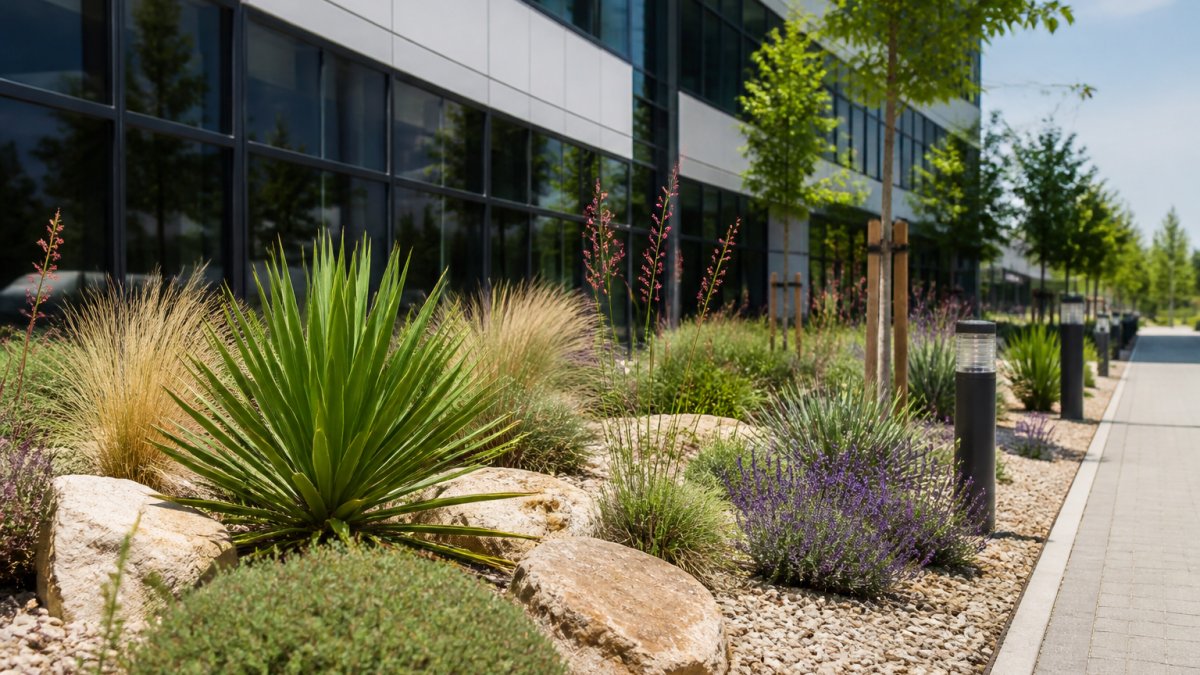
Landscaping is the visual framework for your entrance. It's where most visitors first notice whether your business is well-maintained. Commercial landscaping for office entrances should be strategic, not excessive, but thoughtfully designed to frame the entrance and create a professional atmosphere.

The landscaping you choose should accomplish several things simultaneously: enhance visual appeal, frame the entrance clearly, require reasonable maintenance, and reflect your business's professionalism. This is where many businesses make mistakes, they either neglect landscaping entirely or choose plants that become overgrown and unkempt.
Your landscaping strategy should include:
Entrance framing: Plants positioned to draw attention to the entrance rather than obscure it
Colour coordination: A cohesive colour palette that feels intentional, not random
Year-round interest: Plants that look maintained and attractive across all seasons
Scale appropriateness: Plants that complement the building size without overwhelming or underwhelming the space
Accessibility: Landscaping that doesn't block sightlines or create obstacles for visitors
The most common mistake is choosing plants that grow too large or too wild for the space. A shrub that looks modest in a nursery pot can become a sprawling mess within two years. This is why understanding plant maturity and growth habits is essential.
For commercial landscaping in the Thames Valley, consider the local climate and seasonal changes. Your landscaping needs to look professional in January as well as July. This is why evergreen plants form the backbone of most successful commercial landscapes, they provide consistent structure and colour year-round.
Pemigogardens works directly with private offices and business parks to create landscaping designs that enhance curb appeal while remaining manageable with regular maintenance. A tailored approach ensures your landscaping reflects your specific site needs and aesthetic preferences, with consistent upkeep throughout the year.
Step 4: Choose Low Maintenance Plants for Business Exteriors
Selecting the right plants is critical. Low maintenance plants for business exteriors should be hardy, attractive year-round, and resistant to common issues. The worst scenario is choosing plants that look beautiful initially but become diseased, overgrown, or neglected within months.
For a welcoming office entrance, prioritise plants that:
Require minimal pruning: Avoid plants that need constant shaping to look neat
Resist pests and disease: Choose varieties known for resilience in your region
Tolerate varied conditions: Plants that thrive in partial shade, full sun, or exposed positions
Maintain appearance year-round: Evergreens and plants with sustained interest across seasons
Scale appropriately: Plants that reach mature size suitable for your entrance space
Evergreen shrubs are the foundation of most successful commercial landscapes. They provide structure, colour, and professionalism without the seasonal bare periods of deciduous plants. Common choices that work well in the Thames Valley include box, privet, and photinia for formal effects, or more textured options like fatsia or griselinia for contemporary aesthetics.
Seasonal colour can be added through well-chosen flowering plants or bedding, but these should be refreshed regularly to maintain a polished appearance. A single dead plant in an otherwise well-maintained bed is immediately noticeable and undermines the entire effect.
Consider also the practical aspects of maintenance. Plants positioned where they block sightlines or create obstacles for visitors create problems. Plants in high-traffic areas may suffer damage and require replacement more frequently. Position your landscaping strategically to enhance the entrance without creating maintenance headaches.
Watch Out Avoid plants known for aggressive growth, invasive root systems, or high pest vulnerability in your region. A plant that looks attractive in a garden centre may become a maintenance nightmare within a season. Prioritise proven performers over novelty plants.
Step 5: Design Lighting and Refresh Your Colour Scheme
Lighting design transforms your entrance from functional to welcoming. Poor lighting makes even a well-designed space feel unwelcoming or unsafe. Good lighting creates atmosphere, improves visibility, and extends the visual appeal of your entrance into evening hours.
Your lighting strategy should address:
Ambient lighting: Overall illumination that makes the entrance feel safe and welcoming
Task lighting: Focused light on signage, pathways, or reception areas where visibility matters
Accent lighting: Strategic lighting that highlights architectural features or landscaping
Safety lighting: Illumination of steps, changes in level, or potential hazards
The colour temperature of your lighting matters. Warm white light (2700K-3000K) creates a welcoming, professional atmosphere. Cool white light (4000K+) feels more clinical and institutional. For a welcoming office entrance, warm white lighting is almost always the better choice.
Your colour scheme works in partnership with lighting. The colours you choose should feel intentional and professional, not random or trendy. A cohesive colour palette across your entrance, in landscaping, signage, paint, and furnishings, creates a sense of care and attention.
Consider these colour principles:
Neutral base: Walls, pathways, and large elements in neutral tones (white, cream, soft grey, warm beige)
Accent colour: One or two accent colours in landscaping, signage, or furnishings that reflect your brand
Natural materials: Wood, stone, or quality materials that age well and feel substantial
Contrast for clarity: Sufficient contrast between elements to ensure wayfinding is clear
Refreshing your colour scheme doesn't require repainting everything. Often, a fresh coat of paint on doors, trim, or accent walls, combined with updated landscaping colours, creates a dramatically improved effect. The key is intentionality, every colour choice should feel deliberate, not accidental.
Step 6: Improving Office Curb Appeal Through Furniture and Cleanliness
Your entrance furniture and cleanliness are the final details that complete a welcoming impression. Even with excellent landscaping and lighting, a cluttered or dirty entrance undermines everything else.
Start with cleanliness as your baseline. This means:
Regular sweeping and cleaning: Pathways, steps, and entrance areas free of debris, leaves, or dirt
Window cleaning: Clean glass doors and windows that provide clear views into your reception area
Pressure washing: Periodic cleaning of hardscaping to remove algae, moss, or accumulated grime
Landscaping maintenance: Removing dead leaves, spent flowers, or overgrown growth
Litter management: Ensuring bins are emptied and the area is free of debris
Cleanliness is non-negotiable. A single piece of litter or a dirty entrance negates the impact of excellent landscaping and design. This is why regular maintenance contracts matter, consistency prevents the slow decline that happens when maintenance is sporadic.
Entrance furniture should be minimal, functional, and high-quality. If you include benches, planters, or other furniture, choose pieces that:
Match your aesthetic: Furniture that complements your entrance design rather than clashing with it
Withstand weather: Materials that age gracefully and don't require constant replacement
Serve a purpose: Functional elements that enhance the space rather than clutter it
Remain clean: Materials that are easy to maintain and don't accumulate dirt or stains
For many businesses, less is more. A single well-chosen planter or bench creates a more sophisticated effect than multiple pieces that create visual clutter.
The entrance area should feel purposeful and organised. If you need bins, bike racks, or other functional elements, position them thoughtfully so they don't dominate the visual space. A well-designed entrance feels intentional, not like a storage area.
Element | Maintenance Task | Frequency |
Pathways and hardscaping | Sweep and clean | Weekly |
Landscaping | Deadhead, remove debris | Fortnightly |
Glass and windows | Clean | Monthly |
Pressure washing | Deep clean hardscaping | Quarterly |
Signage | Check and clean | Monthly |
Entrance furniture | Inspect and clean | Monthly |
Creating a welcoming office entrance requires attention across multiple elements: layout clarity, visibility, landscaping, lighting, colour coordination, and consistent maintenance. Each component contributes to the overall impression visitors receive. The challenge most businesses face isn't knowing what to do, it's maintaining consistency over time.
Pemigogardens provides regular maintenance contracts specifically designed for private offices and business parks. A dedicated team handling your grounds maintenance ensures your entrance remains welcoming throughout the year, with consistent upkeep that reflects your business standards. Rather than managing multiple contractors or struggling with sporadic maintenance, a tailored maintenance contract keeps your entrance looking professional without requiring your attention. TELL US to discuss how regular grounds maintenance can transform and sustain your office entrance.
Frequently Asked Questions
How does landscaping impact the first impression of an office entrance?
Landscaping shapes how clients perceive your business within seconds of arrival. Well-maintained plants, clean borders, and seasonal colour create a professional atmosphere that signals reliability and attention to detail. Poor landscaping, overgrown beds, dead plants, or bare earth, suggests neglect. Commercial landscaping for office entrances should frame your entrance, guide visitor flow, and reinforce your brand identity through colour and design consistency.
What are the best low maintenance plants for a business exterior?
Choose evergreen shrubs and structured perennials that require minimal seasonal intervention. Box, yew, and holly provide year-round structure with minimal pruning. Ornamental grasses and sedums tolerate poor soil and reduce watering needs. Avoid plants that drop leaves heavily or require frequent deadheading. Low maintenance plants for business exteriors should survive seasonal neglect and look professional in all weather, this reduces your maintenance costs while maintaining curb appeal throughout the year.
How can I improve office curb appeal on a budget?
Start with cleanliness: power wash hard surfaces, remove weeds, and tidy planting beds. Refresh signage and paint weathered frames or doors. Add simple planters with seasonal colour near the entrance. Improve lighting with solar uplighters or spotlights on key features. These steps cost less than full renovation but deliver measurable impact. Improving office curb appeal doesn't require expensive redesign, strategic cleaning, fresh paint, and simple planting changes create a welcoming environment that impresses clients without major investment.
How often should I maintain landscaping and entrance areas?
Professional grounds maintenance should occur weekly or fortnightly depending on season and site size. Weekly visits maintain cleanliness, remove debris, and catch issues early. Seasonal planting changes (spring bedding, summer colour, autumn clearance) require planning four to six weeks ahead. Regular site visits throughout the year prevent deterioration and ensure your entrance always reflects your business standard. Consistent maintenance protects your investment and maintains the welcoming first impression clients expect.
TELL US Submit
This article was written using GrandRanker


Comments